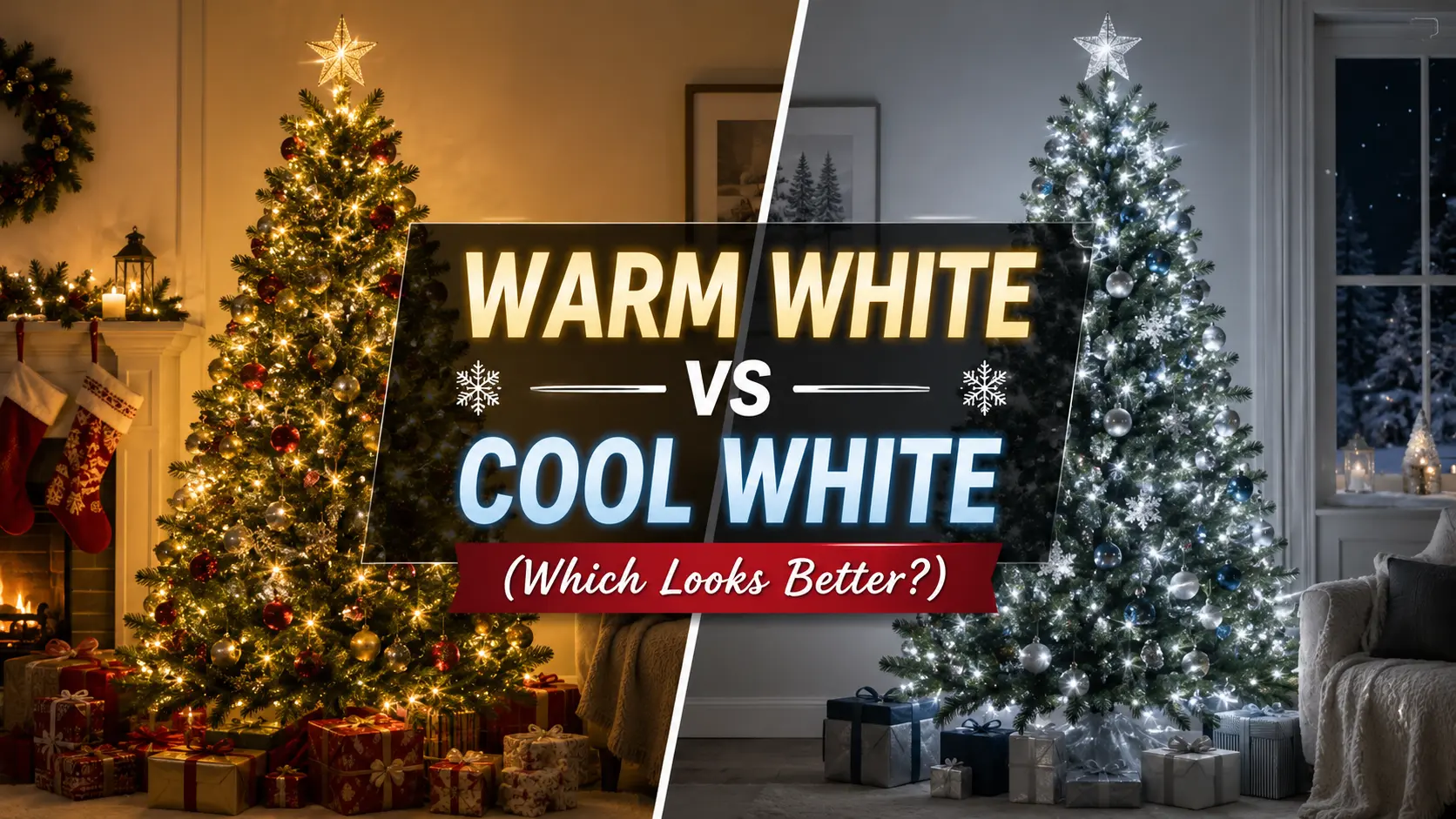

Walk into any home goods store in November and you will immediately notice the wall of Christmas light options. Among all the choices, the one question that stops most people dead in their tracks is a simple one: warm white or cool white?
It sounds like a minor detail, but this single decision shapes the entire mood of your Christmas tree and your home during the holiday season. The difference between warm white and cool white Christmas lights is not just about color temperature. It is about the kind of feeling your space radiates, the style you are going for, and how everything looks once the room lights go down and the tree takes center stage.
If you have ever set up a beautifully decorated tree only to feel like something was slightly off, there is a good chance the lighting color was the culprit. At christmastree.deals, this is one of the most common questions people have before buying, and for good reason. Getting the light color right is one of the highest-impact decisions in holiday decorating.
This guide breaks down both options in full detail so you can walk away knowing exactly which one fits your home, your style, and the atmosphere you want to create.
What Are Warm White Christmas Lights
Warm white lights sit on the lower end of the color temperature spectrum, typically between 2700K and 3000K. That range produces a soft, amber-tinted glow that most people associate with candlelight or the warm light from an old incandescent bulb.
When you look at a tree lit with warm white lights, the effect feels cozy and lived-in. The light is not harsh or clinical. It wraps around ornaments softly, creating gentle shadows and a golden depth that makes decorations look richer. Deep red baubles appear more vibrant. Gold and bronze accents catch the light beautifully. Wooden ornaments and natural materials like pine cones and burlap look completely at home in that amber warmth.
This is the light most people grew up with, whether they knew it or not. Traditional incandescent Christmas lights have always leaned warm, so there is genuine nostalgia built into the color. When someone says a Christmas tree looks “classic” or “old-fashioned” in the best possible way, warm white lights are almost always responsible.
Beyond aesthetics, warm white lighting is also easier on the eyes during extended viewing. Sitting near a warm-lit tree in the evening feels relaxing rather than stimulating. For living rooms and family gathering spaces, that distinction matters.
What Are Cool White Christmas Lights
Cool white lights sit at the opposite end of the spectrum, typically between 4000K and 6000K. At those temperatures, the light shifts from neutral white toward a crisp, bluish-white tone that feels bright, clean, and sharp.
If warm white evokes a fireplace, cool white evokes fresh snow on a clear winter night. The light is more luminous, more modern, and noticeably brighter in appearance even when the watt output is identical to a warm white bulb. This is because cooler color temperatures are perceived by the human eye as more intense.
Cool white lights tend to complement silver, chrome, white, and icy blue ornaments exceptionally well. Against a white-flocked tree, cool white lights create a visual effect that genuinely looks like a tree dusted in snow under moonlight. It is a striking, editorial look that photographs beautifully and commands attention.
The trade-off is that cool white can feel less emotionally warm. It is a more contemporary, design-forward choice. In homes with modern or minimalist interiors, this is a strength. In a space that leans rustic or traditional, it can feel slightly out of place.
Warm White vs Cool White Lights: The Full Comparison
This is where things get interesting. Both options are genuinely good, but in different contexts. Here is a detailed comparison across the factors that matter most.
Overall Appearance
Warm white creates a soft golden hue that blends naturally into home interiors, particularly those with wood tones, neutral walls, and classic furnishings. Cool white produces a crisp, high-contrast look that stands out sharply against dark backgrounds and modern decor.
Brightness Perception
Despite often having the same lumen output, cool white lights appear brighter. This is a color temperature effect. If you want a tree that truly glows and catches the eye from across the room, cool white achieves that with less effort. Warm white creates a more diffused, layered brightness that requires denser light coverage to achieve the same visual impact.
Mood and Atmosphere
Warm white creates a relaxed, intimate atmosphere. It slows the room down in a good way. Cool white creates an elevated, wide-awake feel. It is more theatrical and dramatic. For evenings spent watching movies around the tree, warm white wins. For a showpiece tree in a formal entryway, cool white delivers.
Traditional vs Modern Styling
Warm white is the traditional choice. It aligns with decades of Christmas imagery built on the amber glow of incandescent bulbs. Cool white is unambiguously modern. It pairs well with color-blocked ornaments, geometric shapes, metallics, and minimalist decorating.
Indoor vs Outdoor Use
Both work outdoors, but they behave differently against natural backdrops. Cool white lights show up more dramatically against night skies and dark exteriors. Warm white blends beautifully into spaces with warm exterior lighting and is especially effective when mixing with candle-lit pathways or lanterns.
Photography and Visual Impact
Cool white lights photograph more cleanly. The crisp tone reduces color cast in photos and creates sharper bokeh effects when shooting with shallow depth of field. Warm white lights can create a golden color cast that sometimes needs correction in editing, though many photographers actively love that golden haze for its mood.
Eye Comfort
Warm white is easier to look at for long periods. Cooler light temperatures can cause mild eye fatigue during extended exposure, which is worth considering if your tree is in a bedroom or a space where people spend quiet evenings.
Holiday Aesthetic
Warm white reinforces a nostalgic, traditional Christmas feel. Cool white creates a more contemporary holiday look that aligns with winter themes rather than specifically traditional Christmas imagery.
Quick Comparison Table
| Feature | Warm White | Cool White |
|---|---|---|
| Color Temperature | 2700K – 3000K | 4000K – 6000K |
| Tone | Amber, golden | Crisp, icy blue-white |
| Mood | Cozy, nostalgic, relaxed | Modern, dramatic, elevated |
| Best Ornament Colors | Gold, red, bronze, wood | Silver, white, blue, chrome |
| Eye Comfort | High | Moderate |
| Best Decor Style | Traditional, rustic, farmhouse | Modern, minimalist, luxury |
| Photography | Warm golden haze | Clean, sharp, minimal cast |
| Perceived Brightness | Softer | Higher contrast |
Which Light Color Works Best for Different Tree Types
Not every tree is the same, and the structure and color of your tree should genuinely influence your lighting choice.
Flocked Trees
A flocked tree is already doing the heavy lifting visually. The white or off-white coating mimics snow, and cool white lights lean straight into that effect. The result looks like a freshly snow-dusted tree caught in winter moonlight. It is a genuinely stunning combination that needs very little else to look complete.
Warm white on a flocked tree works too, but it shifts the mood toward a softer, more romantic look rather than a crisp winter scene. If you are decorating a flocked tree, you can explore more styling ideas in this guide to the best lights and decor ideas for flocked Christmas trees.
Rustic or Farmhouse Trees
A natural green tree decorated in a farmhouse or rustic style practically demands warm white lights. The amber glow works in harmony with burlap ribbon, wooden ornaments, dried citrus slices, pinecones, and plaid. Cool white would feel mismatched against these organic, textural elements.
Pre-Lit Trees
Pre-lit trees come with lights already integrated, so your choice is made at the purchase stage. This makes the initial selection even more important. Many modern pre-lit trees now offer dual-color or color-changing options, which gives you flexibility. If you are shopping for a pre-lit tree, understanding the lighting color built into the tree is as important as the tree’s size and shape. Check out stunning decoration ideas for pre-lit Christmas trees to see how different light tones interact with various decor approaches.
If you want a full breakdown of what to look for before buying, the ultimate guide to pre-lit Christmas trees covers everything from light density to long-term maintenance.
Large Statement Trees
A 10-foot tree or taller is a centerpiece. These trees benefit from layered lighting where density and depth matter more than the raw number of lights. Cool white can look spectacular on a tall statement tree in a grand room, while warm white creates a more inviting glow in a family living space. Large tree lighting setups deserve careful planning. Browse 10-foot Christmas tree options if you are working with a grand space that needs a proportionally dramatic tree.
Best Lighting Color for Different Decor Styles
Your decor style is probably the single most useful filter for choosing between warm and cool white. Here is how each option maps to the most common holiday styling approaches.
Minimalist Christmas Trees
Minimalist trees rely on restraint. They use fewer ornaments, cleaner lines, and intentional negative space. Cool white lights support this approach perfectly because they add brightness without visual clutter. The sharp, clean tone complements the deliberate simplicity. Warm white can work in a minimalist setup but tends to feel slightly more lived-in and casual, which may or may not suit the look you are going for.
Luxury Christmas Trees
High-end, luxury trees benefit enormously from the right light color. Cool white lights paired with silver, gold, and crystal ornaments create a dramatic, editorial look. The brightness of cool white makes metallic ornaments shimmer in a way that warm white simply does not replicate as effectively. That said, warm white with deep jewel-toned ornaments and velvet ribbons creates its own version of luxury, one that is more intimate and baroque than cool and architectural.
Scandinavian Decor
Scandinavian Christmas styling leans heavily on natural elements, white, and restraint. Cool white lights fit this aesthetic instinctively. They complement the clean palette of whites, greiges, and natural wood tones that define Scandinavian design. The icy brightness reinforces the winter-in-the-Nordic-forest feeling that this style channels so well.
Rustic and Farmhouse Styles
Warm white is non-negotiable here. Farmhouse Christmas decor relies on texture, natural materials, and that sense of comforting imperfection. The golden glow of warm white lights wraps around all of those elements and makes them look intentional and beautiful. Cool white in a farmhouse setting would feel clinical and out of place.
Traditional Christmas Decor
Classic ornaments in red, gold, and green paired with tinsel, ribbon, and heirloom decorations belong with warm white lights. This combination is the defining image of Christmas for most people. It is the look you see on greeting cards and in classic holiday films. Warm white is simply the right call for a traditional tree.
LED vs Incandescent Lighting Colors
This is an important distinction that affects how your chosen color temperature actually looks in practice.
Traditional incandescent Christmas lights are naturally warm. The filament technology produces a golden glow by default, and that warmth is genuine and continuous. The light has a slight flicker quality and a depth that many people find more appealing and organic.
LED lights are more efficient and longer-lasting, but they display color temperatures very differently depending on quality. A low-quality warm white LED can look flat or slightly greenish. A high-quality warm white LED can look nearly indistinguishable from incandescent. The difference comes down to the specific LEDs used and how carefully the manufacturer has calibrated the color.
Cool white LEDs tend to perform more consistently because the crisp, high-intensity quality of LED light naturally complements the cool color range. A cool white LED looks polished and deliberate in a way that can be harder to achieve with incandescent technology.
For a detailed breakdown of how these two technologies compare across brightness, color rendering, and cost over time, read this full comparison of LED vs incandescent Christmas lights.
How Many Lights You Need for Better Visual Balance
Light color and light quantity interact with each other in ways that most people do not fully account for.
Warm white lights require higher density to achieve a visually full effect because the softer glow does not project as far or as sharply. A tree with 200 warm white lights can look sparse and underwhelming. The same tree with 400 lights glows richly and evenly. The rule of thumb for warm white is to go slightly denser than you think you need.
Cool white lights project more strongly, so they can appear fuller with slightly fewer lights. However, even spacing becomes more critical because the sharper light makes gaps more noticeable. Uneven distribution is more forgiving with warm white because the diffuse glow blends naturally. With cool white, poor spacing reads as a flaw immediately.
Understanding the math behind light density makes a significant difference in your final result. For precise guidance based on tree size, the guide on how many lights you need for a Christmas tree gives you the numbers you need.
Common Lighting Mistakes to Avoid
Even with the right light color chosen, a few common mistakes can undermine the final look.
Mixing warm and cool white incorrectly. Layering two different color temperatures on the same tree almost never looks good unless you are doing it intentionally with a very clear design intent. The tones clash visually in a way that reads as an accident rather than a choice. If you want to layer lights, choose the same color temperature throughout.
Overusing bright cool white lights on small trees. A small tabletop tree saturated with cool white lights can look harsh and clinical rather than elegant. Scale matters. Cool white on compact trees requires restraint in quantity.
Skipping the back of the tree. This sounds obvious but is extremely common. The depth of a tree comes from lighting that penetrates through multiple layers. Light only the front-facing branches and the tree looks flat. Work lights into the inner branches from the trunk outward before finishing at the tips.
Choosing the wrong color for your room’s existing light. If your living room is lit with warm bulbs in the evening, cool white Christmas lights will create a jarring contrast between the tree and the surrounding space. Match your Christmas lighting to the ambient light temperature in the room for a cohesive feel.
Ignoring the ornament-to-light relationship. Certain ornament colors only perform at their best under the right light temperature. Buying cool white lights and then decorating with warm copper and red ornaments creates a subtle visual mismatch that is hard to identify but easy to feel.
Which Looks Better? The Final Verdict
There is no single winner because the right answer is genuinely different depending on your home, your style, and the feeling you want to create.
For cozy family living rooms: Warm white. The ambient quality of the light makes the space feel warm and inviting in a way that cool white simply does not replicate. This is the light for sitting around the tree with family, drinking something hot, and feeling like the holidays arrived exactly as they should.
For modern homes with clean interiors: Cool white. Contemporary spaces with neutral walls, sleek furniture, and metallic accents benefit enormously from the crisp brightness of cool white. The light feels intentional and design-forward rather than decorative for decoration’s sake.
For luxury setups: Either can work, but for a dramatic, editorial luxury look, cool white with metallics and crystal ornaments is hard to beat. For a warm, baroque luxury feel, rich jewel tones under warm white create something genuinely stunning.
For minimalist styling: Cool white lights with restrained decoration create an elegant, understated look that holds up beautifully across the entire holiday season.
For traditional and rustic spaces: Warm white every time. There is no version of a farmhouse or traditional Christmas tree that looks better under cool lighting.
For flocked trees specifically: Cool white is the stronger pairing, reinforcing the snowy effect and creating a winter wonderland aesthetic.
Frequently Asked Questions
Can I mix warm and cool white lights on the same tree?
Technically yes, but it rarely looks intentional or polished. The two color temperatures clash visually when placed close together, and the result tends to look like a mismatch rather than a design decision. If you want layered lighting, use two strands of the same color temperature rather than mixing tones.
Which light color is brighter, warm or cool white?
Cool white appears brighter to the human eye even when lumen output is equal. The higher color temperature creates a higher-contrast light that the eye perceives as more intense. If you want maximum visual impact, cool white will get there with less effort.
Do warm white lights work outdoors?
Yes. Warm white lights work beautifully outdoors, particularly against brick, wood, and natural materials. They create a welcoming, golden ambiance along pathways and across exterior features. In spaces with natural stone or dark siding, cool white tends to show up more dramatically at night.
What is the best light color for photography?
Cool white tends to photograph more cleanly with less color correction needed. Warm white creates a golden haze that some photographers and content creators love for its mood, but it can require adjustment depending on your camera settings and ambient light conditions.
Are warm or cool white LED lights more energy efficient?
LED efficiency is largely independent of color temperature. Both warm and cool white LEDs consume far less energy than incandescent alternatives. The color temperature you choose should be driven entirely by aesthetic preference rather than energy considerations.
What color temperature is most popular for Christmas trees?
Warm white remains the most popular choice overall, largely due to its traditional and nostalgic quality. However, cool white has grown significantly in popularity alongside the rise of modern and minimalist Christmas decorating styles.
Should I choose warm or cool white for a pre-lit tree?
That depends entirely on your decor style. If you lean traditional or rustic, look for a pre-lit tree with warm white lights in the 2700K to 3000K range. If you prefer a modern or Scandinavian aesthetic, a tree with cool white lights around 5000K to 6000K will serve you better. Many newer pre-lit trees offer both color options in one strand, which gives you flexibility depending on the occasion or mood.
Conclusion
The warm white vs cool white debate does not have a definitive winner because it was never really a competition. It is a design decision, and like most design decisions, the right answer depends entirely on context.
Warm white creates something irreplaceable: the feeling of being somewhere safe and comfortable during the most sentimental time of year. It belongs in traditional homes, rustic spaces, and anywhere the goal is warmth over wow factor.
Cool white creates something different but equally valid: a clean, modern visual statement that elevates a space and photographs beautifully. It belongs in contemporary homes, minimalist setups, and wherever the goal is visual drama and a refined aesthetic.
Know your space, know your ornaments, and trust your instincts. The lighting color that makes you feel something when you walk in the room and see your tree is the right one. Everything else is just technical detail.