
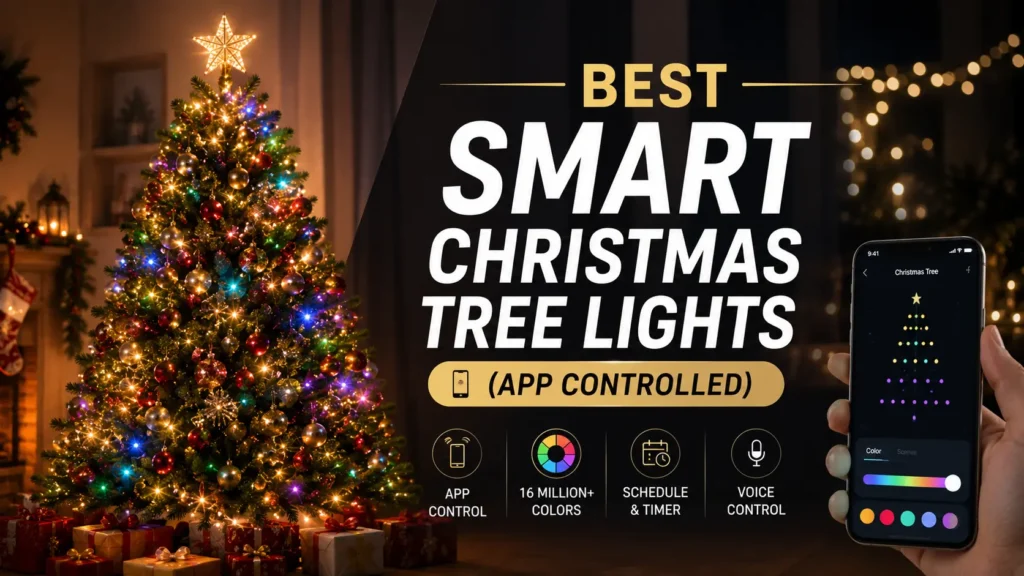
Holiday decorating has changed more in the last five years than it did in the previous fifty. The shift started with LED lights replacing incandescent bulbs, but what is happening now goes well beyond efficiency. Smart Christmas tree lights have turned a simple seasonal ritual into something genuinely interactive, and the people who have made the switch tend to wonder how they ever managed without them.
The appeal is straightforward. Instead of crawling behind the tree every night to flip a power strip, you pull out your phone and tap a button. Instead of committing to one light color for the entire season, you change the mood for a dinner party, a kids’ movie night, or Christmas morning with a swipe. Instead of forgetting to turn the tree off before bed, a schedule does it for you automatically.
App controlled Christmas lights are not a gimmick. They are a genuinely useful upgrade that makes the holiday experience more flexible, more personalized, and in many cases more visually impressive than anything traditional lights can achieve. Whether you are setting up a new tree or rethinking a setup you have used for years, this guide covers everything you need to know about smart Christmas tree lighting and how to choose the right option for your home.
For tree options that pair beautifully with smart lighting setups, christmastree.deals is a good starting point while you plan your full holiday setup.
What Are Smart Christmas Tree Lights
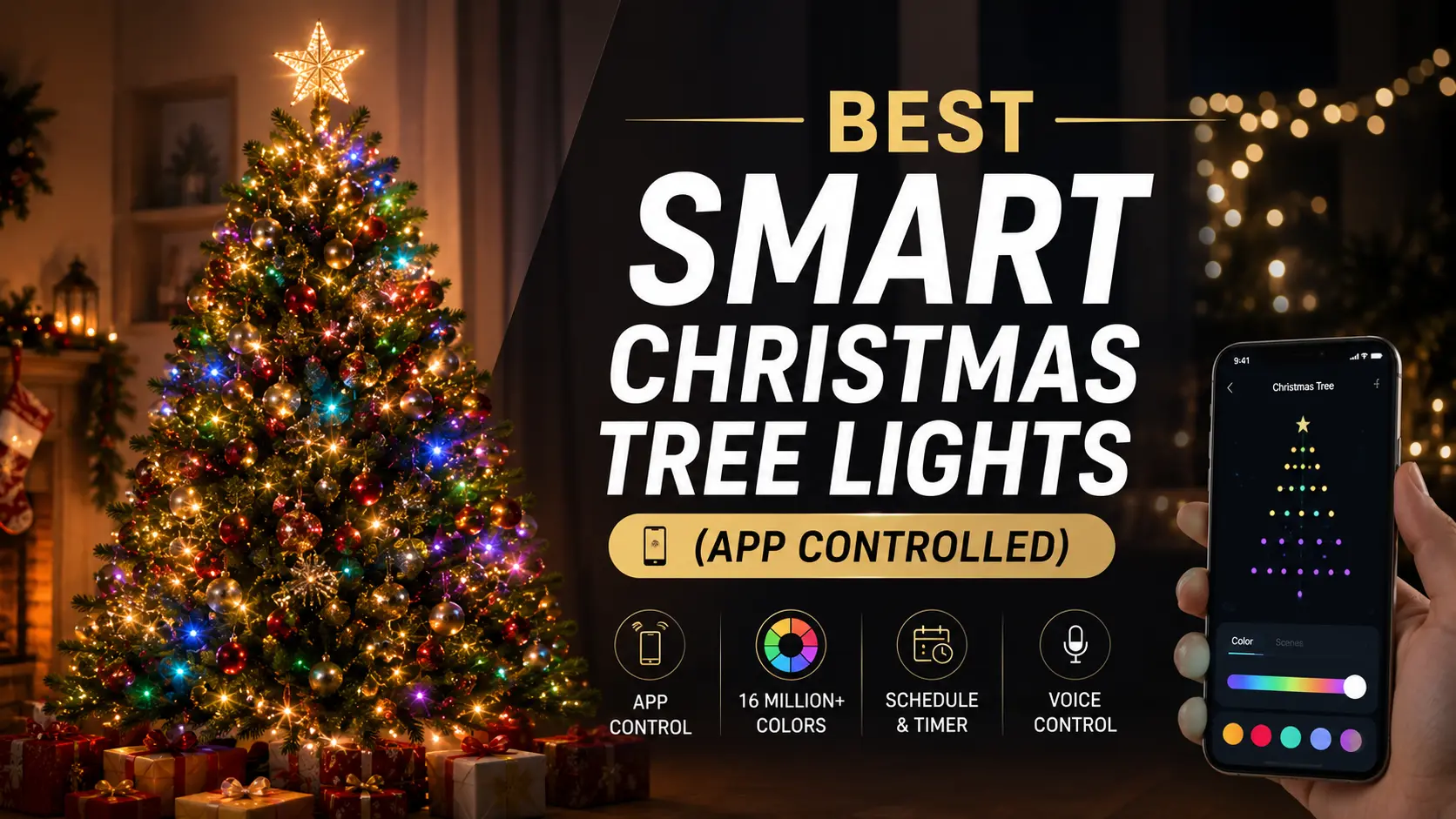
Smart Christmas lights are string lights equipped with wireless connectivity that allows them to be controlled through a smartphone app, a voice assistant, or a smart home system rather than a physical switch or remote.
The connectivity comes in a few forms. WiFi-enabled lights connect directly to your home network, which means they can be controlled from anywhere, including outside your home. You can turn the tree on before you arrive home from work, check that you turned it off after you left, or set a schedule that runs automatically without any input once configured.
Bluetooth-controlled lights connect directly to your phone without needing your home network. This limits range to roughly the same room or a short distance, but it also means setup is simpler and the lights work reliably without needing to troubleshoot router settings or connectivity issues.
Many smart Christmas lights now offer both options, connecting via Bluetooth for quick local control and WiFi for full remote access. The better options on the market also integrate with Amazon Alexa, Google Home, and Apple HomeKit, which allows voice control and inclusion in broader smart home automations. You can say “turn off the Christmas tree” on your way upstairs and the lights respond without any manual interaction at all.
At their core, smart holiday lights are still string lights. They wrap around your tree the same way traditional lights do. The difference is entirely in how you interact with them and what they can do.
Benefits of Smart Christmas Tree Lights
Understanding why people are making the switch requires looking at what smart lights actually enable in daily use, not just in theory.
App Control Convenience
The most immediate benefit is eliminating the physical switch entirely. Every interaction happens through an app that typically takes a few seconds to open and a single tap to act. You can control brightness, color, effects, and power state without getting up from the couch or locating a remote. For anyone who has ever gone to bed and then spent ten minutes debating whether to get up and turn the tree off, this alone justifies the upgrade.
Good apps also save your preferred settings so you do not have to reconfigure anything each time. Your go-to warm white setting for weekday evenings and your full-color Saturday night effect are both one tap away.
Custom Color Themes
RGB smart lights offer a color palette that covers virtually the entire visible spectrum. This means you can match your tree lighting to your room’s existing color scheme, shift from a traditional warm white for the early weeks of December to richer, more festive colors closer to Christmas, or run themed lighting for specific events. A green-and-red scheme for Christmas Eve. A cool white glow for a winter-themed dinner. A slow color cycle for a relaxed evening at home.
This flexibility is particularly useful if your decorating style evolves across the season or if you decorate for multiple holidays and want to reuse the same lights with different color setups.
Music Synchronization
Many smart Christmas light apps include a music sync feature that uses your phone’s microphone to detect sound and translate beats and rhythms into light effects. The lights pulse, shift color, and change brightness in response to whatever is playing. For holiday parties this is a genuinely impressive effect that requires no setup beyond enabling the mode in the app.
The quality of sync varies between brands. Some respond to general sound levels while others analyze frequency ranges to create more nuanced light responses. If this feature matters to you, it is worth checking user reviews specifically about sync performance rather than relying on manufacturer claims.
Timers and Automation
Scheduling is one of the most quietly useful features smart lights offer. You set a time for the tree to turn on and off, and then you largely stop thinking about it. Most apps allow multiple schedules for different days of the week, so you can have the tree on earlier during weekends when people are home and later on weeknights.
More advanced integrations allow the lights to respond to other triggers, like turning on automatically when you arrive home or switching off when you set a good-night routine in your smart home system.
Energy Efficiency
Smart lights are almost always LED-based, which makes them significantly more energy efficient than incandescent alternatives. The added benefit of scheduling means the lights are only on when you actually want them on, eliminating the phantom hours of a tree glowing in an empty room because someone forgot to switch it off.
Smart Home Integration
For homes already built around a smart home ecosystem, adding app controlled Christmas lights to that system extends the existing setup naturally. You can include the Christmas tree in room scenes, link it to routines, and control it through the same interface you use for your thermostat, lights, and security system. Alexa, Google Assistant, and Siri all support most major smart light brands, and the setup process is generally straightforward if you are already familiar with those platforms.
Best Smart Christmas Tree Lights Features to Look For
Not all smart Christmas lights are built equally, and the feature differences between entry-level and higher-quality options are significant enough to affect your daily experience.
Brightness control is a baseline requirement. Look for lights that offer a full dimming range rather than just a few preset levels. True dimming gives you the flexibility to create different moods without changing colors, which is particularly useful for transitioning from an energetic evening setting to a quieter late-night glow.
RGB color changing opens up the customization that makes smart lights genuinely different from traditional options. Look for lights with individual addressable LEDs if possible, as these allow segment-by-segment color changes and animations rather than the entire string shifting to one color at once. The visual difference is substantial.
Warm white and cool white modes matter if you want to use the lights in a traditional capacity some of the time. Pure RGB lights often struggle to produce a convincing warm white because the combination of red, green, and blue does not perfectly replicate the amber quality of a dedicated warm white LED. RGBW lights add a dedicated white LED to the mix, which solves this problem. If you want the flexibility to go fully white without the slightly artificial look of RGB-blended white, look for RGBW rather than RGB.
Preset animations save time and often produce effects that would take a long time to program manually. Flowing gradients, sparkling effects, breathing pulses, and color cycles are typically included in most smart light apps. The quality and variety of presets varies significantly between brands.
Scheduling should be included in any smart light you consider. This is standard across most reputable options but worth confirming before purchasing.
Outdoor compatibility matters if you plan to use the same lights for exterior decorating as well as your tree. Check the IP rating. IP44 provides splash resistance suitable for sheltered outdoor use. IP65 or higher handles direct rain and is more appropriate for fully exposed outdoor installations.
Mobile app usability is easy to overlook because it is hard to evaluate before purchase, but it is one of the biggest differentiators between smart light brands. A light strip with excellent hardware and a poorly designed app is genuinely frustrating to use. Check recent app reviews on the App Store or Google Play, specifically looking at comments about connectivity reliability, interface intuitiveness, and how well the app performs after updates.
Which Trees Work Best with Smart Lights
Smart lighting works with virtually any tree, but some setups benefit more than others.
Pre-Lit Smart-Compatible Trees
Some modern pre-lit trees come with smart lighting already integrated, which removes the wrapping process entirely and guarantees that the lights are perfectly distributed from the start. These trees often include dedicated apps or connect directly to existing smart home platforms. If you are shopping for a new tree and smart lighting is a priority, this is the most seamless approach available. Browse the full range of pre-lit Christmas trees to see current options with various lighting configurations.
For decorating ideas that work well with pre-lit setups specifically, this collection of stunning decoration ideas for pre-lit Christmas trees covers approaches for different styles and color palettes.
Flocked Trees
A flocked tree with smart RGB lighting is a genuinely striking combination. The white or off-white coating of a flocked tree acts as a natural diffuser, softening and spreading light in a way that a green tree does not. This makes color effects more visible and more even across the tree. Cool white smart lights on a flocked tree create a winter wonderland effect. Shifting to slow-cycling blues and silvers takes that further into something that feels genuinely theatrical. Browse flocked Christmas tree options if you want a tree that maximizes the visual impact of smart lighting.
For more specific guidance on lighting and decorating flocked trees, the guide on the best lights and decor ideas for a flocked Christmas tree covers this combination in useful detail.
Large Trees Requiring Layered Smart Lighting
Trees over seven feet typically need more than one string of smart lights to achieve even, full coverage. The key with layered smart lighting is buying multiple strings from the same brand and app ecosystem so they can be controlled together as a single unit. Mixing brands across a large tree creates a management headache and often means different sections of the tree behave differently.
If you are working with a large statement tree, the ultimate guide to pre-lit Christmas trees includes detailed guidance on light density and layering approaches that apply to smart lighting setups as well as traditional options.
Slim or Minimalist Trees
A narrow or pencil tree benefits from smart lighting because the tight branch structure means fewer lights can still create a strong effect if used well. Cool white or warm white modes with a subtle breathing or sparkling animation suit the clean geometry of slim trees without overwhelming them. These setups tend to favor restraint over color complexity.
Smart Lights vs Traditional Christmas Lights
Making the switch involves real trade-offs, and it is worth being clear-eyed about both sides before committing.
Convenience: Smart lights win this comparison without much debate. Once set up, smart lights require almost no ongoing manual interaction. Traditional lights require a physical switch or at minimum bending down to a power strip every time you want to turn the tree on or off.
Cost: Traditional lights are significantly less expensive upfront. A good quality string of smart Christmas lights costs more than a basic LED string. If you are equipping a large tree with multiple strings, that cost difference adds up. Smart lights do offset some of this through energy efficiency and longer lifespan, but the upfront investment is real.
Setup difficulty: Traditional lights are easier to set up initially because there are no apps to download, no networks to join, and no configurations to save. Smart lights require an initial setup process that, depending on the brand and your existing home network, can take anywhere from five minutes to a frustrating half hour. After that initial setup, smart lights are easier to operate day-to-day.
Long-term usability: Smart lights generally offer better longevity through LED technology, and the ability to update app features over time means the functionality can improve after purchase. Traditional lights are static in what they offer, though they are also simpler and less dependent on manufacturer app support continuing indefinitely.
For a broader comparison of LED and incandescent technology that applies to both smart and traditional options, the breakdown of LED vs incandescent Christmas lights covers the technical and practical differences in detail.
Warm White vs RGB Smart Lighting
Many people considering smart lights for the first time assume they want RGB, the full-color option. After using them for a season, preferences often become more nuanced.
RGB smart lights are genuinely impressive when you want color. They are ideal for parties, for households with children who enjoy changing colors interactively, for gaming or themed setups, and for anyone who enjoys the visual drama of dynamic lighting. The ability to shift a room’s entire feeling with a few taps is a real and enjoyable capability.
Warm white mode, by contrast, creates the kind of cozy, traditional Christmas atmosphere that most people associate with the holiday at its most comfortable. For evening gatherings, for quiet family time, and for the general background warmth that makes a decorated room feel like Christmas rather than like a light show, warm white is usually the better setting.
The practical answer for most households is that having both options available is the actual benefit of smart lights. You use warm white most of the time and switch to color effects when the occasion calls for it. Choosing between a dedicated warm white setup and an RGB setup is, to some extent, a false choice. Smart lights let you have both.
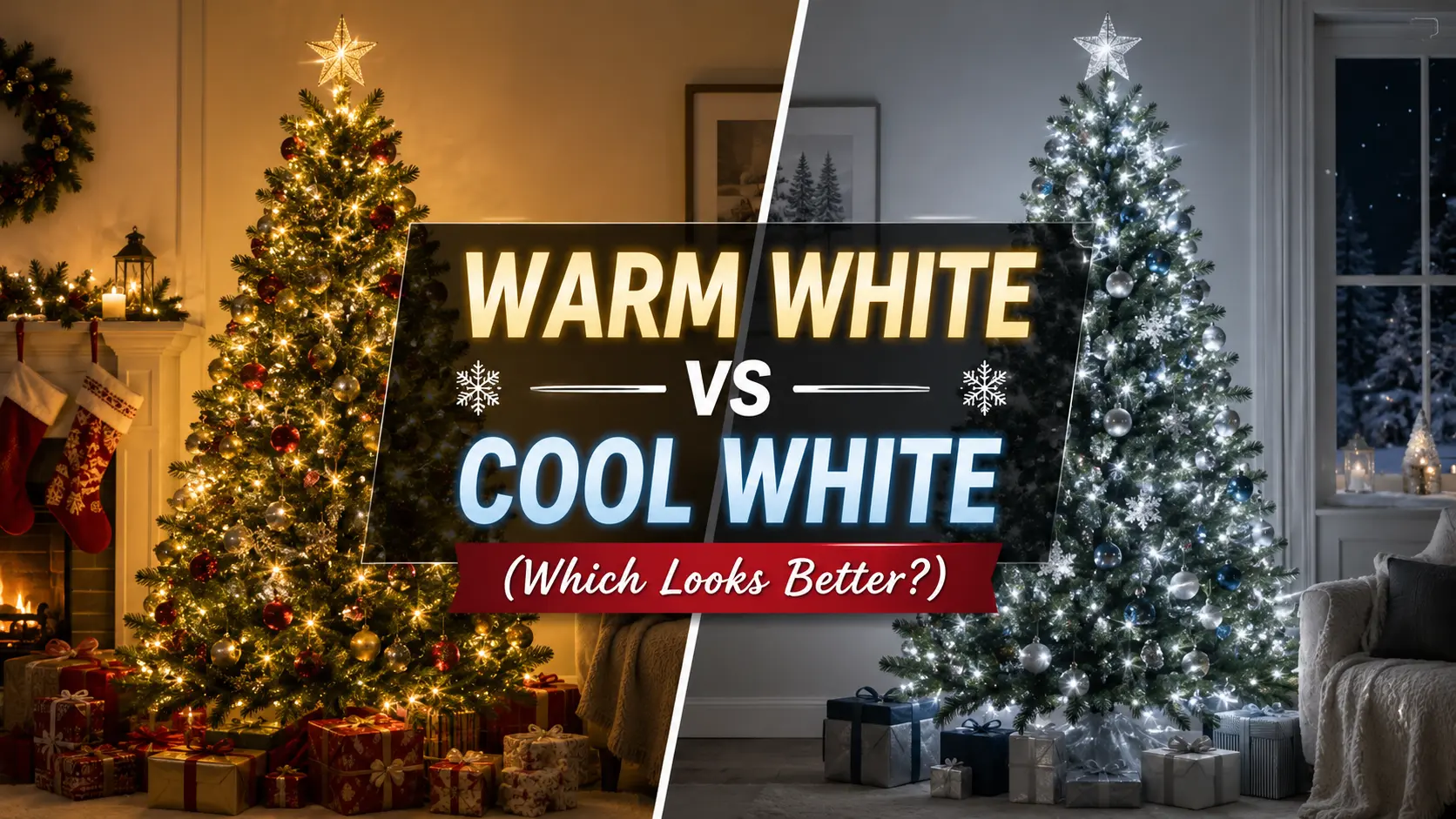
For a detailed comparison of warm and cool white lighting and which suits different decor styles, the guide on warm white vs cool white lights covers that distinction thoroughly.
How Many Smart Lights Do You Need?
The quantity guidance for smart lights follows the same general principles as traditional Christmas lights, with a few additional considerations specific to smart setups.
For a 4-foot tree, 100 to 150 smart lights provide good coverage. A 6-foot tree typically needs 300 to 400 lights for a full, layered look. A 7 to 8-foot tree requires 500 or more. Trees 9 feet and above generally need 700 or more lights distributed across multiple strings.
Smart lights specifically benefit from slightly higher density than you might initially plan for. The color effects and animations look more impressive when the light is dense enough to blend smoothly rather than creating visible gaps between effect transitions. A sparse setup with smart lights can look underwhelming compared to the manufacturer’s promotional images, which are almost always shot with very dense light coverage.
Spacing matters more with smart lights than with traditional options. When lights are individually addressable, gaps in the distribution become more noticeable because adjacent lights may be displaying different colors or animation states. Work lights from the inner branches outward and check coverage from multiple angles before finalizing the wrap.
For precise guidance based on your specific tree height and desired density level, the full breakdown of how many lights you need for a Christmas tree provides specific numbers and practical coverage tips.
Best Decor Styles for Smart Christmas Lights
The right smart light setup depends heavily on the overall decorating style you are going for. Here is how smart lighting maps to the most common approaches.
Modern Minimalist Trees
A minimalist tree benefits from smart lighting that stays clean and controlled. Warm white or cool white mode with a very subtle sparkling or breathing animation suits the restraint of minimalist decor without adding visual noise. The ability to dial brightness precisely is particularly useful here because minimalist setups tend to look best at moderate rather than maximum brightness.
Luxury Trees
For a high-end, luxury tree, smart lighting provides the kind of versatility that makes a statement setup genuinely flexible. Rich warm white for formal occasions. Slow-cycling golds and ambers for an elevated Christmas Eve atmosphere. The ability to match lighting precisely to the room’s mood at a given moment is a genuine luxury in itself. RGBW lights are the stronger choice here over standard RGB because the warm white mode is more refined.
Scandinavian Decor
Scandinavian Christmas styling works beautifully with cool white smart lights set to a calm, steady glow or a very slow, subtle animation. The clean aesthetic of Scandinavian decor does not benefit from dramatic color effects, but the scheduling and dimming control of smart lights fits perfectly with the intentional, uncluttered approach of this style.
Family-Friendly Colorful Setups
This is where smart lights genuinely shine. Households with children get tremendous mileage from RGB smart lights because color changing is interactive and exciting for kids in a way that traditional lights simply are not. Letting children choose the color setting for the evening, running a countdown-to-Christmas color scheme, or cycling through colors during a holiday movie makes the tree an active part of the holiday rather than a static backdrop.
Gaming or RGB-Themed Holiday Setups
For households where a gaming setup or RGB aesthetic is already present, smart Christmas lights extend that visual language naturally into holiday decorating. Syncing the tree lighting with the color scheme of a gaming room, running matching effects across multiple light sources simultaneously, or using music sync during gaming sessions with holiday playlists creates a cohesive RGB-forward setup that is genuinely fun for the people who enjoy that aesthetic.
Common Smart Christmas Light Mistakes
Even good hardware produces disappointing results when set up or used incorrectly. These are the mistakes worth avoiding.
Placing the tree too far from your WiFi router. Smart lights that connect via WiFi depend on signal strength. A tree in a far corner of the house, behind walls, or near other interference sources can produce unreliable connectivity. If this is a concern in your space, a WiFi extender or mesh network node near the tree location resolves it cleanly. Alternatively, Bluetooth-only lights avoid this issue entirely at the cost of remote access.
Overcomplicated color setups that look busy rather than beautiful. The ability to run multiple colors simultaneously is impressive but requires restraint. A tree running twelve colors at once in a fast animation looks chaotic rather than festive. Start simple, add complexity only where it genuinely improves the look, and default to cleaner settings for everyday use.
Running too many effects simultaneously. Most smart light apps allow you to layer effects, which is a feature that is easy to overuse. A single well-chosen effect almost always looks better than multiple effects competing for attention on the same tree. Pick one and commit to it.
Ignoring brightness balance across the tree. Smart lights allow precise brightness control, but if you are layering multiple strings on a large tree, check that all strings are set to the same brightness level. A mismatch between strings creates obvious bright and dim sections that undermine the overall effect.
Not updating the app before setting up. Smart light apps are frequently updated, and older versions sometimes have connectivity or compatibility issues that newer versions resolve. Updating the app before your first setup session avoids troubleshooting problems that have already been fixed.
Are Smart Christmas Lights Worth It?
The honest answer depends on who is asking.
For tech enthusiasts and smart home users, the answer is almost certainly yes. If you already use smart bulbs, a smart thermostat, or voice assistants at home, smart Christmas lights slot into that ecosystem without friction and add a genuinely enjoyable layer of seasonal customization.
For families with children, the color-changing and interactive features make smart lights a seasonal hit. The scheduling also reduces the daily management burden, which matters during the already busy holiday season.
For people who prioritize convenience above everything else, smart lights are worth it for the scheduling alone. Never worrying about whether the tree is on or off when you leave the house is a genuinely appealing benefit.
For traditional decorators who are happy with a single warm white setting, the value proposition is less clear. You can achieve the same look with a high-quality LED string light on a smart plug for significantly less money. The additional features of app controlled Christmas lights only add value if you will actually use them.
For long-term holiday decorating, smart lights make financial sense over time. The LED technology that underpins them lasts far longer than incandescent alternatives, and the functionality improves through app updates rather than requiring hardware replacement.
Frequently Asked Questions
Do smart Christmas lights work without WiFi?
Many smart lights include a Bluetooth mode that works independently of your home WiFi network. This allows local control through the app within range of your phone. Some lights can also be set to run a saved schedule or preset without any active phone connection once configured. Fully remote control, however, requires WiFi connectivity.
Can I use smart Christmas lights outdoors?
Yes, but check the IP rating before purchasing. IP44 is suitable for sheltered outdoor areas. IP65 or higher handles direct exposure to rain and is appropriate for trees, bushes, or exterior structures in fully outdoor environments. Not all smart lights are weather rated for outdoor use, so confirming the rating before installation is important.
Do smart Christmas lights work with Alexa and Google Home?
Most major smart Christmas light brands support both Amazon Alexa and Google Home integration. Apple HomeKit support is less universal but available in a growing number of options. Always confirm compatibility with your specific ecosystem before purchasing if voice control is a priority.
How long do smart Christmas lights last?
Smart Christmas lights use LED technology, which typically offers a rated lifespan of 25,000 to 50,000 hours. At typical seasonal use rates of a few hours per day, a quality set of smart lights should last many years before the LEDs begin to degrade. The limiting factor is more often the app support from the manufacturer than the hardware itself.
Can I sync multiple strings of smart lights together?
Yes, and this is one of the most important capabilities for larger trees. Most smart light apps allow you to group multiple strings and control them simultaneously as a single unit. The key is buying multiple strings from the same brand and app platform to ensure full compatibility.
Are smart Christmas lights difficult to set up?
Initial setup requires downloading an app, connecting the lights to your home WiFi, and running through the in-app configuration process. For most people this takes 10 to 20 minutes. Subsequent seasons simply require plugging the lights in and possibly reconnecting them to the app if network credentials have changed.
Can children use smart Christmas light apps?
Yes, and most children adapt quickly to the color and effect controls. Many households find that giving children some control over the tree lighting becomes a fun part of the holiday experience. Most apps are straightforward enough that older children can navigate them independently.
Conclusion
Smart Christmas tree lights represent a real and practical upgrade to holiday decorating, not just a technological novelty. The scheduling alone justifies the switch for many households. The color flexibility, app control, and smart home integration add layers of convenience and creativity that traditional lights simply cannot match.
The trade-offs are real. Smart lights cost more upfront and require an initial setup investment of time and patience. For households that want a simple, traditional warm white glow and nothing more, a quality LED string on a smart plug delivers most of the convenience benefit at a lower cost.
For everyone else, and that covers most modern households with some interest in customization, convenience, or smart home functionality, app controlled Christmas lights are worth the investment. They make the daily ritual of holiday lighting simpler, the visual result more flexible, and the overall experience more enjoyable across the full season.
Choose a setup that matches your tree size, your decor style, and the app ecosystem you are already using. Start with a single string to test the setup before committing to a full multi-string arrangement. And once you have a schedule running and a preferred setting saved, you will likely find that smart lights become one of those upgrades you genuinely cannot imagine going back from.