
Walk into any room with a well-lit Christmas tree and you feel it immediately. There is a warmth, a depth, a particular quality of light that seems to make the whole space feel different. That effect is not accidental. It is the result of thoughtful decisions about light type, color temperature, quantity, placement, and layering. And yet most people spend more time choosing ornaments than they do thinking about lighting, even though lighting is the single element that determines whether every other decorating decision looks good or gets lost in a dim, flat display.
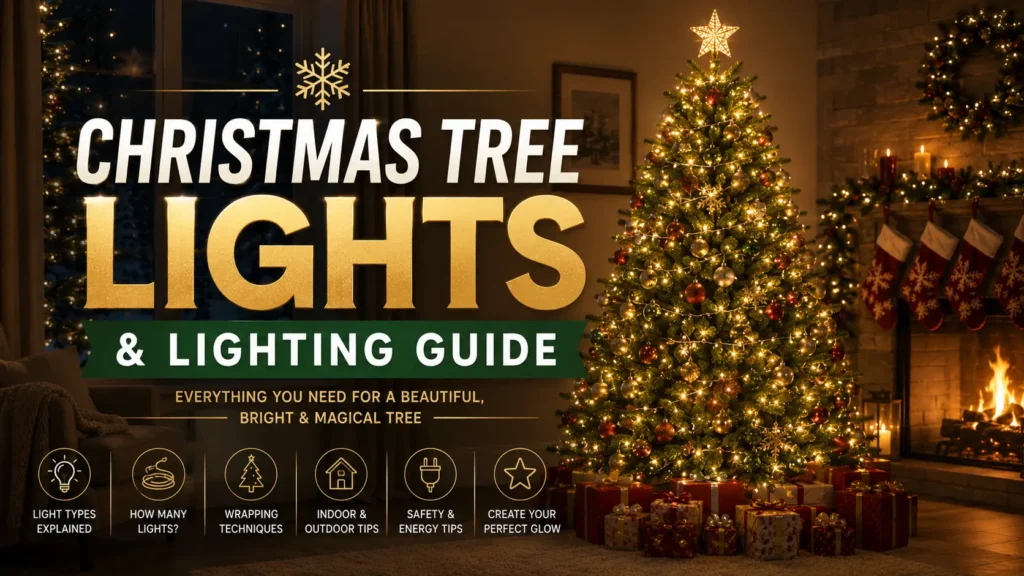
The lights on your tree are not just decoration. They are the foundation that everything else sits on. Get the lighting right and even simple, inexpensive ornaments look beautiful. Get it wrong and even a tree full of stunning decorations will fall flat. This guide covers the full picture of Christmas tree lighting, from understanding the different types of lights available to choosing the right color temperature, calculating how many lights you actually need, installing them like a professional, and avoiding the mistakes that keep most trees from reaching their potential.
Whether you are setting up your first tree or have been decorating for decades and want to elevate your results, the information at christmastree.deals and throughout this guide will help you make decisions with confidence.
Types of Christmas Tree Lights
The lighting market has expanded considerably in recent years. What used to be a simple choice between colored and white bulbs is now a nuanced decision across multiple categories, each with distinct characteristics, trade-offs, and ideal use cases.
LED Lights
LED Christmas tree lights are now the dominant category for good reason. They consume roughly 70 to 80 percent less electricity than comparable incandescent strings, generate very little heat, and have a rated lifespan measured in tens of thousands of hours rather than the hundreds you get from incandescent bulbs. In practical terms, a quality set of LED lights that you use for a few hundred hours each holiday season can last 20 years or more.
LED lights also maintain consistent brightness across the entire string. Unlike incandescent lights, where one failing bulb can dim or kill the whole section, most modern LED strings are wired to keep functioning even when an individual bulb burns out.
The one criticism that used to follow LED lights was that their light quality felt harsh or clinical compared to the soft warmth of incandescent bulbs. That criticism was fair a decade ago. Today, high-quality warm white LEDs are virtually indistinguishable from incandescent in side-by-side comparisons, and they have become the default recommendation for almost every tree type and decorating style.
For a comprehensive comparison of how LEDs and incandescent lights perform across different categories including brightness, color quality, and long-term cost, this LED vs incandescent Christmas lights guide covers everything in detail.
Incandescent Lights
Incandescent Christmas lights have a softness and organic quality to their glow that some people genuinely prefer. The light they produce is slightly warmer and more diffused than most LEDs, and they have a nostalgic quality that fits certain decorating styles well.
The trade-offs are significant, however. They use far more electricity, run noticeably hotter (which matters particularly for flocked trees and artificial trees with materials that can be affected by sustained heat), and their individual bulbs fail relatively quickly. They are also becoming harder to find in retail stores as LED production has scaled and prices have dropped.
Incandescent lights still make sense for people who prioritize that particular quality of glow and are comfortable with the higher operating cost. For most other situations, LED is the practical and increasingly the aesthetic choice as well.
Smart Christmas Tree Lights
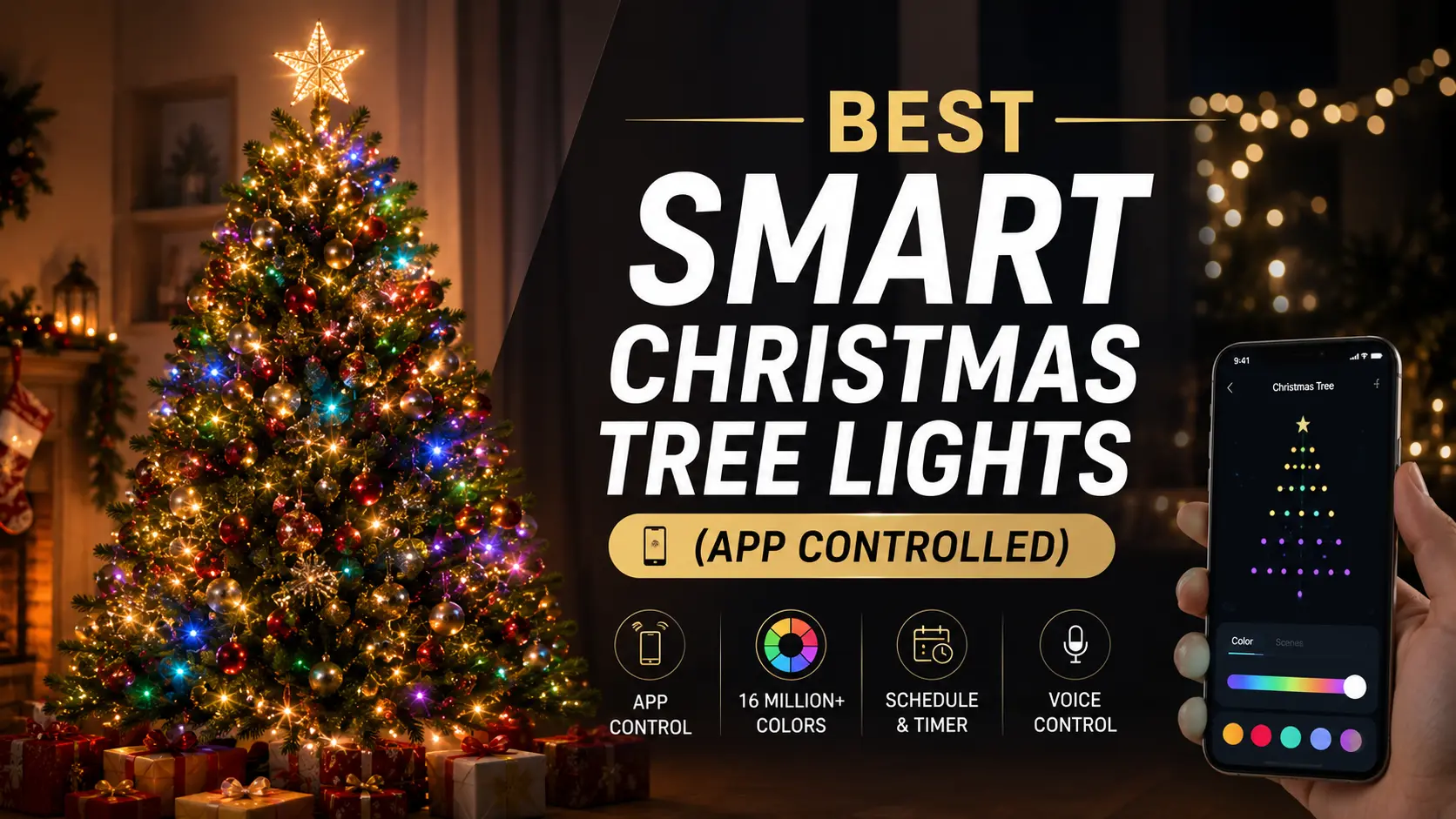
App-controlled smart lights represent the most significant functional advancement in Christmas tree lighting in years. These strings connect to your home Wi-Fi and are controlled through a companion smartphone app, allowing you to change colors, adjust brightness, set schedules, create dynamic lighting scenes, and in many cases sync the lights to music.
For households that want flexibility across different occasions or simply want the ability to shift from warm holiday lighting to colored displays without changing a single bulb, smart lights are a genuine upgrade. They work particularly well on larger trees where the ability to shift the overall mood of the room without touching the tree is a meaningful convenience.
This complete guide to the best smart Christmas tree lights covers the leading options, how to integrate them with voice assistants like Alexa and Google Home, and how to get the most out of the app control features.
Pre-Lit Trees
Pre-lit trees come with lights already installed at the factory, and in quality models the lights are woven through the interior and exterior branches in a way that individual installation rarely matches. The convenience is obvious. You assemble the tree and it is already lit.
The limitation is flexibility. You are locked into the light type and color temperature that came with the tree, and if sections of the factory lights fail in later years, replacement or supplementation becomes necessary. Many people add supplemental lighting to pre-lit trees to increase density or change the color character of the display.
Fairy Lights
Fairy lights are fine-gauge wire strings with very small, delicate bulbs. They produce a softer, more ambient glow than standard mini lights and are particularly effective when used as a secondary layer woven through ornaments and garland rather than as primary tree lighting. Their thin wire is easier to hide and their light scatters beautifully off reflective ornament surfaces.
Mini Lights
Mini lights are the standard workhorse of Christmas tree decorating. The small C3 and C6 bulb sizes are the most commonly used, providing a good balance of brightness and visual scale on the tree. They are available in virtually every color and temperature combination and remain the baseline choice for most home decorators.
Warm White vs Cool White Lights
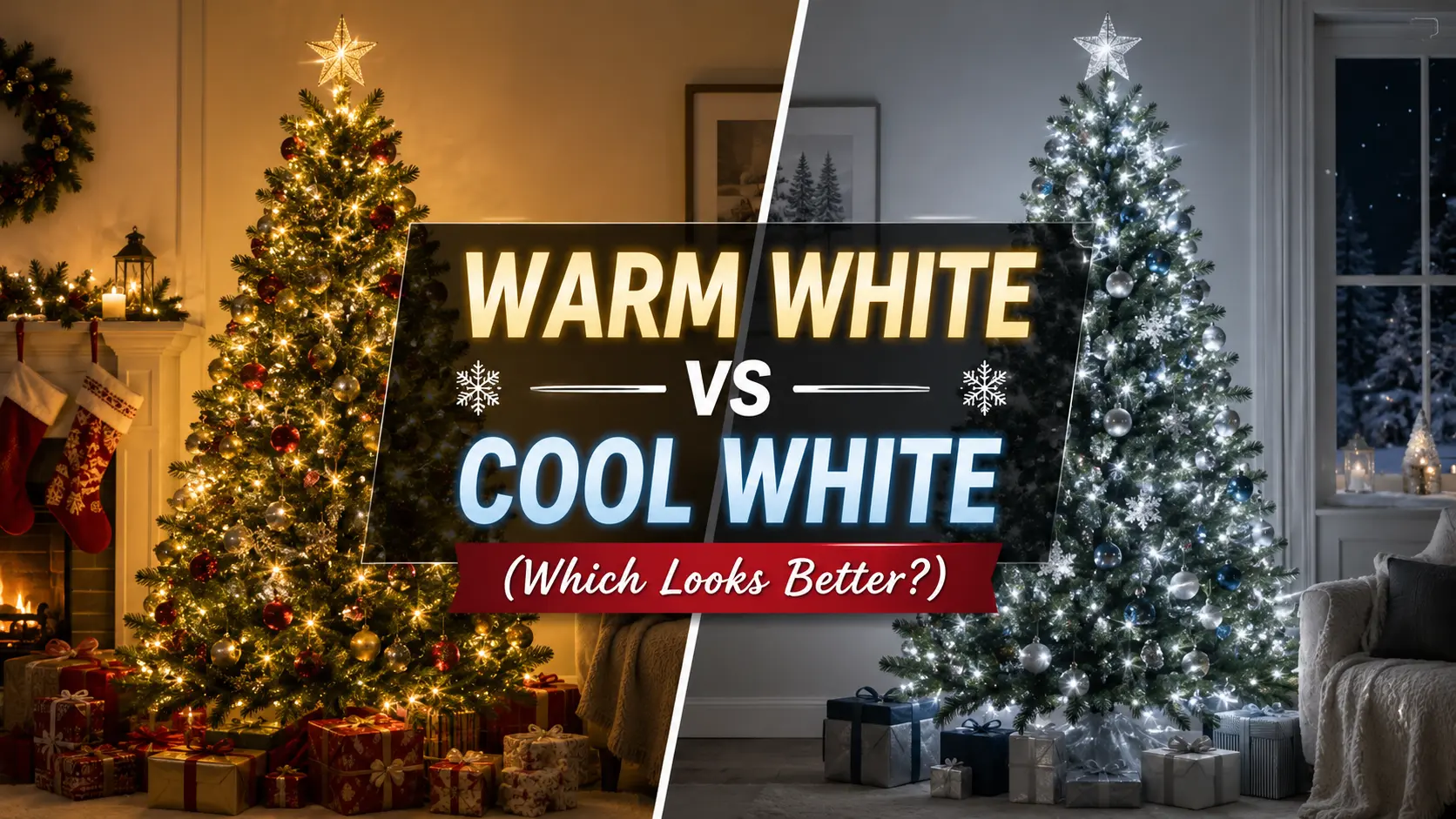
After deciding on the light type, color temperature is the most important aesthetic decision you will make. The difference between warm white and cool white lighting is significant enough to completely change the character of the same tree.
Understanding Color Temperature
Color temperature is measured in Kelvin (K). Lower numbers produce warmer, more amber-toned light. Higher numbers produce cooler, bluer light. For Christmas tree lighting:
- Warm white typically falls between 2700K and 3000K
- Neutral white sits around 3500K to 4000K
- Cool white is generally 5000K and above
The Warm White Look
Warm white lighting creates the cozy, amber-glow effect most people associate with traditional Christmas trees. It evokes firelight and candlelight, which is why it feels instinctively comfortable and festive. Warm white pairs naturally with gold, red, copper, bronze, and burgundy ornament palettes. It is the default choice for traditional, farmhouse, luxury, and rustic tree styles.
The Cool White Look
Cool white lighting creates a crisper, more contemporary feel. The blue-tinted brightness pairs exceptionally well with silver, white, blue, and icy color palettes. It is particularly striking on flocked trees, where the cool light plays off the white snow-like coating and creates something that genuinely resembles moonlight on fresh snow. Cool white also suits Scandinavian and modern minimalist decorating styles very well.
Comparison Table
| Feature | Warm White (2700K-3000K) | Cool White (5000K+) |
|---|---|---|
| Tone | Amber, golden | Blue-tinted, crisp |
| Mood | Cozy, traditional | Modern, clean |
| Best with | Gold, red, copper ornaments | Silver, white, blue ornaments |
| Tree types | Traditional, luxury, farmhouse | Flocked, Scandinavian, minimalist |
| Photography | Very flattering, natural tones | High contrast, striking |
| Mixing potential | Works as inner layer | Works as outer layer |
Can You Mix Warm and Cool White?
Yes, and when done intentionally the result can be one of the most visually impressive lighting approaches available. Place warm white lights deep in the interior branches of the tree and cool white lights on the outer branch tips. The transition from warm interior to cool exterior creates natural depth and dimension that single-temperature lighting cannot match.
Avoid mixing them randomly or sourcing them from incompatible brands without checking the actual color output side by side. Two different brands of “warm white” can look noticeably different from each other.
For a thorough breakdown of how each temperature performs across real decorating scenarios, this warm white vs cool white comparison guide is worth reading before purchasing.
How Many Lights You Need for a Christmas Tree
Lighting quantity is where most trees fall short before a single bulb is even placed. Underlit trees look flat and dim regardless of how carefully the lights are installed. The most common mistake people make is buying one or two strings of 100 lights and expecting them to cover a 6 or 7-foot tree adequately.
The Standard Recommendation
The widely cited baseline is 100 lights per vertical foot of tree height. That gives a 6-foot tree 600 lights as a starting point. However, this baseline assumes average branch density and a moderate lighting result. For the layered, dimensional look that professional decorators achieve, the real number is closer to 150 to 200 lights per foot.
Light Quantity by Tree Height
| Tree Height | Minimum Lights | For a Full Look | Professional Dense Lighting |
|---|---|---|---|
| 4 feet | 400 | 600 | 800 |
| 5 feet | 500 | 750 | 1000 |
| 6 feet | 600 | 900 | 1200 |
| 7 feet | 700 | 1050 | 1400 |
| 8 feet | 800 | 1200 | 1600 |
| 9 feet | 900 | 1350 | 1800 |
| 10 feet | 1000 | 1500 | 2000+ |
Adjusting for Tree Style
Slim and pencil trees need slightly fewer lights because the branch depth is reduced. A 6-foot pencil tree might look excellent with 700 to 800 lights that would be far too few for a full, wide 6-foot tree.
Wide or extra-full trees, particularly those in the 48-inch or larger diameter category, often need more than the professional column suggests near the base where branch span is greatest and coverage demands are highest.
Pre-lit trees already have a baseline number of lights installed. If you want to supplement them, focus additional strings on the areas between the factory strands rather than layering directly over the existing lights.
For detailed calculations based on specific tree shapes, styles, and desired outcomes, this guide on how many lights you need for a Christmas tree provides a complete breakdown with additional scenarios.
Best Trees for Different Lighting Styles
The type of tree you are working with genuinely influences how you should approach lighting. Some trees are built for certain techniques. Others require adjustments.
Pre-Lit Trees for Convenience and Consistency
A quality pre-lit Christmas tree offers factory-installed lighting that is often more evenly distributed than most people manage with manual installation. The lights are threaded through interior and exterior branches during manufacturing, which naturally creates some of the layered depth that takes skill to achieve manually.
The key to getting the most from a pre-lit tree is treating the factory lights as a foundation rather than the complete solution. Supplementing with additional strings in the areas where factory coverage is thinner, and potentially adding a fairy light layer woven through the outer ornament zone, takes a good pre-lit tree to an exceptional result. This ultimate guide to pre-lit Christmas trees covers buying, decorating, and maintaining pre-lit trees in full detail.
Slim and Pencil Trees for Minimalist Lighting
Slim and pencil Christmas trees have a narrower branch profile that changes how lighting should be distributed. Because there is less depth from trunk to branch tip, pushing lights deeply into a pencil tree is less effective. Instead, focus light placement on the outer two-thirds of the branches and use slightly brighter bulbs to compensate for the reduced interior glow potential.
Pencil trees suit minimalist lighting approaches very naturally. A single warm white string at moderate density looks intentional and elegant on a slim tree in a way that would look underlit on a full-width traditional tree.
Large Statement Trees for Layered Lighting
Trees above 8 feet require a genuinely layered approach. At this scale, single-string wrapping simply does not create enough visual impact across the full volume of the tree. Multiple strings at different depths, potentially with different temperature or brightness characteristics, are necessary to fill the space adequately. The investment in lights for a large tree is significant, but so is the impact when it is done well.
Flocked Trees for Soft Warm Glow Effects
Flocked trees are perhaps the most photogenic when properly lit. The white coating on the branches acts as a natural light diffuser, catching and scattering light in a way that green branches do not. This means you can achieve a beautiful result with slightly fewer lights than you might use on a comparable non-flocked tree.
Warm white lights create a beautiful golden-snow effect on flocked trees. Cool white lights create a more dramatic, wintry moonlit appearance. Both work. The choice depends on the overall color palette of your ornaments and room. For detailed lighting and decorating ideas specific to flocked trees, this flocked Christmas tree lighting and decor guide covers the topic thoroughly.
How to Wrap Christmas Tree Lights Like a Professional
Technique matters as much as quantity when it comes to Christmas tree lighting. The way you place lights on the tree is what determines whether you get a flat, surface-level glow or the layered dimensional effect that makes a professionally decorated tree so striking.
Horizontal vs Vertical Wrapping
Most people wrap lights horizontally, circling the tree in a downward spiral. This method is intuitive and works reasonably well but tends to keep lights on the outer surface of the branches, producing limited depth.
Professional decorators typically work in vertical sections, dividing the tree into panels and lighting each one by moving the string in and out through the branch depth as they work downward. This places lights naturally at multiple depths, creating the interior glow that horizontal wrapping misses entirely.
The Core Technique: Interior First
The single most impactful change most people can make to their tree lighting is to place lights deep inside the branches before addressing the outer sections. Push strings toward the trunk, wrapping them around inner branches close to the center. This interior layer creates the warm glow-from-within effect that distinguishes professional results from average ones.
Once the interior layer is placed, bring lights outward through the mid-depth branches, and then finish with an outer pass along the branch tips. Three effective depths, three distinct layers of light, all working together to create a tree with genuine visual dimension.
Hiding Wires and Avoiding Dark Spots
Route all cords along the underside of branches toward the trunk. Use the natural fork points where branches meet the central pole to anchor cords rather than letting them drape across the visible face of the tree. Step back after each vertical section and look for dark areas before moving to the next section. It is dramatically easier to correct uneven lighting section by section than to try to fix the whole tree once it is covered in ornaments.
The full step-by-step professional wrapping process, including a detailed comparison of horizontal and vertical methods and how to achieve the layered technique on different tree types, is covered in this complete guide to wrapping Christmas tree lights like a professional.
Best Lighting Styles for Different Christmas Themes
The lights you choose and how you place them should reinforce the overall decorating theme of the tree. Lighting that does not match the theme creates visual tension that no amount of great ornaments can fully resolve.
Luxury Christmas Trees
Luxury trees are defined by richness and abundance. Use warm white LEDs at high density, 150 to 200 lights per foot minimum, and focus on achieving a deep, layered glow that makes the tree appear to be lit from within. Gold, champagne, and ivory ornaments reflect warm light beautifully, creating a shimmer that reinforces the upscale aesthetic. Avoid colored lights entirely on luxury-themed trees. The palette should feel refined rather than festive in the traditional sense.
Minimalist Trees
Minimalist tree lighting is about restraint and intention. A moderate number of warm white or cool white lights placed with deliberate spacing creates an airy quality that suits clean, simple decorating schemes. The goal is for the light to feel considered rather than abundant. Leave visible gaps between light positions rather than filling every space. The tree should breathe.
Scandinavian Decor
Scandinavian Christmas trees lean into natural materials, simple silhouettes, and clean light. Cool white or neutral white lights at even, moderate spacing work best here. The light should feel crisp and airy, evocative of winter daylight rather than the warm amber of a fireplace. Pair with simple wooden ornaments, natural textures, and minimal decoration for the most authentic result.
Farmhouse Trees
Farmhouse style embraces warmth, texture, and a relaxed imperfection that feels lived-in and genuine. Warm white lights, particularly those with a slightly more diffused or Edison-style character, suit this aesthetic perfectly. Placement can be slightly less precise than other styles. Relaxed, slightly uneven spacing actually reinforces the farmhouse aesthetic rather than detracting from it. Pair with burlap ribbons, wooden slices, cotton bolls, and vintage-style ornaments.
Rustic Trees
Rustic lighting takes the farmhouse approach further toward naturalistic, earthy warmth. Deep amber warm white lights, potentially mixed with a small number of amber or amber-tinted bulbs, create a campfire-like glow that suits trees decorated with pinecones, twine, raw wood, and natural greenery. Keep wattage moderate and avoid anything that looks too bright or modern.
Modern RGB Trees
RGB smart light setups allow the tree to shift between color profiles for different occasions. A base layer of warm white LEDs in the interior branches provides a consistent, attractive foundation, while outer-layer RGB strings handle the dynamic color changes via app control. This approach gives you a tree that looks beautiful as a traditional warm white display most of the time and can transform completely for special evenings or parties.
Smart Christmas Tree Lighting Trends for 2026
The smart home lighting category has matured significantly, and Christmas tree lights have followed that trajectory. The options available in 2026 represent a meaningful upgrade over what was available even two or three years ago.
App-Controlled Lighting
Current-generation smart Christmas lights offer app control that goes well beyond simple on-off scheduling. High-quality app platforms allow you to create and save custom color scenes, set specific brightness curves across the day, and switch between complete lighting profiles with a single tap. The ability to save a “classic warm white” profile and a “full color party” profile and switch between them instantly is genuinely useful.
Music Syncing
Several leading smart light systems now offer real-time music synchronization through the companion app microphone or direct Bluetooth audio input. The lights respond dynamically to the tempo, rhythm, and intensity of music playing in the room. This feature is more impressive in practice than it sounds in description, particularly at gatherings where the tree becomes an active visual element rather than a static backdrop.
Voice Assistant Integration
Full integration with Amazon Alexa, Google Home, and Apple HomeKit means voice control for Christmas tree lighting is now genuinely reliable rather than a novelty. Being able to say “turn the tree to warm white” or “set the tree to 60 percent brightness” and have it respond correctly is a meaningful quality-of-life improvement during the holiday season.
Dynamic Lighting Scenes
Pre-built dynamic scenes, including slow color transitions, twinkling effects, and animated patterns, are increasingly sophisticated. The best implementations create effects that look genuinely beautiful rather than gimmicky, particularly the slow fade sequences that cycle through warm amber tones or create the effect of light moving gently through the branches.
RGB Customization
Full RGB customization at the individual bulb level, available on premium smart light systems, allows for effects that were previously only achievable with professional commercial lighting setups. Gradient effects where the tree transitions from one color at the base to another at the top, for example, are achievable with the right system and some time in the app.
Common Christmas Tree Lighting Mistakes
Understanding what not to do is often as valuable as knowing the correct technique. These are the errors that consistently separate good results from great ones.
Using too few lights. The most common mistake by a significant margin. A tree that is underpowered with lights will always look flat and dim regardless of how carefully they are placed or how beautiful the ornaments are. When in doubt, add another string.
Keeping lights only on the surface. Wrapping lights exclusively along the outer branch tips creates a flat, two-dimensional result that lacks the depth and warmth of properly layered lighting. Always include an interior branch layer.
Mixing incompatible color temperatures. Combining warm white from one manufacturer with warm white from another without checking actual output side by side frequently produces a jarring, inconsistent result. Two brands of “warm white” can differ by several hundred Kelvin in practice.
Ignoring dark spots until it is too late. Dark areas that are not corrected before ornaments go on are extremely difficult to fix afterward. Check for coverage gaps after each vertical section during installation.
Overlighting specific sections. Clustering too many lights in one area while other sections remain sparse creates a patchy look. Even distribution matters as much as total quantity.
Not testing lights before installation. Discovering a faulty string after the tree is fully decorated and loaded with ornaments is one of the most frustrating decorating experiences possible. Test every string before installation.
Daisy-chaining too many strings through one outlet. This is both an aesthetic problem (uneven brightness at the end of long chains) and a genuine fire safety concern. Stay within the manufacturer’s recommended connection limits.
Christmas Tree Lighting Safety Tips
Lighting safety is not an area where cutting corners makes sense. The combination of electricity, heat, and flammable materials that characterizes Christmas tree decorating creates specific risks that are entirely avoidable with a few straightforward practices.
Fire Safety Basics
Always purchase lights that carry a recognized safety certification such as UL, ETL, or CE. These certifications indicate that the product has been tested to basic electrical safety standards. Buy from reputable retailers and avoid very cheap, uncertified lights from unknown sources, which are a documented fire risk.
Turn lights off when leaving the house or going to sleep. LED lights run cool enough that this is less of an active heat risk than incandescent lights, but any electrical connection left unattended represents a potential hazard. Using a timer outlet resolves this without requiring any daily action.
Keep natural trees well-watered. A dry natural tree is highly flammable. A well-watered tree is far more resistant to ignition from any heat source including warm lights.
Electrical Load Management
Every light string has a maximum number of end-to-end connections specified by the manufacturer. Exceeding this limit causes the wiring to carry more current than it is rated for, which generates heat and represents a fire risk. Check the manufacturer’s guidelines and stay within them.
Use properly rated extension cords. A cord rated for 5 amps will overheat if it is carrying the load of 15 amps worth of lights. Match the amperage rating of the extension cord to the actual load you are placing on it. Power strips with built-in surge protection add an additional layer of safety.
Indoor vs Outdoor Lights
Indoor and outdoor Christmas lights are rated differently. Outdoor lights are designed to handle moisture, temperature variation, and UV exposure. Using indoor lights outside, even temporarily, is not safe. Check the rating on any light string before placing it in an outdoor application.
Child and Pet Safety
Keep light strings out of reach of young children and pets where possible. Low-hanging branch sections near the floor are a particular concern since curious pets and toddlers may pull at light strings, creating both a tripping hazard and potential electrical contact. Secure cords along the trunk and keep the lowest tier of the tree at a height that provides some natural separation from floor-level activity.
Professional Lighting Tips for Better Visual Impact
These techniques go beyond the basics and move into the territory where professional results become achievable in a home setting.
Work with multiple light sizes on the same tree. Combining standard mini lights with slightly larger C6 or C7 bulbs at select points adds visual interest and scale variation. Use the larger bulbs sparingly as accent points rather than as primary coverage.
Layer ambient and accent lighting. Treat your tree lighting the way interior designers treat room lighting: with a separation between ambient base light and accent highlights. Interior strings create ambient light. Outer strings hitting the branch tips create accent lighting. The combination creates a more sophisticated visual result than any single layer could achieve alone.
Create a photography-friendly setup. Warm white lighting at moderate brightness consistently photographs better than high-brightness cool white. Camera sensors handle warm tones more naturally, and moderate brightness levels avoid the blown-out highlights that make brightly lit trees look flat in photographs. If you plan to photograph the tree frequently, this is worth factoring into your light choice.
Use the reflective potential of ornaments actively. Position reflective ornaments in the areas with the highest light density. Matte ornaments absorb light. Reflective ornaments multiply it. Strategic placement of reflective ornaments in well-lit zones dramatically increases the overall visual luminosity of the tree without adding a single additional light.
Adjust depth of lighting for room distance. A tree that will be viewed from across a large room needs stronger exterior lighting so the display reads clearly at distance. A tree in a small space that people will stand close to benefits more from the interior glow layers that create warmth and texture at close range.
For trees with extensive ornament collections, this decoration ideas guide for pre-lit trees offers useful perspective on how lighting and decorating decisions work together.
Ultimate Christmas Tree Lighting Checklist
Use this checklist before, during, and after installation to ensure a professional result.
Planning and purchasing:
- Calculated the number of lights needed based on tree height and desired density
- Chosen a consistent color temperature across all strings
- Purchased safety-certified lights from a reputable source
- Verified extension cord amperage rating against total light load
- Purchased a timer outlet for automatic on and off
Before installation:
- Tree fully assembled and all branches fluffed and shaped
- Every light string tested individually before going on the tree
- Pre-lit tree sections checked for failing or dim factory lights
- Tree positioned correctly and stand locked in place
- Power source location confirmed and extension cord route planned
During installation:
- Starting at the trunk with power connection secured near the base
- Interior branch layers placed before mid-depth and outer layers
- Working in vertical sections rather than horizontal spirals
- Stepping back after each section to check for dark spots
- Wires routed along branch undersides toward the trunk
- No cord running visibly across the front face of the tree
After installation:
- Tree viewed from normal room distance in all lighting conditions
- All dark spots identified and corrected before ornament placement
- No visible wires from primary viewing angle
- Color temperature consistent across all strings from all viewing angles
- Total electrical load confirmed within safe limits
- Timer outlet set for desired on and off schedule
Conclusion
Lighting is not one element among many in Christmas tree decorating. It is the element that determines the success of everything else. The right lights at the right density, placed with the right technique, create a tree that functions as a genuine focal point of the room. The wrong lighting approach, regardless of how expensive or beautiful the ornaments are, produces a result that never quite fulfills its potential.
The good news is that understanding the principles covered in this guide puts excellent results within reach for any decorator at any experience level. Choosing the right light type and color temperature, buying enough lights for genuine coverage, working in layers from the interior outward, and taking the time to correct dark spots and hide wires are all accessible techniques that require only patience and a willingness to slow down compared to the usual approach.
Experiment with layering warm and cool white together. Push lights deeper into the branches than feels instinctively necessary. Step back often and trust your eye. Try smart lights one season and see whether the flexibility changes how you think about tree lighting entirely.
The tree that stops people when they walk into the room is achievable. Lighting is where that journey starts.