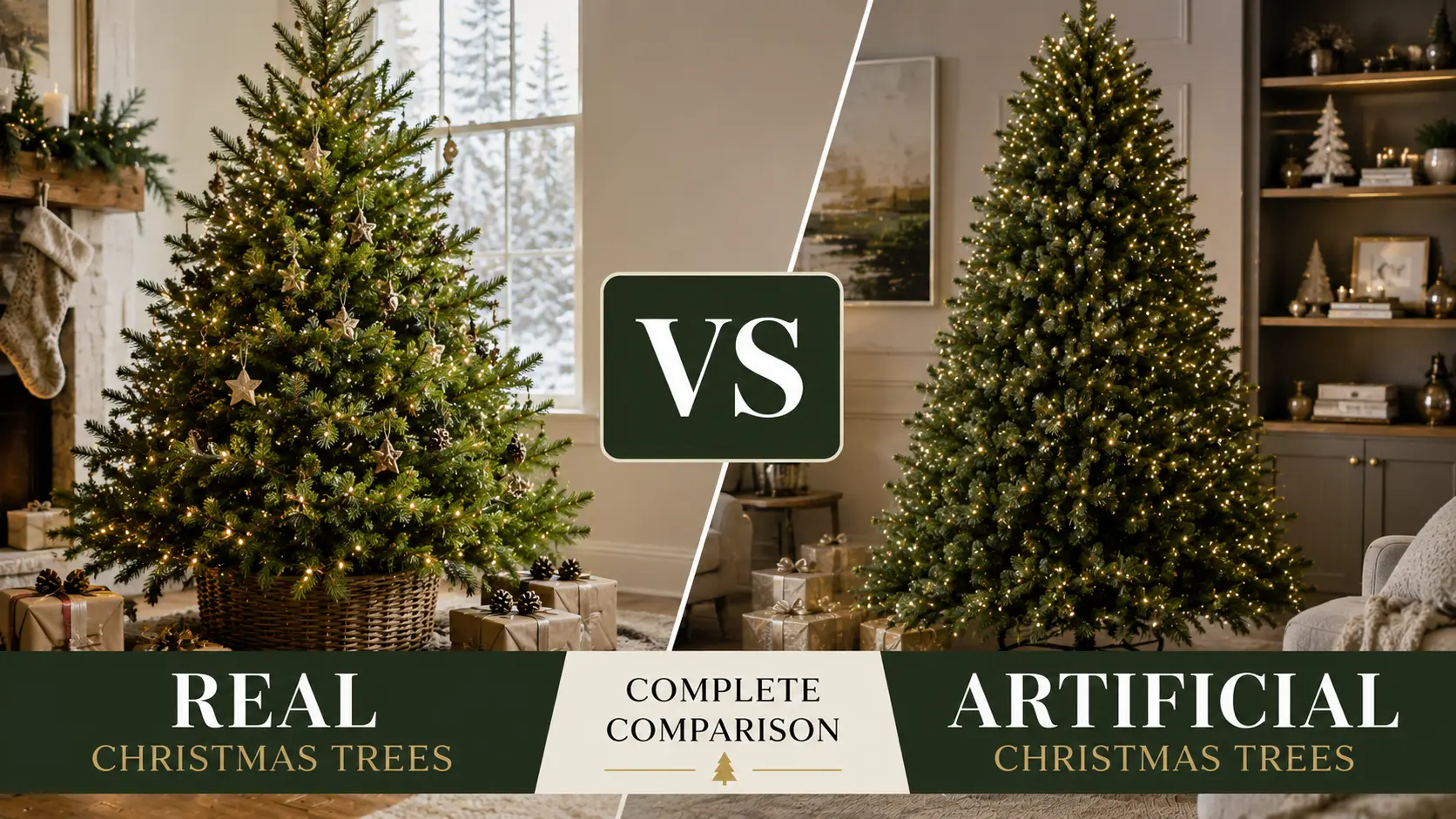

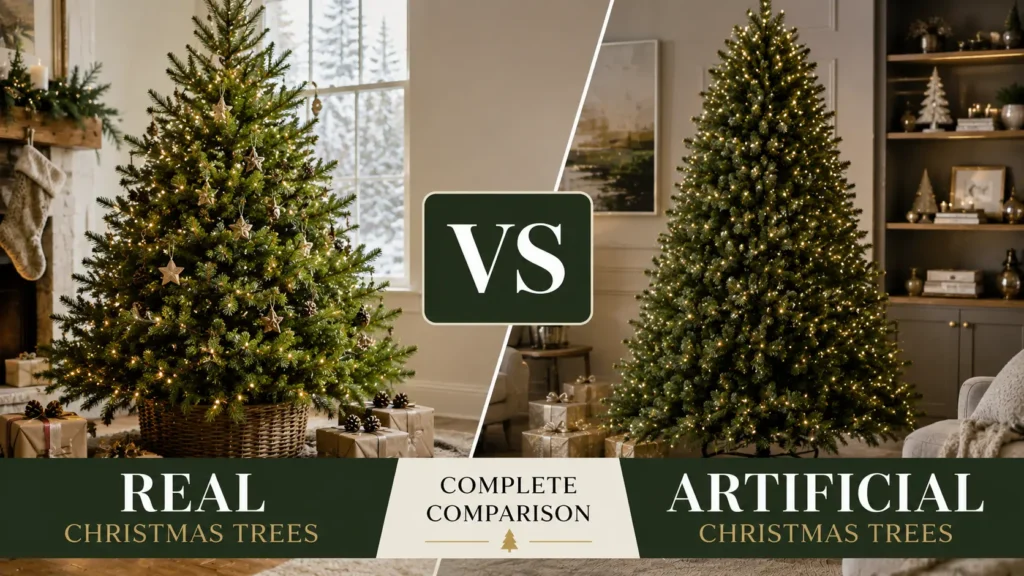
Every December, millions of households face the same question: should we get a real tree or pull the artificial one out of storage? It sounds simple, but the answer depends on factors that are deeply personal — budget, lifestyle, values, available space, and how you picture the holidays in your home.
This debate has been going on for decades, and neither side is going away anytime soon. Real tree farms sell roughly 25 to 30 million trees in the United States each season. At the same time, an estimated 80 percent of American households that decorate with a Christmas tree now use an artificial one. Both numbers keep growing, which tells you something important: there is no universally correct answer here.
What this guide does is lay out every meaningful difference between real and artificial Christmas trees — appearance, cost, maintenance, longevity, environmental impact, safety, convenience, and more — so you can make a decision that actually fits your home and your habits. By the time you finish reading, you will know exactly which type of tree belongs in your living room.
Comparison Overview
| Factor | Real Tree | Artificial Tree |
|---|---|---|
| Upfront Cost | $50 to $150+ per season | $50 to $900+ (one-time) |
| Long-Term Cost | Recurring annual expense | Breaks even after 5 to 10 years |
| Appearance | Natural variation, imperfections | Consistent, increasingly realistic |
| Scent | Rich, authentic pine fragrance | None unless sprayed |
| Longevity | 4 to 6 weeks (one season) | 7 to 10+ years |
| Maintenance | Daily watering, needle cleanup | Minimal, mostly assembly |
| Environmental Impact | Biodegradable, renewable | Long-term landfill concern |
| Convenience | Requires sourcing, transport | Stored and reused each year |
| Safety | Fire risk if dry | Generally fire-resistant |
| Storage Required | None | Significant — large box or bag |
What Is a Real Christmas Tree?
A real Christmas tree is a fresh-cut evergreen grown specifically for the holiday season. Most farms cultivate trees for 7 to 10 years before harvest, shaping and trimming them throughout that time to produce the full, symmetrical silhouette most people associate with a Christmas tree.
The most popular species in the United States include:
Fraser Fir — Considered the gold standard by many buyers. It has sturdy branches that hold ornaments well, excellent needle retention, and a pleasant, mild scent. It is the most widely sold premium species.
Douglas Fir — One of the most common and affordable options. It has a classic pyramid shape and a sweet, slightly nutty fragrance. Needle retention is decent but not as strong as Fraser Fir.
Noble Fir — A Pacific Northwest favorite with stiff, well-spaced branches and a bluish-green color. The open branch structure makes it ideal for heavy ornaments and large decorations.
Blue Spruce — Known for its silvery-blue needles and symmetrical shape. It is beautiful but has a pricklier texture and a shorter indoor lifespan than firs.
Balsam Fir — A traditional choice in the northeastern U.S. with a strong, classic pine scent and good needle retention.
The emotional pull of a real tree goes well beyond aesthetics. For many people, the annual trip to a tree farm or lot is a ritual — part of what makes the holidays feel real. That experience, that smell, that imperfect branch on the left side — these things carry meaning that no manufactured product can replicate.
What Is an Artificial Christmas Tree?
An artificial Christmas tree is a reusable, manufactured tree designed to resemble a natural evergreen. Modern artificial trees have come a long way from the sparse, obviously plastic versions that appeared in the 1970s and 1980s.
Most artificial trees today are constructed with PVC branches — a flexible, durable plastic that can be shaped and colored to mimic real needles with reasonable accuracy. Higher-end trees use a combination of PVC and PE (polyethylene) tips, with the PE material molded directly from real tree branches to produce a strikingly natural texture and color variation.
The branch construction typically follows one of two systems: hinged branches that fold out from a central pole, or individual branches that slot into numbered holes. Hinged designs are far more convenient for setup and takedown.
Pre-lit trees come with integrated lighting — either traditional incandescent bulbs or energy-efficient LED lights — already threaded through the branches. For shoppers who want to skip the untangling and stringing process, a pre-lit Christmas tree is one of the most practical upgrades available. Many models now offer multicolor and warm white switching, remote controls, and even color-changing RGB options.
Sizes range from tabletop trees under two feet tall to towering 12-foot showpieces. If you are unsure what size makes sense for your ceiling height and room layout, a height guide can help you get the proportions right before you buy.
Appearance: Which Looks Better?
This used to be a straightforward question. Real trees looked real; artificial trees looked plastic. That gap has narrowed significantly.
Real trees bring texture, color variation, and structural irregularity that no factory has fully replicated. Each tree is unique — some branches dip lower, others grow at odd angles, the needles vary in shade from deep forest green to silvery blue depending on species. That organic imperfection is, for many people, the whole point.
Artificial trees have genuine strengths in the appearance category that should not be dismissed. They are consistently full. There are no bare patches, no lopsided growth, no surprise gaps where a branch broke in transit. Entry-level trees with all-PVC construction can look flat and uniform up close, but mid-range and premium models using mixed PE and PVC tips produce convincing needle textures, realistic branch clusters, and natural-looking color gradients.
The highest-end artificial trees — particularly those made with full PE construction and modeled from actual Fraser or Noble Fir branches — can genuinely fool a casual observer from across the room. The telltale signs at close range are the uniformity of spacing and the absence of scent.
One area where artificial trees have a clear advantage is fullness control. Real trees, especially in the mid-price range, often have gaps that need to be turned toward the wall. Artificial trees are engineered to look complete from every angle.
Branch structure also matters for decorating. Real trees vary: some have branches strong enough for heavy ornaments, others need lighter decorations. Artificial trees, particularly those with sturdy wire frames, offer predictable load-bearing capacity.
For households committed to maximizing visual drama, a flocked artificial tree offers a snow-dusted aesthetic that is difficult to achieve consistently with a real tree and adds a distinctive elegance to holiday decor.
Scent Comparison
The fragrance of a real Christmas tree is, for many people, irreplaceable. The terpenes and resins released by fresh-cut firs and spruces produce a complex, earthy, resinous smell that is deeply tied to holiday memory and emotion. Fragrance research consistently shows that scent is one of the most powerful triggers of autobiographical memory — which is part of why the smell of a fresh tree can feel like being transported to childhood.
Fraser Fir produces one of the most beloved scents: clean, mildly sweet, and not overpowering. Balsam Fir is more intense and resinous. Douglas Fir has a slightly fruity quality. Blue Spruce is more subtle.
The scent also evolves over time. In the first days after setup, it is strongest and most immediate. As the tree settles indoors, the fragrance mellows into a constant background note that fills a room without demanding attention.
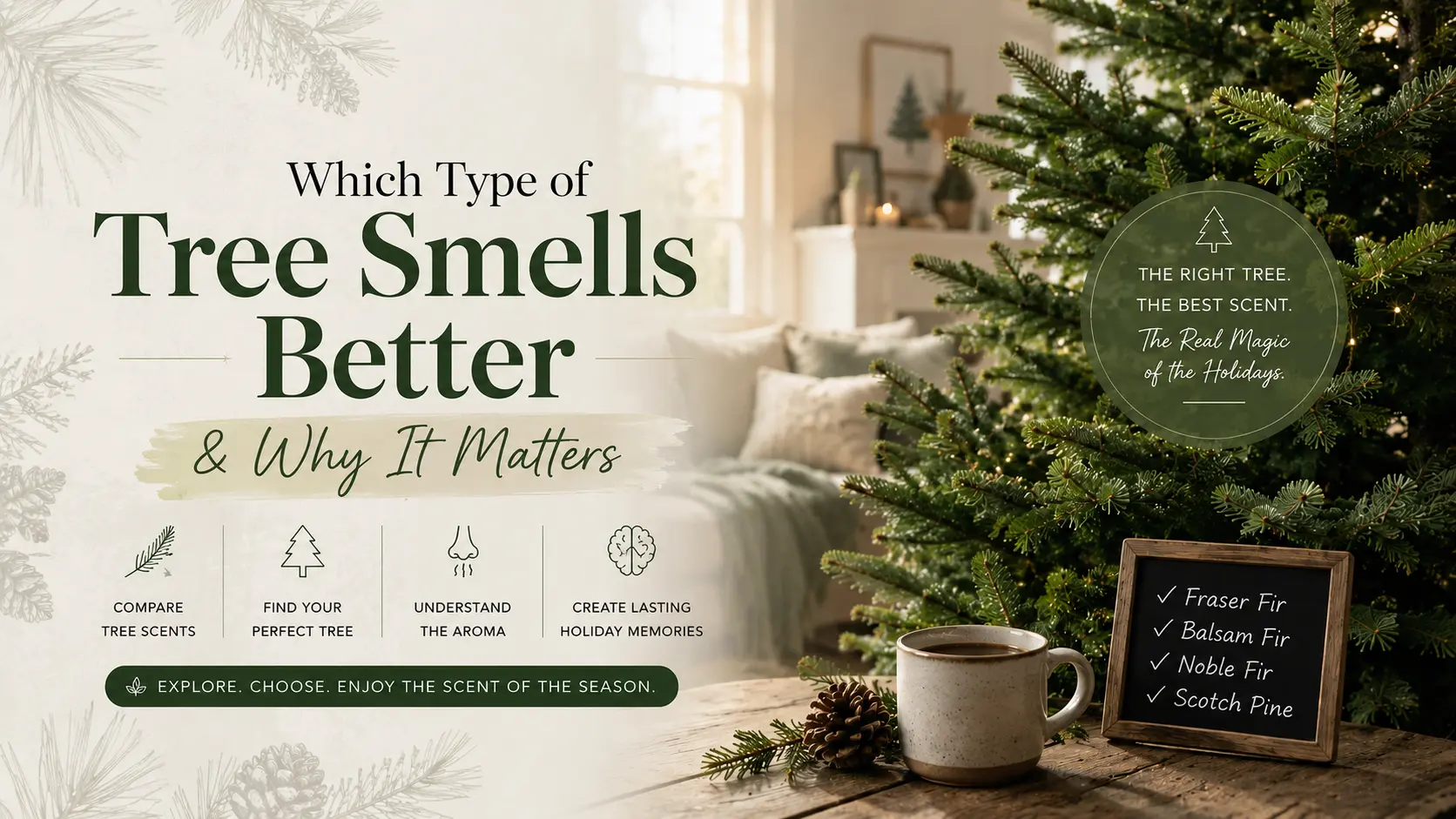
Artificial trees produce no natural scent. Some manufacturers offer scent sprays designed to mimic pine fragrance, and while some are acceptable, none truly replicates the layered organic complexity of a living tree. If the scent of the season matters to you, this is one area where a real tree holds a permanent advantage. A detailed breakdown of how tree species compare on fragrance is worth reading if scent is a deciding factor for your household.
Cost Comparison
Cost is one of the most misunderstood aspects of this debate, because the right comparison depends entirely on the time horizon you use.
Real trees cost between $50 and $150 on average, with premium species like Fraser Fir or Noble Fir often landing at the higher end. Prices vary significantly by region and by whether you cut your own (generally cheaper) or buy from a retail lot. That cost recurs every single year.
Artificial trees range from under $50 for basic budget options to $800 or more for large, premium PE/PVC pre-lit models. That is a higher upfront number, but it does not repeat. A quality artificial tree used for 10 years at $200 works out to $20 per season.
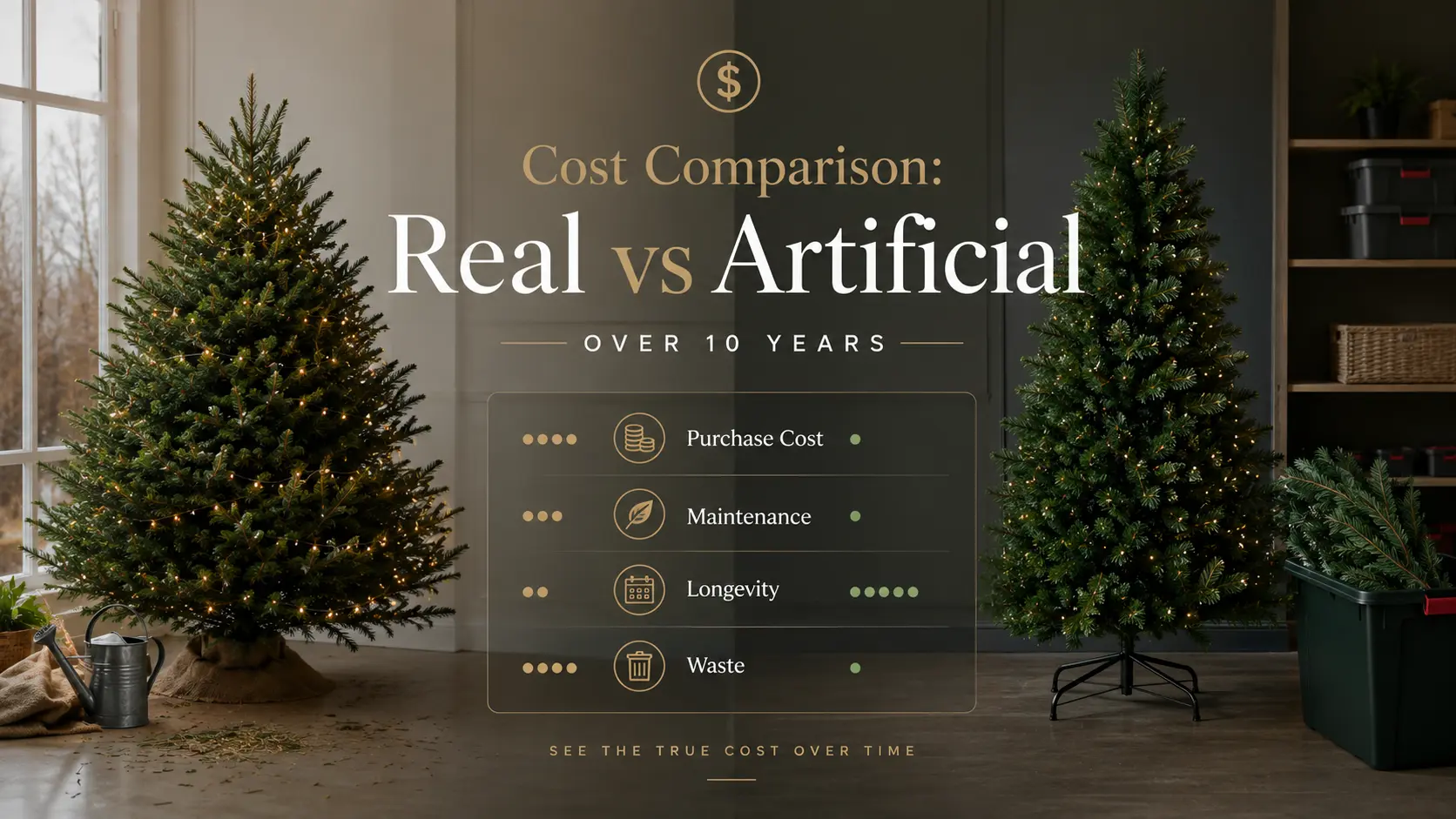
The crossover point — where an artificial tree becomes the cheaper option — typically falls somewhere between year 5 and year 10, depending on the cost of each. For a detailed year-by-year breakdown of the actual numbers, this cost comparison over a 10-year period lays it out clearly.
Beyond the tree itself, real trees sometimes require a quality tree stand if you do not already own one ($20 to $60). Artificial trees require storage space, and some households need to purchase a storage bag or box ($20 to $50).
| Scenario | Real Tree (10 years at $80/yr) | Artificial Tree ($200 upfront) |
|---|---|---|
| Year 1 | $80 | $200 |
| Year 3 | $240 | $200 |
| Year 5 | $400 | $200 |
| Year 10 | $800 | $200 |
The financial case for artificial trees gets stronger the longer you use them — which is why durability matters.
Longevity Comparison
A real Christmas tree has a fixed lifespan once it is cut. With proper care, a fresh-cut tree can last 4 to 6 weeks indoors — more than enough to cover the holiday season from early December through New Year’s. After that, it is done.
An artificial tree, by contrast, is designed to be used repeatedly for many years. Entry-level trees may show wear within 3 to 5 years — branches losing shape, lights failing, the overall look becoming noticeably dated. Mid-range and premium trees, especially those with solid wire branch frames and quality PE tips, routinely last 10 years or more with proper care.
The actual lifespan depends heavily on storage. Trees stored in a climate-controlled space in a dedicated bag or box will outlast trees crammed into an attic through temperature extremes. How long an artificial tree realistically lasts — and what affects that lifespan — is worth understanding before you decide how much to spend.
For households that want to get maximum value from their purchase, investing in a higher-quality tree from the start typically delivers better long-term results than replacing a cheaper tree every few years.
Maintenance Comparison
Real Tree Maintenance
A real tree requires active attention throughout the season. The most important task is watering. A freshly cut tree can drink a quart of water or more on its first day indoors; after that, it typically needs a half-quart to a full quart daily to stay fresh. A dry tree loses needles faster, fades in color, and becomes a fire hazard.
Other maintenance considerations:
- Re-cutting the trunk before placing in water (cut an inch off the base to open the water-drawing cells)
- Needle cleanup — even a well-watered tree drops some needles, and this becomes more significant as the season progresses
- Tree stand management — checking water levels daily, making sure the stand is stable
- Keeping away from heat sources — radiators, vents, and fireplaces accelerate drying significantly
- Disposal — at the end of the season, you need to remove and transport the tree, which many municipalities accept for composting
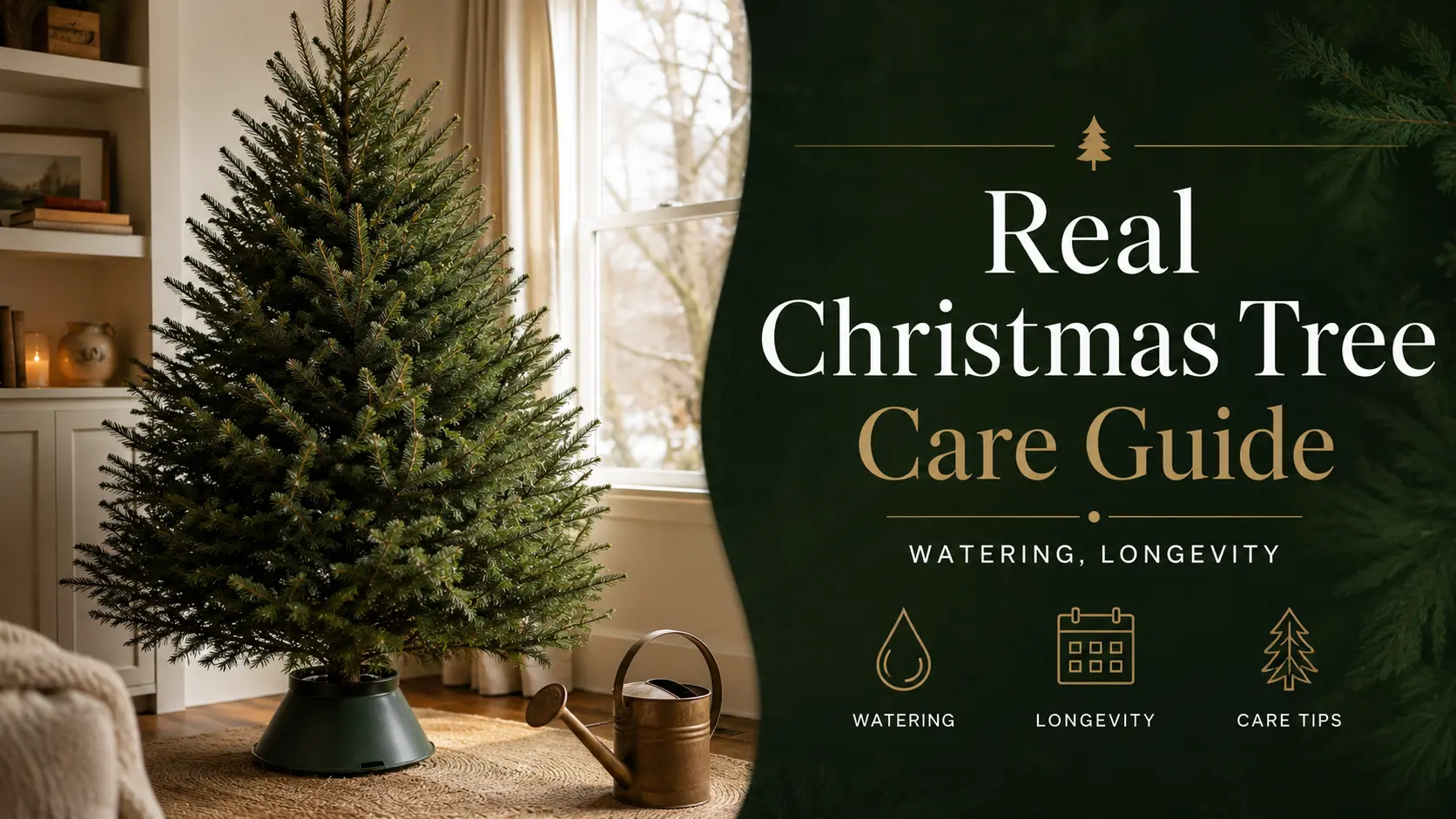
A thorough real Christmas tree care guide covering watering schedules and longevity tips provides specific guidance for getting the most out of your tree through the full season.
Artificial Tree Maintenance
Artificial trees require far less ongoing attention. The primary tasks are assembly at the start of the season and disassembly at the end.
- Setup takes 20 to 60 minutes depending on tree size and construction type
- Cleaning involves occasional dusting; no vacuuming required during the season
- No watering — the single biggest maintenance difference
- Storage requires a dedicated bag or box and adequate space (a 7-foot tree typically needs a container roughly 60 inches tall or a wide storage bag)
- Light maintenance on pre-lit trees may be needed over time as individual bulbs fail; many newer trees use LED lights that last significantly longer than incandescent bulbs
The tradeoff is clear: artificial trees demand more effort at setup and storage but virtually no attention in between.
Environmental Impact
This is one of the most genuinely complex areas of the real vs artificial debate, and the honest answer is that neither option is perfectly green.
Real trees are grown on farms, a renewable agricultural product. The trees absorb carbon dioxide during their 7 to 10 years of growth. After the season, they can be composted, chipped into mulch, or used in erosion control programs — returning nutrients to the soil rather than sitting in a landfill. The environmental concern is transportation: trees grown far from consumers generate meaningful carbon emissions in shipping.
Artificial trees are manufactured primarily in China, using PVC and other petroleum-derived plastics. The production process is energy-intensive and generates chemical byproducts. The trees are then shipped internationally, adding to the carbon footprint. At end-of-life, most artificial trees end up in landfills because the mixed-material construction makes recycling difficult.
The key environmental variable for artificial trees is how long they are used. Studies suggest an artificial tree needs to be used for at least 7 to 10 years to have a lower carbon footprint than buying a real tree each year — assuming the real trees are locally sourced and composted after use. A full environmental analysis of artificial Christmas trees covers the lifecycle data in more detail.
| Factor | Real Tree | Artificial Tree |
|---|---|---|
| Material source | Renewable agricultural crop | Petroleum-based plastics (PVC, PE) |
| Carbon during growth | Absorbs CO2 for 7 to 10 years | Not applicable |
| Manufacturing emissions | Low | High |
| Transport | Local to regional | International shipping |
| End-of-life | Biodegradable, compostable | Mostly landfill |
| Pesticide use | Possible on farms (varies) | None in use phase |
For eco-conscious shoppers, the most defensible choice depends on sourcing (local real trees or long-use artificial) and what happens at end of life.
Convenience Comparison
Convenience is one of the clearest differentiators between real and artificial trees, and it often determines which type works better for a given household’s lifestyle.
Real tree logistics:
- Requires a trip to a farm or retail lot each season
- Trees need to be transported home — either strapped to a vehicle roof or purchased from delivery services
- The tree must be trimmed, placed in water, and set up in a stand
- Cleanup is ongoing as needles drop, and increases toward season end
- Disposal requires transporting the tree again
Artificial tree logistics:
- Retrieved from storage once per year
- No transportation required after initial purchase
- Assembly takes 20 to 60 minutes
- No daily maintenance tasks
- Disassembly and storage take roughly the same amount of time as assembly
For busy households, the convenience advantage of artificial trees is substantial. There is no annual sourcing task, no messy transport, no daily watering, and no end-of-season disposal to arrange.
The setup process for artificial trees also becomes faster with experience. After a few seasons, most people can assemble their tree, shape the branches, and have it ready for lights and decorations in under an hour. Speaking of lighting, having a plan for how you will light your tree — whether that means a pre-lit model or adding your own strands — makes the decorating process significantly smoother.
Safety Considerations
Both real and artificial trees carry safety considerations that are worth understanding, particularly for households with young children, pets, or older electrical wiring.
Real Tree Safety
The primary safety concern with real trees is fire risk, and it is a legitimate one. A dry Christmas tree is extraordinarily flammable — the National Fire Protection Association reports that Christmas trees are the ignition source in roughly 160 home fires per year in the U.S., with dry trees and electrical issues as the leading causes.
Key safety practices for real trees:
- Water the tree daily without fail
- Keep the tree away from heat sources, fireplaces, and candles
- Never leave tree lights on when sleeping or away from home
- Inspect light strands for frayed wires or broken sockets before use
- Remove the tree promptly once it starts dropping significant needles or feels dry to the touch
Artificial Tree Safety
Artificial trees labeled “fire-resistant” are treated to resist ignition, which significantly reduces but does not eliminate fire risk. They do not dry out like real trees, so the risk profile is different — but electrical faults in lights can still cause fires.
Other considerations:
- Older artificial trees, particularly those manufactured before 2000, may contain lead in the PVC materials; this is less of a concern with modern trees
- Some artificial trees can shed small plastic particles that may be a concern in homes with crawling infants or pets that chew on branches
- Cats and dogs are attracted to both real and artificial trees; the main difference is that some real tree species (like certain pines) can cause digestive upset if needles are ingested
For both tree types, using a quality tree stand (for real trees) or stable base (for artificial), securing tall trees to a wall or ceiling with thin fishing line, and keeping electrical connections away from water sources are all sensible precautions.
Which Tree Is Better for Different Households?
Families With Children
Real trees offer a rich sensory experience that children tend to love — the smell, the trip to the farm, the ritual of picking out “the one.” On the other hand, the watering and needle maintenance can be overwhelming with young kids in the mix. An artificial tree removes those worries while still providing a beautiful focal point for decorating traditions.
Recommendation: Either can work well. If the annual tree-choosing experience is important to your family culture, go real. If simplicity and safety are priorities, a quality artificial tree is a strong choice.
Apartment Dwellers
Storage space is often limited in apartments, which makes a real tree more practical from a square footage standpoint — it arrives, serves its purpose, and leaves. However, the needle cleanup and daily watering in a smaller space can be more noticeable. Slim artificial trees designed for narrow footprints are an option, though storage for the off-season remains a challenge.
Recommendation: Real tree, unless you have dedicated storage space (a closet, storage unit, or building storage room).
First-Time Homeowners
The first holiday season in a new home is already full of decisions and expenses. A real tree keeps the upfront cost manageable while delivering the full traditional experience. Over time, as life settles and budgets stabilize, switching to a quality artificial tree may make more sense.
Recommendation: Start with a real tree; consider a long-term artificial investment after the first year or two.
Luxury Decor Enthusiasts
High-end artificial trees — particularly full PE models from premium brands — offer the kind of consistent, showroom-level appearance that a real tree cannot guarantee. Pair with professional-quality ornaments, ribbon garland, and intentional lighting design, and an artificial tree can anchor a genuinely stunning holiday display.
Recommendation: Premium artificial tree with a pre-lit LED feature, chosen to complement the room’s design aesthetic.
Busy Professionals
Time is the limiting factor here. The annual real tree process — sourcing, transporting, watering daily, disposing — adds up to real time and mental load during one of the busiest periods of the year. A quality artificial tree, stored and ready to go, fits a high-demand schedule far better.
Recommendation: Artificial tree, preferably pre-lit with a hinged branch system for fast assembly.
Eco-Conscious Shoppers
The most environmentally defensible path is either: (a) a locally grown real tree from a certified sustainable farm, composted or chipped after use, or (b) a high-quality artificial tree used for 10 or more years before disposal. Buying a cheap artificial tree and replacing it every five years is one of the worst environmental options in this debate.
Recommendation: Local real tree with post-season composting, or a premium artificial tree committed to long-term use.
Frequent Movers
Moving with an artificial tree is manageable but not trivial — the storage box takes up significant space in a moving truck. Real trees eliminate that burden entirely, since you simply buy a new one at each location.
Recommendation: Real tree, or a compact/collapsible artificial tree that packs more efficiently.
Common Myths About Real and Artificial Trees
Myth: Real trees are always the greener choice. Not automatically. A real tree grown with heavy pesticide use, shipped long distances, and sent to a landfill after the season has a meaningful environmental footprint. The comparison depends on sourcing practices and disposal.
Myth: Artificial trees always look obviously fake. This was true twenty years ago. Modern PE/PVC hybrid trees from reputable manufacturers can look remarkably natural. The biggest visual giveaway today is not texture but uniformity.
Myth: Artificial trees save money immediately. The upfront cost of a quality artificial tree is often higher than a single real tree. The savings come over multiple years of use. In year one, you are almost always spending more on artificial.
Myth: Real trees are too dangerous to have at home. A properly watered and maintained real tree is significantly less flammable than a dry one. The fire risk is real but largely preventable with simple care habits. Millions of households use real trees safely every year.
Myth: Flocked or snow-dusted trees are only for artificial options. Real trees can be flocked — a coating process applied after purchase at some tree farms and garden centers. However, the consistency and durability of the coating is easier to achieve with an artificial tree.
Myth: Artificial trees are always more convenient. For households without storage space, dragging out a large artificial tree box, assembling a 7-foot tree, and packing it back up is not trivially simple. A real tree from a nearby lot can actually be faster from a total time standpoint for some households.
Pros and Cons
| Real Tree | Artificial Tree | |
|---|---|---|
| Pros | Authentic appearance | Reusable year after year |
| Natural pine fragrance | No watering or needle cleanup | |
| Lower upfront cost | Consistent fullness and shape | |
| Biodegradable and compostable | Pre-lit options available | |
| Unique and organic character | Cost-effective over many years | |
| Supports tree farm industry | No annual sourcing required | |
| Cons | Requires daily watering | High upfront cost |
| Needle shedding and cleanup | No natural scent | |
| Annual recurring expense | Requires storage space | |
| Fire risk if dried out | Manufacturing environmental impact | |
| Must be sourced and transported | End-of-life landfill concern | |
| Lifespan limited to one season | Can look uniform or artificial |
Which Should You Choose?
Choose a real tree if:
- Authenticity and fragrance are central to your holiday experience
- You have limited storage space
- Your budget favors lower upfront costs
- You value the annual ritual of selecting a tree
- You prioritize biodegradable, locally sourced options
Choose an artificial tree if:
- Convenience and low maintenance are your top priorities
- You plan to use the same tree for 10 or more years
- You want consistent appearance and full branch coverage every year
- You prefer pre-lit options that eliminate the lighting setup process
- You have adequate, climate-controlled storage space
Consider your budget timeline: If you are buying for one or two seasons, a real tree is almost certainly the more economical option. If you are investing for a decade of holidays, a quality artificial tree will save money and time over the long term.
Consider your storage situation honestly: A 7-foot artificial tree requires roughly 5 to 6 cubic feet of storage. If that space does not exist in your home, an artificial tree becomes a logistical problem rather than a convenience.
Final Verdict: Real vs Artificial Christmas Trees — Which One Is Better?
There is no single winner. Both types of trees are legitimate choices that serve different households well, and the decision comes down to what you actually value and how you actually live.
Real trees win on authenticity, scent, tradition, and environmental transparency when sourced and disposed of responsibly. They reward households that enjoy the annual ritual and can commit to consistent care.
Artificial trees win on convenience, long-term cost, consistency, and low maintenance. They reward busy households, people with storage space, and anyone who wants a beautiful tree without the recurring work.
The worst outcomes on either side come from misalignment: an artificial tree that goes to the landfill after three seasons squanders its cost and environmental investment. A real tree that is neglected, dried out, and fire-adjacent by week three undermines the joy it was supposed to create.
Buy the tree that fits how you actually live — not the one that sounds better in theory.
Conclusion
Both real and artificial Christmas trees are capable of creating a beautiful, meaningful holiday centerpiece. The debate has no objective winner because the right choice is genuinely different for different households.
Appearance: Real trees bring organic, unique character; modern artificial trees offer consistent fullness and increasingly convincing textures.
Cost: Real trees cost less upfront; artificial trees become the better value after years five to ten of consistent use.
Longevity: Real trees last one season; quality artificial trees last a decade or more with proper storage and care.
Sustainability: Real trees have a clear biodegradable end-of-life advantage; artificial trees can offset their manufacturing footprint through long use.
Convenience: Artificial trees require less ongoing effort; real trees require no storage space and no end-of-season packing.
Use the decision frameworks in this guide, be honest about your storage situation and lifestyle, and choose the option that you will actually enjoy maintaining. That is the best Christmas tree for your home.
Frequently Asked Questions
Q: How long does a real Christmas tree last once it is cut? A: With proper care — including daily watering and placement away from heat sources — a fresh-cut Christmas tree typically lasts 4 to 6 weeks indoors. Some species, like Fraser Fir, are known for especially good needle retention and can look healthy through late December and into early January when well-maintained.
Q: Is it cheaper to buy a real or artificial Christmas tree? A: In the short term, real trees are usually cheaper. A quality real tree costs $50 to $150 per season, while a comparable quality artificial tree may run $150 to $400 or more. Over 7 to 10 years of use, the artificial tree typically becomes the less expensive option when you average out the annual cost.
Q: Are artificial Christmas trees fire-resistant? A: Most artificial trees sold today are labeled “fire-resistant,” meaning they are treated to resist igniting easily. They are not fireproof. An artificial tree can still burn if exposed to an open flame or a sustained heat source. Using lights with intact wiring and keeping them off when sleeping or away from home applies to both artificial and real trees.
Q: Do artificial Christmas trees look realistic? A: It depends significantly on the price and construction. Budget trees with all-PVC branches can look noticeably plastic. Mid-range and premium trees using polyethylene (PE) tips molded from real branches produce a much more convincing appearance. The best modern artificial trees are genuinely difficult to distinguish from real ones from a normal viewing distance.
Q: What is the most fragrant Christmas tree species? A: Balsam Fir is generally considered to have the most intense and traditional Christmas fragrance. Fraser Fir is prized for a slightly milder, cleaner scent that many people prefer for indoor use. Douglas Fir has a distinctive sweet fragrance. Scent intensity also decreases as the tree dries, so freshness at the time of purchase matters.
Q: How long do artificial Christmas trees last? A: A quality artificial tree — one with sturdy wire branch frames and PE or PE/PVC construction — can realistically last 10 to 15 years or more with proper storage. Budget trees may show visible wear within 3 to 5 seasons. Storage conditions (avoiding extreme heat, humidity, and compression) are one of the biggest factors in lifespan.
Q: Are real Christmas trees bad for the environment? A: Not inherently. Real trees are a renewable agricultural crop, grown and harvested on farms that replant continuously. They absorb carbon during their growth period and are biodegradable at end of life. The environmental concern is transportation distance and whether the tree is composted or sent to a landfill. A locally grown, composted real tree has a reasonably low environmental footprint.
Q: Can I put an artificial tree in a room without a lot of space? A: Yes. Artificial trees are available in slim or pencil configurations specifically designed for narrow spaces — hallways, apartments, or rooms where floor space is at a premium. These trees typically have a footprint of 18 to 24 inches in diameter while still reaching 6 or 7 feet tall, making them a practical option for smaller rooms without sacrificing height.