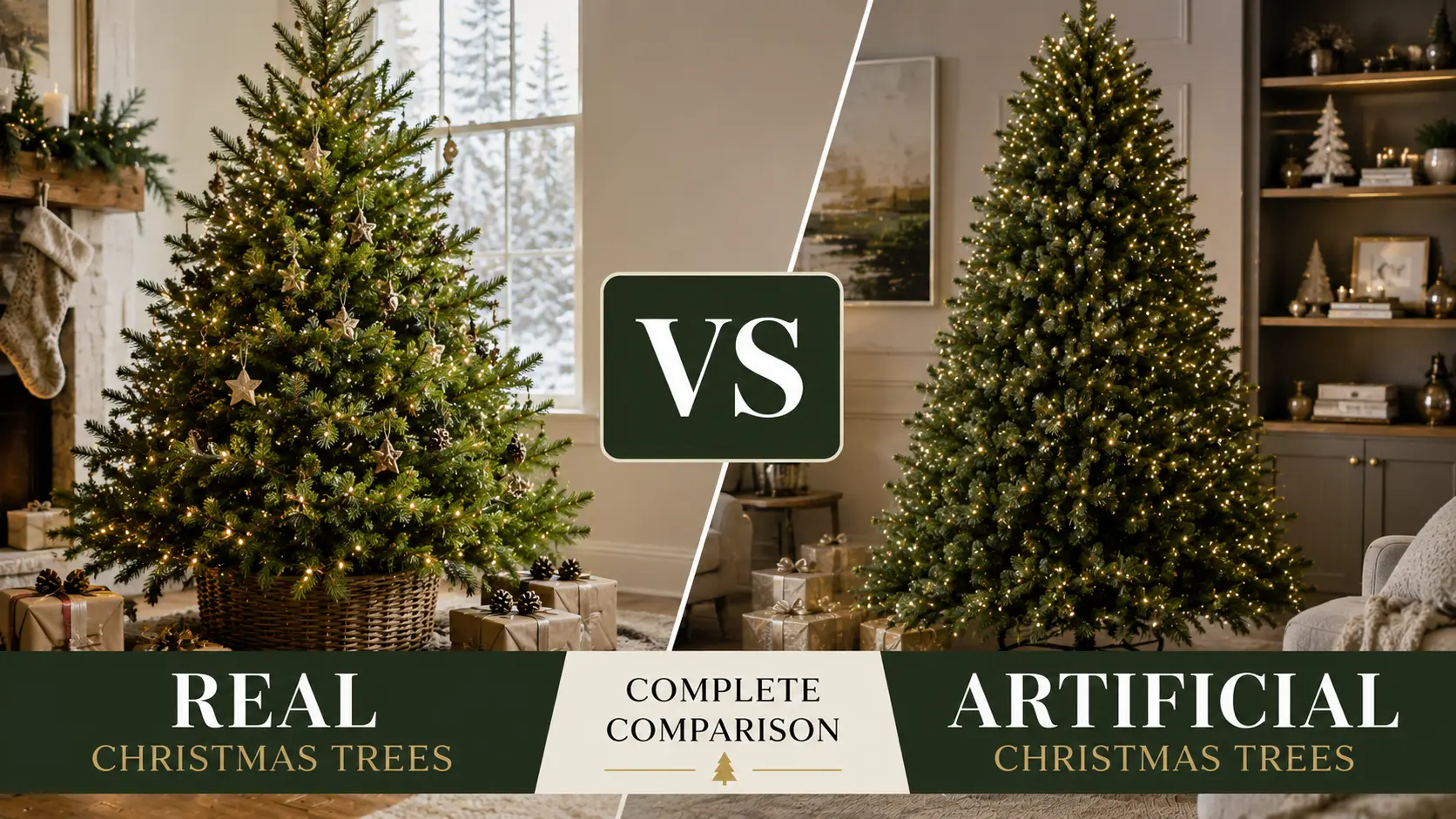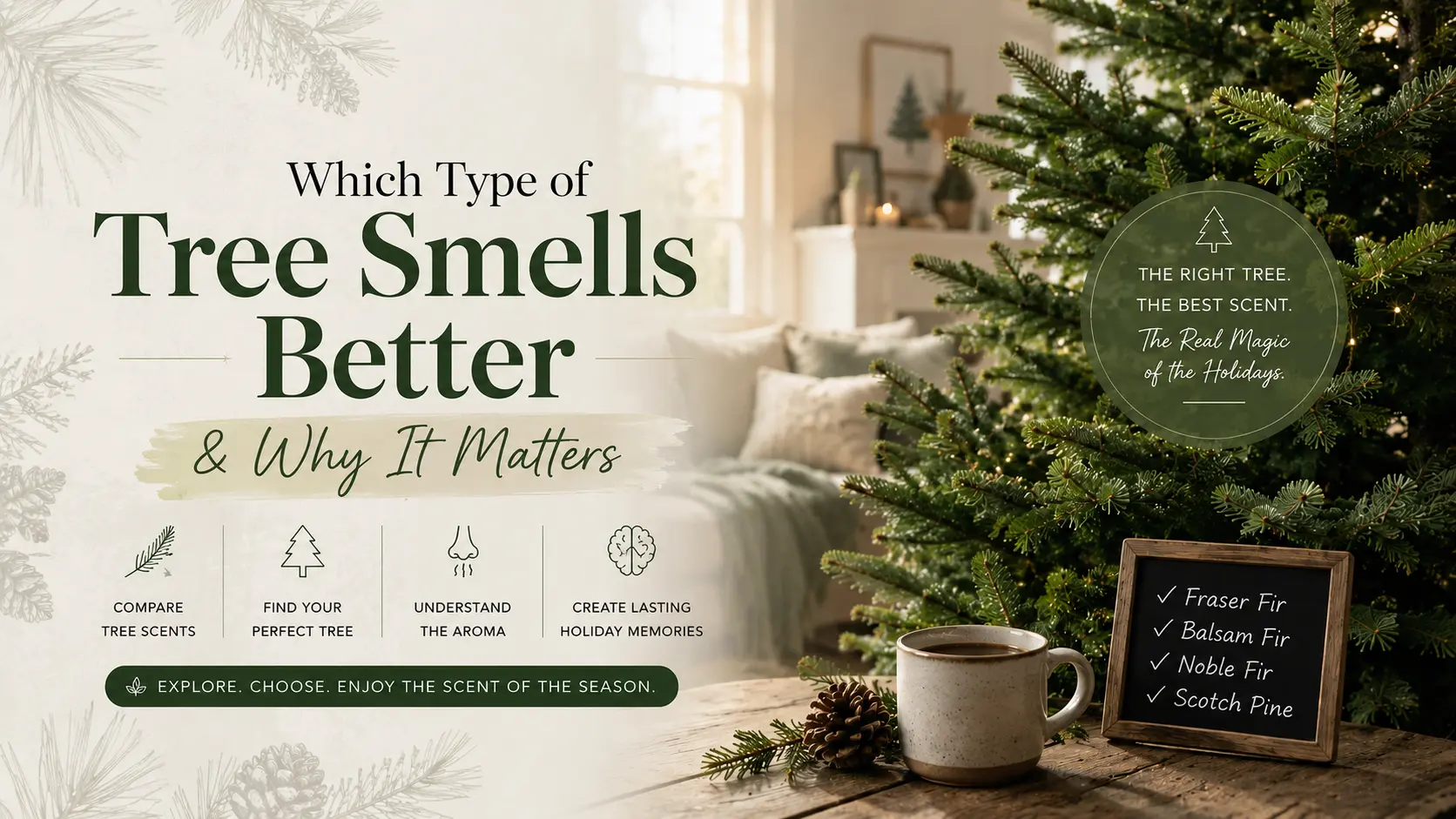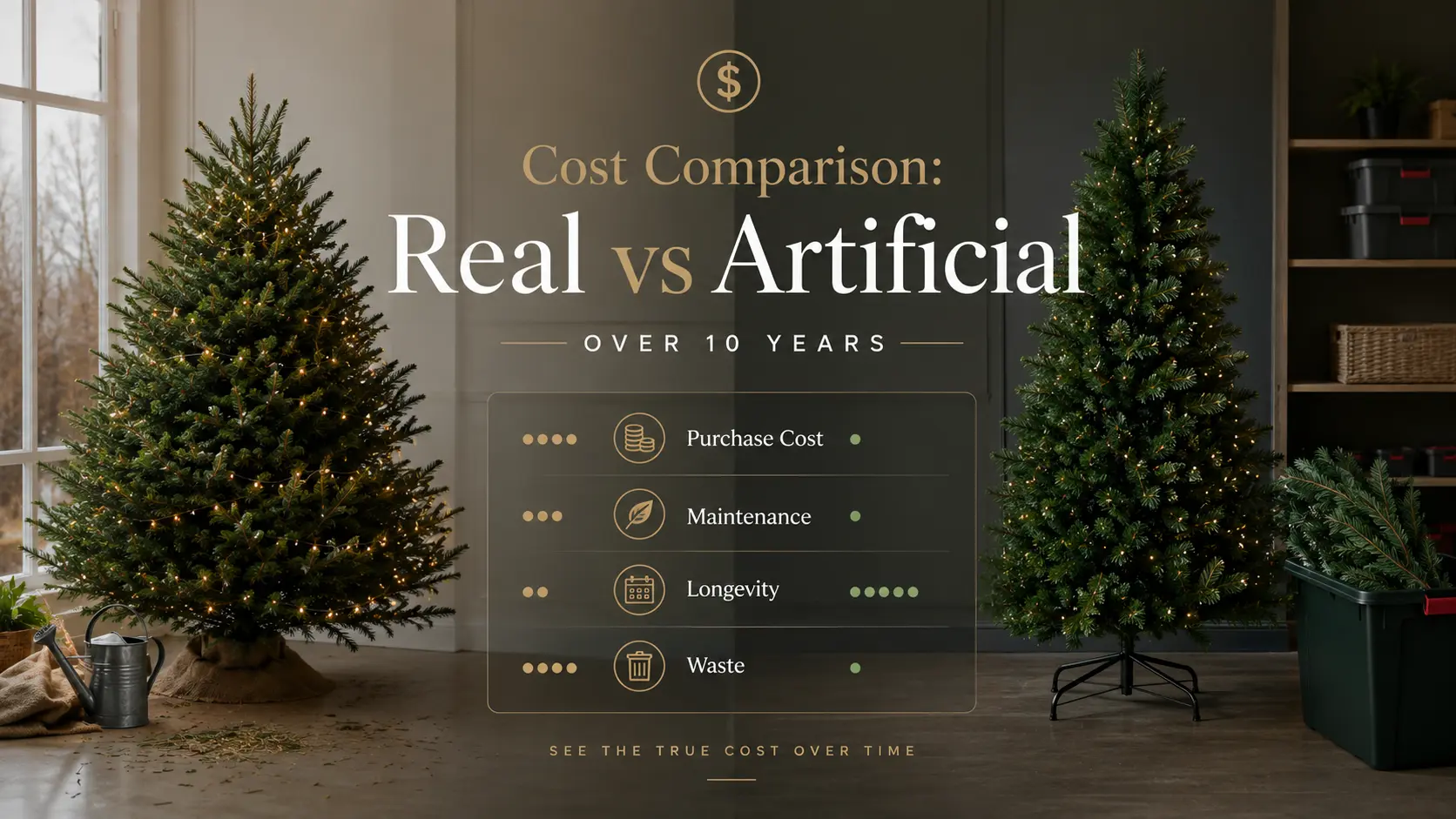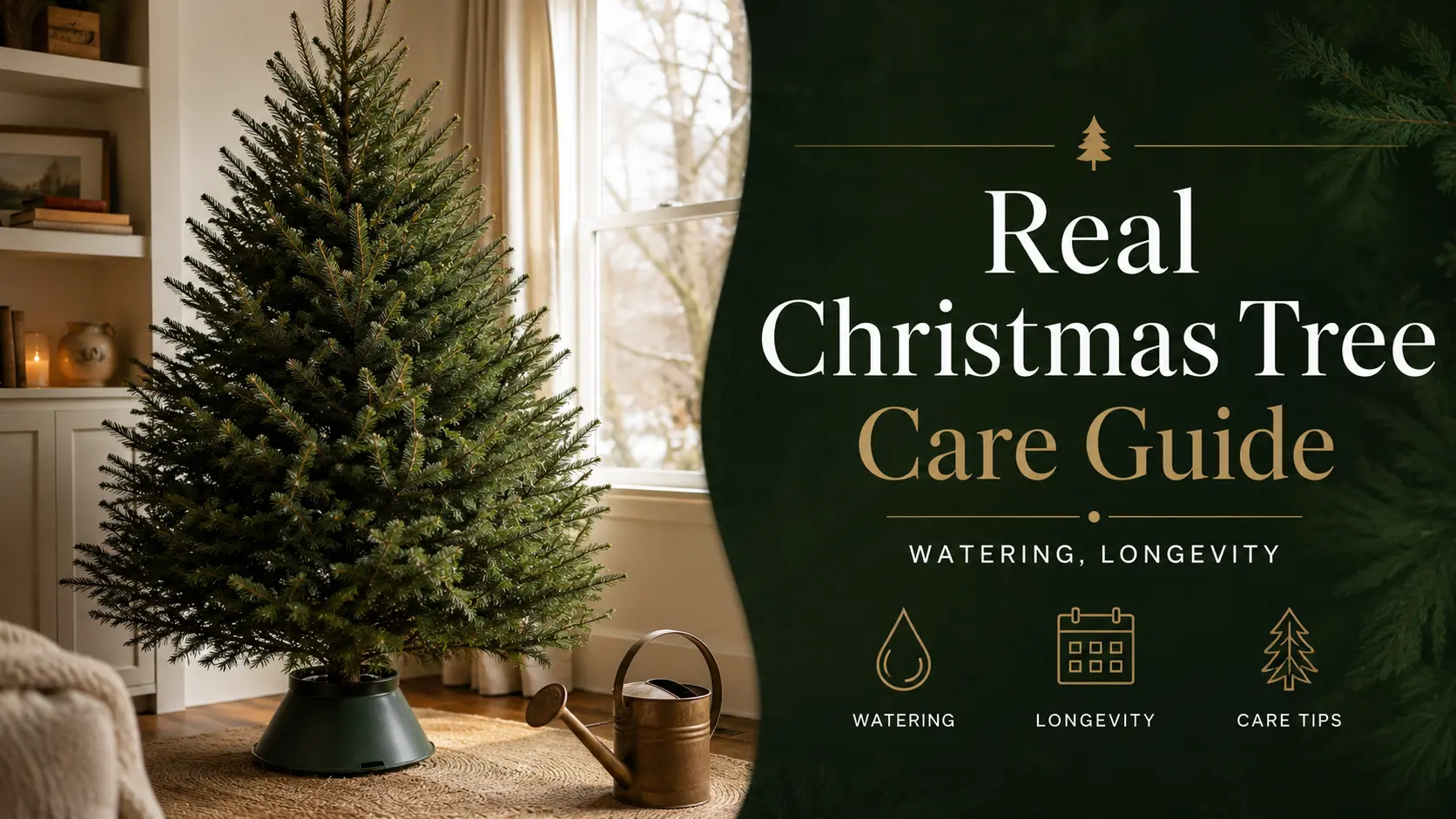

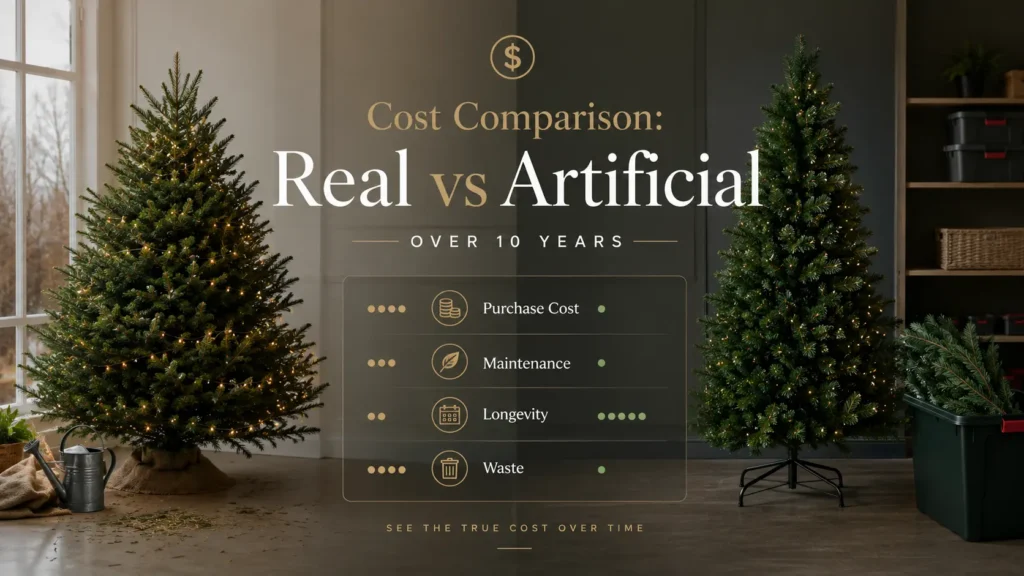
The question comes up every single November: should we get a real tree again this year, or is it finally time to invest in a good artificial one?
For a lot of families, this decision is based on tradition, smell, or aesthetics. But underneath all of that is a real financial question that does not get answered nearly enough: which option actually costs less over time?
At ChristmasTree.Deals, we have seen this debate play out from every angle. And the honest answer is that neither option is universally cheaper. It all depends on how long you keep an artificial tree, what species of real tree you buy, and a whole range of hidden costs that most buyers overlook entirely.
This article breaks down the true 10-year cost of both options with realistic numbers, detailed tables, and practical guidance for every type of household. Whether you are trying to trim your holiday decorating budget or simply want to make a smarter long-term decision, this comparison gives you the full picture.
Understanding the True Cost of a Christmas Tree
Most people compare the price tag on a real tree at a lot against the sticker price on a boxed artificial tree at a retail store. That comparison tells you almost nothing useful.
The real cost of Christmas tree ownership includes several layers:
- The purchase price (or annual purchase price for real trees)
- Transportation to and from the lot or storage unit
- Tree stand purchase and replacement
- Lighting costs, including bulbs and replacements
- Decoration wear and storage
- Water, cleanup, and maintenance
- Disposal or recycling fees
- Long-term storage for artificial trees
- Replacement costs when a tree ages past its useful life
Once you account for all of these, the numbers shift considerably. A $50 real tree can end up costing over $100 when you add a stand, disposal fee, and transportation. A $200 artificial tree can creep toward $400 over a decade when you factor in storage bags, replacement bulbs, and the cost of replacing the tree after ten years of use.
The upfront price is just the beginning.
Average Cost of a Real Christmas Tree
Real tree prices vary widely based on region, species, and the year you are buying. In recent years, supply chain disruptions and increased demand have pushed prices higher in most markets.
Typical price ranges by species:
| Species | Average Price (6-7 ft) | Notes |
|---|---|---|
| Fraser Fir | $75 – $110 | Most popular; excellent needle retention |
| Noble Fir | $80 – $120 | Strong branches; great for heavy ornaments |
| Douglas Fir | $50 – $80 | Common and affordable; softer needles |
| Balsam Fir | $60 – $90 | Classic scent; traditional choice |
| Nordmann Fir | $90 – $130 | Very low needle drop; imported variety |
Regional price differences are significant. In the Pacific Northwest, where many tree farms are concentrated, a Fraser Fir might cost $65. In New York City or Boston, the same tree delivered to a street-corner lot can easily run $120 to $150. Midwest buyers tend to pay somewhere in the middle.
Additional real tree costs to factor in:
- Tree stand: $20 to $50 (can last several years but needs replacement eventually)
- Transportation: $0 if you drive, or $15 to $40 for delivery services in urban areas
- Water: minimal, roughly $2 to $5 per season
- Needle cleanup: vacuum bags, time, and floor protection
- Disposal: many cities charge $15 to $30 for curbside pickup if recycling is not available free
For this comparison, we will use a national average real tree price of $85 for a mid-size Fraser Fir or Douglas Fir, with realistic add-on costs factored in.
Average Cost of an Artificial Christmas Tree
Artificial trees span a huge price range, and where you land on that spectrum affects your long-term math considerably.
Budget options ($50 to $100): These are basic PVC trees, often unlit, with thin branches and obvious plastic appearance. They tend to look cheap quickly and may only last four to six years before they become visually tired.
Mid-range options ($100 to $250): This is where most shoppers land. These trees have better branch density, realistic needle textures, and are often available in pre-lit versions. A quality mid-range tree can last eight to twelve years with proper care.
Premium options ($250 to $600+): High-end artificial trees use PE (polyethylene) molded tips alongside PVC, producing branches that look remarkably close to a real tree. Many come with pre-installed LED lighting systems. Pre-lit Christmas trees in this range deliver genuine value over time because they eliminate the cost and hassle of buying separate light strands every few years.
Large statement trees ($400 to $1,000+): Twelve-foot trees for grand entryways or vaulted ceilings come at a premium. The upfront cost is significant, but spread over ten or more years of use, these can still be cost-competitive with annual real tree purchases.
Additional artificial tree costs:
- Storage bag or box: $20 to $60
- Replacement bulbs for pre-lit sections: $10 to $30 per year (older incandescent sets)
- LED lights last significantly longer and reduce this cost considerably
- Occasional cleaning or fluffing time (minimal cost, just time)
10-Year Cost Breakdown: Real Trees
The following table uses an $85 average tree price, a $30 stand (replaced at year 5), $20 transportation per year, $15 disposal per year, and $5 maintenance per year.
| Year | Tree Cost | Stand | Transport | Disposal | Maintenance | Annual Total | Cumulative Total |
|---|---|---|---|---|---|---|---|
| Year 1 | $85 | $30 | $20 | $15 | $5 | $155 | $155 |
| Year 2 | $85 | $0 | $20 | $15 | $5 | $125 | $280 |
| Year 3 | $85 | $0 | $20 | $15 | $5 | $125 | $405 |
| Year 4 | $85 | $0 | $20 | $15 | $5 | $125 | $530 |
| Year 5 | $85 | $30 | $20 | $15 | $5 | $155 | $685 |
| Year 6 | $85 | $0 | $20 | $15 | $5 | $125 | $810 |
| Year 7 | $85 | $0 | $20 | $15 | $5 | $125 | $935 |
| Year 8 | $85 | $0 | $20 | $15 | $5 | $125 | $1,060 |
| Year 9 | $85 | $0 | $20 | $15 | $5 | $125 | $1,185 |
| Year 10 | $85 | $0 | $20 | $15 | $5 | $125 | $1,310 |
10-year total for a real tree: approximately $1,310
This is a conservative estimate. In higher-cost cities, or for families who prefer premium Fraser Fir or Noble Fir, that number easily climbs past $1,500 to $1,800 over a decade.
10-Year Cost Breakdown: Artificial Trees
This table assumes a $200 mid-range artificial tree purchased in Year 1, a $40 storage bag, $15 per year for replacement bulbs (incandescent pre-lit sets lose sections over time), and minimal ongoing maintenance.
| Year | Tree Purchase | Storage | Bulb Replacement | Maintenance | Annual Total | Cumulative Total |
|---|---|---|---|---|---|---|
| Year 1 | $200 | $40 | $15 | $5 | $260 | $260 |
| Year 2 | $0 | $0 | $15 | $5 | $20 | $280 |
| Year 3 | $0 | $0 | $15 | $5 | $20 | $300 |
| Year 4 | $0 | $0 | $15 | $5 | $20 | $320 |
| Year 5 | $0 | $0 | $15 | $5 | $20 | $340 |
| Year 6 | $0 | $0 | $15 | $5 | $20 | $360 |
| Year 7 | $0 | $0 | $15 | $5 | $20 | $380 |
| Year 8 | $0 | $0 | $15 | $5 | $20 | $400 |
| Year 9 | $0 | $0 | $15 | $5 | $20 | $420 |
| Year 10 | $0 | $0 | $15 | $5 | $20 | $440 |
10-year total for a mid-range artificial tree: approximately $440
If you invest in a premium LED pre-lit tree at $350, your Year 1 cost rises, but your annual bulb replacement cost drops dramatically because LED strands last far longer. Over ten years, the total might land around $480 to $520, still well below the real tree total.
Real vs Artificial: Side-by-Side Cost Comparison
This is where the numbers get genuinely illuminating.
| Cost Category | Real Tree (10 Years) | Artificial Tree (10 Years) |
|---|---|---|
| Tree purchase costs | $850 | $200 |
| Stand costs | $60 | $0 (built-in) |
| Transportation | $200 | $0 (one-time, Year 1) |
| Disposal fees | $150 | $0 |
| Storage | $0 | $40 |
| Lighting/bulb replacement | $0* | $150 |
| Maintenance | $50 | $50 |
| Total (10 Years) | $1,310 | $440 |
| Annual Average Cost | $131/year | $44/year |
*Many real tree buyers also purchase lights annually, which is not included here. If you factor in $30 per year for string lights on a real tree, that adds another $300 over ten years, bringing the real tree total to $1,610.
The difference is substantial. Over a decade, the artificial tree saves the average household roughly $870 compared to buying a real tree every year.
That said, this comparison hinges entirely on how long you actually keep and use your artificial tree. A tree that gets replaced after five years because it looks worn changes the math considerably.
How Longevity Impacts Total Cost
The single biggest variable in this comparison is how long your artificial tree lasts. Understanding how long artificial Christmas trees last is essential before you can calculate real value.
A budget $80 tree that lasts five years before looking ragged is a different investment than a $300 premium tree that holds its shape and color for fifteen years.
Cost per year by artificial tree type:
| Tree Type | Purchase Price | Estimated Lifespan | Cost Per Year |
|---|---|---|---|
| Budget PVC tree | $80 | 4-6 years | $13 – $20/year |
| Mid-range tree | $200 | 8-12 years | $17 – $25/year |
| Premium PE/PVC tree | $350 | 12-20 years | $18 – $29/year |
| High-end designer tree | $600 | 15-25 years | $24 – $40/year |
Even a premium tree at the high end of its cost-per-year range comes in well below the $131 annual average of buying a real tree every season.
The key takeaway: cheap artificial trees are not automatically cost-effective. If a $70 tree lasts four years before you feel embarrassed putting it up, you are spending $18 per year and still need to replace it. A $250 tree that lasts fifteen years costs $17 per year and never looks tired.
Quality pays for itself.
The Hidden Costs Many Buyers Forget
A lot of cost comparisons stop at the tree itself. That leaves out a surprising amount of real spending.
Storage costs for artificial trees: A quality storage bag protects your tree from moisture, pests, and crushing. These run $25 to $60. If you are renting a storage unit to hold holiday items, allocate a portion of that monthly cost to your tree math. Even $10 per month dedicated to storage is $120 per year.
Lighting costs: Whether real or artificial, most families add lights. Incandescent string lights burn out sections and consume more electricity. LED lights cost more upfront but last far longer and use roughly 75 percent less energy. A full set of quality LED lights for a 7-foot tree runs $40 to $80 and can last a decade. For detailed guidance on the best approach, a good Christmas tree lighting guide covers everything from strand count to color temperature.
Watering for real trees: A real tree drinks a surprising amount of water in its first week, sometimes a quart or more per day. The cost is minimal, but the time commitment is real. Forgetting to water leads to early needle drop, which means more cleanup.
Needle cleanup: This is underestimated every year. Vacuuming, using lint rollers on upholstery, and dealing with needles in carpet takes time and wears down vacuum filters. Not a massive financial cost, but not zero either.
Disposal: Many municipalities offer free recycling for real trees in early January, which is great. But plenty of areas charge, and some offer no organized pickup at all, leaving you to transport the tree yourself or pay for special pickup.
Environmental Costs vs Financial Costs
This article focuses primarily on money, but the environmental angle intersects with long-term ownership in ways worth mentioning briefly.
Artificial trees are made from PVC plastic, which is petroleum-derived and not biodegradable. The carbon footprint of manufacturing and shipping one tree is significant. However, studies generally suggest that an artificial tree needs to be used for at least seven to ten years before its environmental footprint becomes competitive with buying a real tree annually.
Real trees are renewable, biodegradable, and actively sequester carbon while growing. However, farm transportation, pesticide use, and disposal all add up.
For a fuller picture of where each option stands from a sustainability perspective, the question of whether artificial Christmas trees are eco-friendly involves more nuance than most people expect.
The financial case and the environmental case largely agree on one thing: if you buy an artificial tree, use it for as many years as possible.
Maintenance Costs of Real Trees
Real trees require consistent attention to look their best and last through the holiday season.
The most important task is watering. A freshly cut tree that is watered immediately and kept consistently hydrated can last four to six weeks without excessive needle drop. A tree that dries out can become a fire hazard within days and will shed needles aggressively.
Beyond water, placement matters. Keeping a real tree away from heat vents, fireplaces, and sunny windows dramatically extends its life. These are not costly steps, but they require awareness. A complete breakdown of what keeps a real tree healthy can be found in this real Christmas tree care guide on watering and longevity.
The maintenance costs of a real tree are mostly time rather than money. But time has value, and the cumulative hours spent watering, cleaning needles, and disposing of the tree every year add up across a decade.
Cost Comparison by Tree Size
The price differences between real and artificial trees are not uniform across sizes. Larger trees amplify every advantage and disadvantage.
Small Trees (4 to 6 feet)
A small real tree in the 4-to-5-foot range might cost $40 to $65. A comparable artificial tree runs $60 to $120. At this size, the break-even point between real and artificial comes around the second or third year. Small trees are popular for apartments and secondary rooms.
Medium Trees (6 to 8 feet)
This is the most common size for family living rooms. Real trees in this range average $75 to $120. Artificial equivalents run $120 to $350 depending on quality. The break-even point is typically between Year 2 and Year 4, after which the artificial tree saves money consistently.
Large Trees (9 to 12 feet)
Large real trees can cost $150 to $300 or more, especially for premium species. This is where artificial trees show their most compelling financial case. A 9-foot artificial Christmas tree might cost $250 to $500, but at even $150 per year for a comparable real tree, you reach break-even in two to three seasons.
For those with genuinely high ceilings and a love of grand holiday displays, 10-foot artificial Christmas trees offer serious long-term savings given that equivalent real trees in that height bracket are exceptionally expensive and often difficult to find at standard lots.
Premium Tree Options and Long-Term Value
Not all artificial trees are created equal, and the premium segment deserves its own discussion when it comes to long-term value.
High-end artificial trees, particularly those in the flocked Christmas tree category, offer a distinctive snowy appearance that real trees cannot reliably replicate. Flocking a real tree yourself is messy, impermanent, and costs $50 to $100 every season. A quality flocked artificial tree delivers that look consistently for a decade or more.
Premium trees also tend to have better structural integrity, meaning they maintain their shape after years of storage and setup. The branch tips on high-end PE trees are molded individually to mimic real needles, and the visual quality holds up remarkably well compared to budget alternatives.
If your goal is maximum visual impact with minimum annual expense, premium artificial trees are among the strongest long-term investments in the holiday decorating space.
When buying premium, a comprehensive pre-lit Christmas trees buying and decorating guide can help you evaluate the specific features worth paying for, including lighting systems, branch construction, and warranty coverage.
Which Option Saves More Money?
The honest answer depends on your situation. Here is how it breaks down by household type.
Budget-Conscious Families
A mid-range artificial tree at $150 to $200 is almost always the right financial choice. After Year 2 or 3, you have already come out ahead of buying a real tree, and that savings compounds every year after. Focus on getting a tree that will genuinely last eight or more years.
Apartment Dwellers
Space constraints matter here. A smaller artificial tree with good storage compression makes financial sense, and the lack of needle mess in a smaller living space is a genuine quality-of-life advantage. Look at 5-to-6-foot options in the $80 to $150 range.
Large Homes
The bigger the tree, the more compelling the case for going artificial. A family buying an $150 to $200 real tree every year is spending $1,500 to $2,000 over a decade. A $400 premium artificial tree pays itself off in three years.
Frequent Movers
This is the one category where real trees might actually make more sense. Moving a large artificial tree multiple times, especially without consistent storage, accelerates wear. If you move every two to three years, the math on artificial trees tightens considerably. A high-quality, compact real tree tradition may be genuinely cheaper than replacing artificial trees repeatedly.
Luxury Decor Enthusiasts
Premium artificial trees offer the best combination of consistent aesthetics, low annual cost, and design flexibility. If you care deeply about how your tree looks, a high-end PE tree or designer flocked tree will outperform real trees visually within the first few seasons.
When Does an Artificial Tree Become Cheaper?
Using our baseline numbers ($85/year real tree with costs, vs $200 artificial tree), here is exactly when the artificial tree crosses into savings territory.
| Year | Cumulative Real Tree Cost | Cumulative Artificial Tree Cost | Savings from Artificial |
|---|---|---|---|
| Year 1 | $155 | $260 | -$105 (real is cheaper) |
| Year 2 | $280 | $280 | $0 (break-even) |
| Year 3 | $405 | $300 | +$105 |
| Year 5 | $685 | $340 | +$345 |
| Year 7 | $935 | $380 | +$555 |
| Year 10 | $1,310 | $440 | +$870 |
| Year 15 | $1,960 | $540 | +$1,420 |
The break-even point in this scenario falls at Year 2. From Year 3 onward, every year you use the artificial tree puts more money back in your pocket.
For a premium $350 artificial tree, the break-even extends to around Year 3 to 4. For a budget $100 tree that only lasts five years before needing replacement, the math shifts further and the lifetime savings shrink.
Choosing the right height from the start also affects long-term satisfaction and the likelihood of keeping the tree for many years. Understanding what height Christmas tree you should buy for your home before purchasing prevents the common mistake of buying a tree that looks wrong in your space and gets replaced prematurely.
Common Mistakes When Comparing Costs
People make the same errors when thinking through this decision every year.
Looking only at purchase price. A $60 real tree looks like a bargain next to a $200 artificial tree. It is not, once you add transportation, disposal, and maintenance. The comparison only makes sense when full costs are included.
Ignoring tree lifespan. An artificial tree that lasts five years has a very different cost profile than one that lasts fifteen. Before buying, research the manufacturer, read reviews specifically about longevity, and understand what warranty is offered.
Underestimating storage. Artificial trees need space. If you are stuffing your tree into a garage corner without a proper bag, it will get crushed, dusty, and damaged. Budget for real storage, because poor storage kills artificial trees early.
Forgetting about lighting. Many cost comparisons ignore lights entirely. Over ten years, LED lighting costs significantly less in electricity and replacement compared to incandescent alternatives. If you buy a pre-lit tree, confirm it uses LED bulbs.
Replacing prematurely. The biggest financial mistake artificial tree buyers make is replacing a tree that still has several good years left because they want a “newer look.” The longer you keep the tree, the better your economics become.
Final Verdict
Over 10 years, an artificial Christmas tree is cheaper than buying a real tree every year in nearly every realistic scenario.
The numbers are not close. A mid-range artificial tree purchased for $200 and maintained for a decade costs roughly $440 total. Buying a real tree annually, with all associated costs, runs approximately $1,310 over the same period. That is a difference of nearly $870.
The break-even point arrives at Year 2 for most mid-range artificial trees. After that, every additional year of use is pure savings.
That said, real trees are not irrational choices. If you live somewhere real trees are cheap and easy to dispose of, if you only want a tree for three or four weeks and storage is a genuine problem, or if the sensory experience of a fresh Fraser Fir is genuinely important to your holiday tradition, the premium over an artificial tree may be worth paying.
For most households, though, the financial math strongly favors artificial trees, especially when you invest in quality and commit to keeping the tree for many years.
Conclusion
The real vs artificial Christmas tree debate is not just about aesthetics or tradition. It is a genuine financial decision that plays out differently depending on how you shop, how long you commit, and what hidden costs you account for.
The core findings from this comparison:
- A mid-range artificial tree saves approximately $870 over 10 years compared to buying a real tree annually
- The break-even point is typically Year 2 to Year 3
- Premium artificial trees cost more upfront but deliver the best cost-per-year value over their lifespan
- Hidden costs including storage, disposal, transportation, and lighting significantly affect both sides of the comparison
- Cheap artificial trees are not automatically cost-effective if they require early replacement
- Environmental considerations generally favor artificial trees used for ten or more years
The smartest move is to buy a quality artificial tree, store it properly, and commit to using it for as long as it looks good. That approach delivers the lowest long-term cost and the best value from your holiday decorating budget.
Frequently Asked Questions
Q: How many years does it take for an artificial tree to pay for itself?
A: For most mid-range artificial trees priced around $150 to $200, the break-even point arrives around Year 2 to 3 when compared with the full annual cost of a real tree. After that, every additional year of use increases your savings.
Q: Is it worth spending more on a premium artificial tree?
A: Yes, in most cases. A premium tree at $300 to $500 typically lasts 15 to 20 years, bringing its annual cost down to $20 to $35 per year. A budget tree at $80 that lasts five years costs roughly the same per year and looks noticeably worse throughout its lifespan.
Q: What is the average cost of a real Christmas tree in the US?
A: National averages hover between $75 and $110 for a mid-size Fraser Fir or Douglas Fir. In expensive urban markets like New York or Los Angeles, prices commonly reach $130 to $180 for the same size tree.
Q: Do pre-lit artificial trees save money over time?
A: Yes. A quality pre-lit LED tree eliminates the ongoing cost of purchasing separate light strands and avoids the electricity cost difference between LED and incandescent lighting. The upfront cost is higher, but annual savings on lights and electricity more than compensate over time.
Q: Are there hidden costs with artificial trees?
A: The main hidden cost is storage. A proper storage bag or container costs $25 to $60. If a storage unit is involved, allocate a portion of that cost annually. There is also the cost of replacement bulbs for pre-lit trees with incandescent lighting, which can run $10 to $30 per year as sections fail.
Q: What is the cheapest type of real Christmas tree?
A: Douglas Fir and Virginia Pine are typically the most affordable real tree species, often available for $40 to $75 in mid-range sizes. They lack some of the needle retention and fragrance of premium species like Fraser Fir, but they are genuine trees at an accessible price point.
Q: How long should a quality artificial Christmas tree last?
A: A quality mid-range tree should last 8 to 12 years with proper storage and care. Premium PE or PE/PVC blend trees from reputable manufacturers can last 15 to 20 years or longer. Budget PVC trees often begin looking thin and worn after 4 to 6 years.
Q: Does tree size affect which option is more cost-effective?
A: Yes, significantly. For very small trees (4 to 5 feet), the cost difference narrows because both options are affordable. For large trees 9 feet and above, artificial trees are dramatically more cost-effective because equivalent real trees in those sizes cost $150 to $300 or more per year.