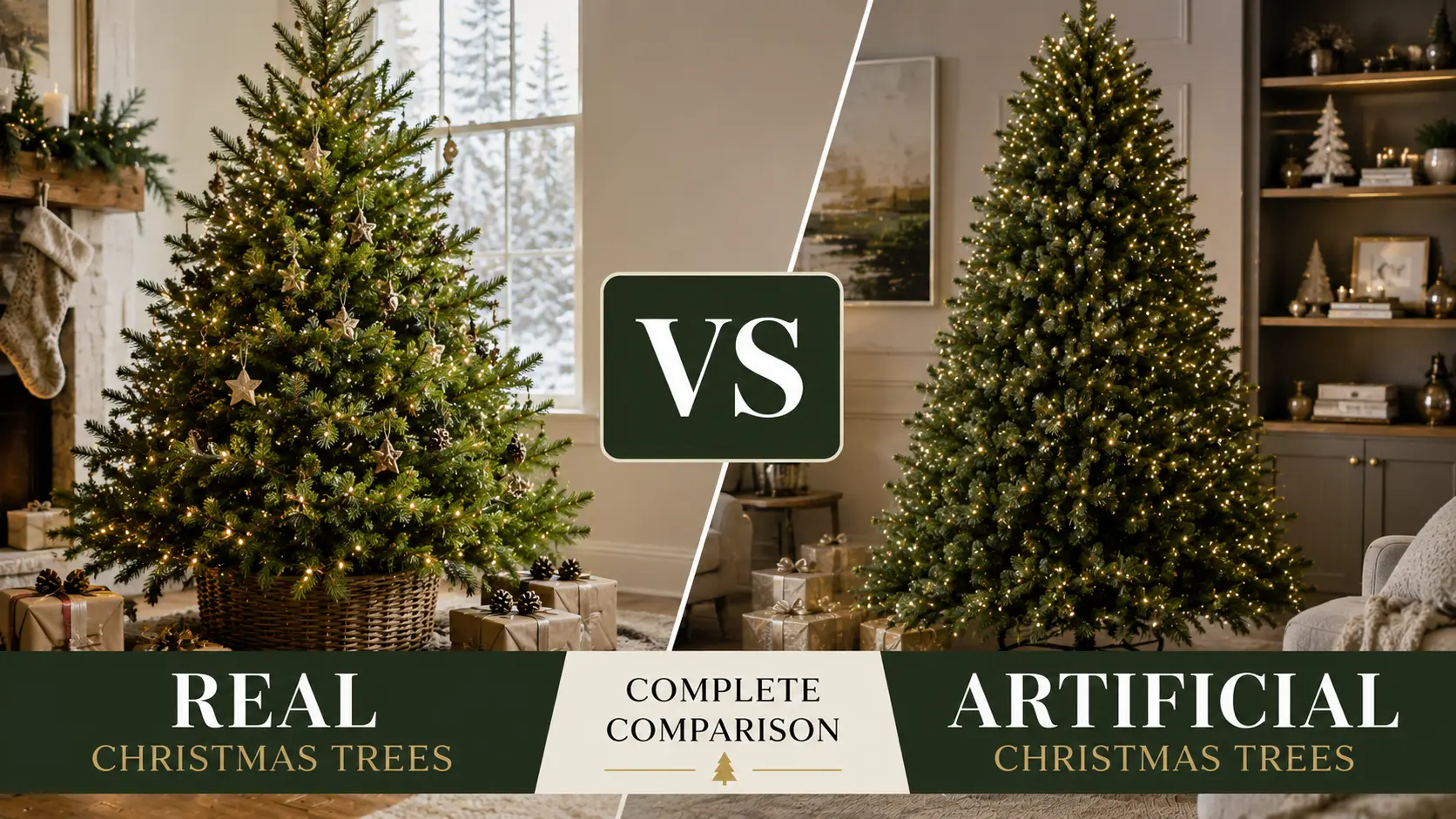

Every December, millions of households face the same question: real tree or artificial? And increasingly, the answer is shaped by something beyond preference or convenience. People genuinely want to know which option is better for the planet.
The sustainability conversation around Christmas trees has grown louder in recent years, and for good reason. Between manufacturing concerns, pesticide use, plastic waste, and carbon footprints, there is a lot to sort through before you can draw any real conclusions. If you have ever searched for an eco-friendly Christmas tree option and found yourself more confused afterward than before, this article is for you.
We will walk through every angle of the artificial Christmas tree debate, from how these trees are made to how long you need to keep one before it actually becomes the greener choice. If you are also thinking about buying a tree this season, christmastree.deals is a solid place to start once you have figured out what suits your situation.
What Makes a Christmas Tree Eco-Friendly?
Before comparing options, it helps to agree on what “eco-friendly” actually means in this context. A product does not automatically earn green credentials just because it is natural or plant-based. True environmental friendliness involves several factors working together.
Carbon footprint is the most commonly cited metric. This refers to the total greenhouse gas emissions produced across a product’s entire life cycle, including manufacturing, transportation, use, and disposal.
Resource consumption matters too. How much water, land, energy, and raw material does a product require to exist?
Longevity and reusability are where artificial trees often make their case. An item used once and discarded is very different from one used for a decade or more.
End-of-life impact also plays a significant role. Can the product be recycled, composted, or repurposed? Or does it sit in a landfill for centuries?
When you stack artificial Christmas trees against real ones across all of these factors, the picture is genuinely nuanced, which is exactly what we are going to explore.
How Artificial Christmas Trees Are Made
Most artificial Christmas trees are manufactured in China, primarily using polyvinyl chloride, more commonly known as PVC. The branches are crafted from PVC needles molded onto wire branch tips, which are then attached to metal or steel central poles. The whole structure is designed to be assembled, disassembled, and stored in a box year after year.
PVC is a plastic derived from fossil fuels, and its production involves chemicals including vinyl chloride monomer, which is classified as a known human carcinogen. This is a legitimate environmental and health concern during the manufacturing stage.
After production, the trees are typically shipped in large shipping containers from manufacturing facilities in China to retail markets in North America, Europe, and elsewhere. The long transoceanic shipping route adds to the product’s carbon footprint before it ever reaches your living room.
On the other hand, once the tree is in your home, it produces no further emissions on its own. No watering, no fresh soil, no weekly trips to a farm stand. Its footprint from that point forward is largely static, which is central to the pro-artificial argument.
Environmental Pros of Artificial Christmas Trees
Reusability Over Many Seasons
This is the core argument in favor of artificial trees from an environmental standpoint. A single artificial tree used for ten, fifteen, or even twenty years is fundamentally different from one used for a single season and tossed. The longer you keep it, the more the manufacturing and shipping footprint gets amortized across years of use.
Reduced Annual Waste
Roughly 25 to 30 million real Christmas trees are sold each year in the United States alone. After the holiday season, many end up in landfills or as yard waste. Even where curbside composting programs exist, the logistics of disposal still have an environmental cost. An artificial tree generates no such recurring waste.
No Watering Requirements
A real Christmas tree in your home needs water every day to stay fresh and slow down needle drop. While this is not the most significant environmental factor, it does contribute to household water usage across the millions of homes that display live trees each year.
No Pesticides or Fertilizers
Commercial Christmas tree farming involves significant chemical inputs. Pesticides, herbicides, and synthetic fertilizers are commonly used to produce the dense, uniform trees consumers expect. These chemicals can affect local soil health, waterways, and surrounding ecosystems. Artificial trees sidestep this entirely.
Stable Long-Term Footprint
Unlike a real tree, which creates a new environmental impact every single year, an artificial tree’s footprint is mostly front-loaded. Once manufactured and purchased, the ongoing environmental cost is minimal. This makes long-term use the deciding variable, which leads us naturally to the cons.
Environmental Cons of Artificial Christmas Trees
Manufacturing Footprint
The production of PVC involves energy-intensive industrial processes and releases pollutants that have real local environmental and health impacts, particularly in communities near manufacturing facilities. This is the biggest legitimate criticism of artificial trees from an environmental standpoint.
Plastic Components and Non-Biodegradability
PVC does not break down. An artificial tree that reaches the end of its useful life, whether after five years or thirty, will not decompose in a landfill. It will persist for hundreds of years. This is a serious issue when trees are discarded after only a few seasons.
Limited Recycling Options
Very few recycling programs accept artificial Christmas trees. The combination of PVC, metal wire, and other materials makes them difficult and expensive to process. In practice, most discarded artificial trees end up in landfill. Some specialty programs exist, but access is limited and inconsistency across regions makes recycling the exception rather than the rule.
Transportation Emissions
The long shipping route from Chinese factories to Western consumers contributes meaningfully to the tree’s overall carbon footprint. Studies have found that transportation can account for a significant share of an artificial tree’s total emissions. This is less of an issue if trees are bought locally and used for many years, but it is worth acknowledging.
Artificial vs Real Christmas Trees: Which Is Greener?
This is the comparison that matters most, and the honest answer is: it depends, primarily on how long you keep your artificial tree.
Carbon Footprint Comparison
A widely cited study by the American Christmas Tree Association found that an artificial tree has a higher upfront carbon footprint than a real tree. However, the same analysis concluded that if you use your artificial tree for at least five years, its annual carbon impact becomes comparable to or lower than buying a new real tree each year.
Other independent studies have suggested the break-even point could be anywhere from seven to twelve years, depending on methodology and the specific tree being analyzed. The range of estimates reflects genuine variation in tree quality, travel distances, farming practices, and disposal methods.
Resource Consumption
Real tree farming does use land, water, and chemicals, but Christmas tree farms also sequester carbon during the growing process. Trees take seven to ten years to reach harvestable size, and farms are typically replanted after harvest, maintaining a cycle of carbon capture. Artificial trees, by contrast, do not capture any carbon.
Waste Generation
A real tree bought from a farm that replants and disposed of through a composting program generates relatively little lasting waste. An artificial tree discarded after a few years generates durable plastic waste with no easy end-of-life solution.
Longevity
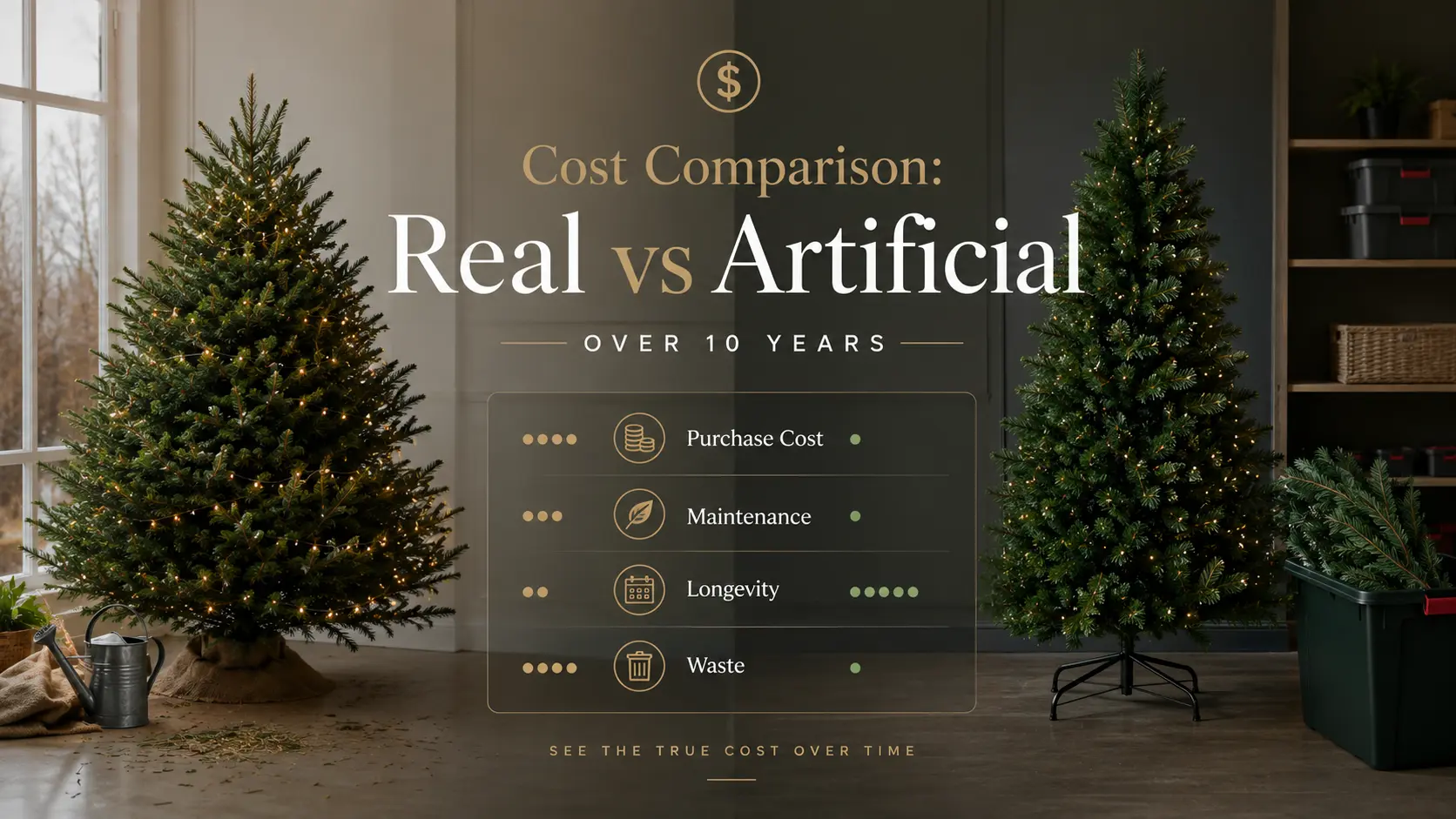
This is where artificial trees have the clearest advantage. A high-quality artificial tree can last fifteen to twenty years with proper care. No real tree can replicate this.
Transportation
Both types of trees involve transportation. Real trees are often grown regionally, especially in major tree-producing states like Oregon, North Carolina, Michigan, and Washington, which reduces shipping distance. Artificial trees typically travel much farther.
At-a-Glance Comparison
| Factor | Artificial Tree | Real Tree |
|---|---|---|
| Upfront carbon footprint | Higher | Lower |
| Annual carbon impact (10+ years) | Lower | Higher (new tree each year) |
| Biodegradability | No | Yes |
| Recyclability | Very limited | High (composting) |
| Pesticide use | None | Common in commercial farming |
| Carbon sequestration | None | Yes, during growing phase |
| Longevity | 10 to 20+ years | One season |
| Reusability | Yes | No |
| Land use | None (after purchase) | Ongoing, but can be net positive |
| Waste generation over time | Potentially significant | Minimal with proper disposal |
How Long Should You Keep an Artificial Tree to Make It Eco-Friendly?
This is arguably the most important question in the entire debate, and most people do not think about it at the time of purchase.
Most environmental analyses suggest that an artificial tree needs to be used for a minimum of seven to ten years before it becomes genuinely competitive with buying a real tree each year from an environmental standpoint. Some analyses put the number lower (around five years) and others higher (up to twelve), but the consensus points to roughly a decade as the meaningful benchmark.
Why does longevity matter so much? Because the environmental cost of an artificial tree is front-loaded. The PVC production, the energy used in manufacturing, the shipping from overseas, all of that happens before the tree reaches your home. Once it is there, the per-year footprint drops with each additional season of use. After year one, the only ongoing cost is the energy used to light it.
This also means that households that replace their artificial tree every three to five years, either because of trends, damage from poor storage, or simply wanting something new, are driving the environmental costs up dramatically. A tree replaced frequently is genuinely worse than a real tree in terms of total impact.
The lesson is straightforward: if you buy an artificial tree, commit to keeping it for as long as possible. That is not just advice for your wallet. It is what makes the environmental math work.
Choosing an Eco-Friendly Artificial Christmas Tree
Not all artificial trees are equal from a sustainability standpoint. The quality of the tree, its materials, how it is stored, and how long it realistically lasts all factor into its true environmental impact.
Buy Quality, Not Just Cheap
A tree bought purely on price is more likely to shed branches, lose its shape, and need replacement within a few years. Spending more upfront on a well-constructed tree with a solid metal frame, dense branch tips, and durable foliage material gives you a product that can genuinely last for fifteen years or more.
Consider Pre-Lit Trees
Pre-lit trees can actually be a smarter choice for households planning to use their tree for many years. They eliminate the need to purchase and replace string lights separately each year, reducing the overall material consumption associated with your holiday setup. If you are looking at this option, the selection at christmastree.deals/collection/pre-lit-christmas-trees/ is a good place to compare quality options.
Think About Storage
One underappreciated factor in artificial tree longevity is storage. Trees stored carelessly, crammed into small spaces, or left in damp garages deteriorate faster. Choosing a tree that comes with a storage bag or box, and dedicating proper space to it, extends its lifespan significantly.
Slim Trees for Smaller Spaces
For apartment dwellers or anyone working with limited space, a slim or pencil-style tree is worth considering. These trees take up less storage space, meaning they are more likely to be stored properly and therefore last longer. You can also size it correctly for your room without buying a tree that is too large, which increases the odds you will keep it year after year. The slim and pencil Christmas tree collection at christmastree.deals has options worth exploring, and if you are deciding on size, this guide on what height Christmas tree to buy for your home can help narrow things down before you commit.
Tips for Making Your Artificial Tree More Sustainable
Once you own an artificial tree, there are practical ways to extend its life and reduce its overall environmental footprint.
Store it properly every year. Use the original box, a dedicated storage bag, or a tree storage bin. Proper storage prevents physical damage, keeps the shape intact, and protects branch tips from breaking.
Repair before replacing. If a section stops working or a branch tip breaks, look for replacement parts before writing off the whole tree. Many manufacturers sell replacement parts, and with a little effort, a minor issue can be fixed rather than becoming a reason to discard the entire tree.
Reuse your decorations. Every year spent reusing existing ornaments, ribbons, and tree skirts instead of buying new ones adds up. The environmental footprint of a Christmas setup includes the decorations, not just the tree.
Use LED lighting. If your tree is not pre-lit, use LED string lights. They use up to 75% less energy than traditional incandescent bulbs and last far longer, meaning fewer bulbs end up in the bin.
Give your tree away rather than discarding it. If you genuinely need to replace your tree, consider donating it to a school, church, community center, or charity organization before sending it to landfill. A tree with more life left in it should get that chance.
Common Sustainability Myths About Artificial Christmas Trees
“Artificial trees are always the environmentally worse option”
This is simply not true. A well-made artificial tree kept for ten or more years performs comparably to or better than buying a new real tree every year, particularly when the real tree comes from a distant farm or is disposed of in landfill rather than composted.
“Real trees are always the greener choice”
Real trees have genuine environmental benefits, including carbon sequestration during growth, biodegradability, and compostability. But they are not automatically the eco-friendly default. A real tree that travels a long distance from farm to lot to home, in a region with no composting program, has a much less favorable footprint than commonly assumed.
“Artificial trees are too toxic to be considered sustainable”
PVC manufacturing does involve concerning chemicals, and this deserves serious consideration. However, once an artificial tree is in your home, it is not a meaningful toxicity risk during normal use. The concern is primarily at the manufacturing stage and end-of-life stage, not during the years the tree is being used.
“One type of tree is clearly better than the other”
If there is one thing the research consistently shows, it is that there is no universal answer. The best choice depends on how long you keep your artificial tree, where your real tree comes from, how you dispose of it, and a range of other factors specific to your situation.
Best Christmas Tree Option for Different Households
Families with Children
For families who move through multiple real trees each year or who have young children that are tough on decorations, a high-quality artificial tree can be the practical and environmental winner. Children grow up quickly, tastes change, and a durable tree kept for fifteen years serves the household well without creating annual fresh-tree waste. For families who also want the option of flexible sizing over the years, reading about slim and pencil trees for small spaces might open up some options they had not considered.
Apartment Dwellers
Space constraints make compact artificial trees a natural fit. A slim or pencil-style tree stored efficiently in a closet can last many years in an apartment setting where real tree logistics (buying, transporting, disposing) are genuinely burdensome. Less hassle also means less temptation to skip the season or make careless decisions about disposal.
Frequent Movers
People who move often, whether renters or those with careers that involve relocation, are not ideal candidates for large real trees requiring elaborate setup. A sturdy, packable artificial tree that travels well is both practical and more environmentally responsible than buying and discarding a real tree at every new address.
Long-Term Homeowners
For people who have lived in the same home for many years and have a reliable composting program nearby, a real tree from a local farm can be a genuinely good environmental option. The carbon captured during growth, combined with proper disposal, makes the case. But even here, a quality artificial tree used decade after decade is a defensible alternative.
Final Verdict: Are Artificial Christmas Trees Eco-Friendly?
The short answer is: they can be, under the right conditions.
An artificial tree is not inherently eco-friendly or inherently destructive. Its environmental impact is determined almost entirely by how long it is used and what happens to it at the end of its life. A cheap tree bought on impulse, used for three seasons, and thrown away is genuinely bad for the environment. A quality tree bought thoughtfully, stored carefully, and used for fifteen or more years is a genuinely reasonable environmental choice.
The real environmental risk with artificial trees is not the PVC or the overseas manufacturing. It is the consumer habit of replacing them frequently. If the industry and consumers both took longevity more seriously, the environmental math would shift considerably in artificial trees’ favor.
That said, real trees are not the environmental disaster they are sometimes made out to be either, particularly when sourced from local farms and properly composted. The honest conclusion is that both options can be sustainable, and both can be wasteful, depending almost entirely on the choices made around them.
If you are ready to make a decision and want to explore your options in detail, check out the ultimate guide to pre-lit Christmas trees for a deeper look at what to look for in a long-lasting, quality artificial tree.
Conclusion
The environmental debate between artificial and real Christmas trees is genuinely complicated, and anyone who gives you a simple yes or no answer is leaving out important context.
Artificial trees come with a meaningful upfront environmental cost tied to PVC production and overseas shipping. But that cost becomes increasingly reasonable when spread over a decade or more of annual use. The key is longevity: buy quality, store carefully, and resist the urge to replace.
Real trees have real environmental benefits, particularly their ability to sequester carbon during growth and biodegrade cleanly after use. But annual replacement creates recurring waste, and disposal habits vary widely.
For most households, the most sustainable option is whichever tree you will genuinely keep for the longest time, maintain thoughtfully, and eventually dispose of responsibly. That might be an artificial tree you use for twenty years, or it might be a locally grown real tree composted each January. Neither path is wrong. Both require a little intentionality.
Frequently Asked Questions
Are artificial Christmas trees bad for the environment?
Artificial trees have a higher upfront environmental cost due to PVC manufacturing and international shipping. However, they are not necessarily bad for the environment if used for many years. The key factor is longevity. A tree used for ten or more seasons typically has a comparable or lower total environmental impact than buying a new real tree each year.
How many years do you need to use an artificial tree to make it eco-friendly?
Most studies suggest a minimum of seven to ten years is needed before an artificial tree becomes environmentally competitive with an annual real tree. Some analyses put the number at five years, others as high as twelve, depending on the specific assumptions. Using the tree for its full useful life, often fifteen to twenty years for a quality product, makes the environmental case strongest.
Are real Christmas trees better for the environment than artificial ones?
It depends. Real trees grown on local farms and composted after use can be a genuinely eco-friendly choice. However, if real trees are shipped long distances, purchased from non-sustainable sources, or end up in landfill rather than being composted, their environmental benefits shrink considerably. There is no universal winner.
Can artificial Christmas trees be recycled?
Recycling options for artificial trees are very limited. The combination of PVC, metal, and other materials makes them difficult to process through standard recycling streams. A small number of specialty programs exist, but they are not widely accessible. The best environmental strategy is to keep your artificial tree for as long as possible and donate it if it still has life left when you no longer want it.
What is the most eco-friendly Christmas tree option?
There is no single answer. For most people, the most eco-friendly option is whichever tree they will keep and use for the longest period of time. A high-quality artificial tree used for fifteen to twenty years, a real tree from a local farm with proper composting, or even a living potted tree that can be planted outdoors afterward are all valid sustainable choices depending on circumstances.
Do artificial Christmas trees contain harmful chemicals?
Most artificial trees are made from PVC, which involves chemicals during the manufacturing process. Some older or very cheap trees may contain lead stabilizers. Modern quality trees are generally safe for normal household use, but it is worth choosing reputable brands and avoiding very cheap products of uncertain origin. The chemical concerns are primarily relevant during manufacturing and disposal, not during typical in-home use.
What should I look for when buying a sustainable artificial Christmas tree?
Prioritize quality and durability over price. Look for trees with sturdy metal frames, high branch-tip counts, and solid construction that will hold up to repeated assembly and disassembly. Pre-lit trees can reduce additional material consumption over time. Buy from brands with good reviews for longevity, and commit to keeping the tree for as many years as possible.
Is a living Christmas tree the most eco-friendly option?
A living potted tree that can be planted in your garden after the holiday season is often considered the most eco-friendly option of all, at least in theory. It eliminates disposal entirely and can continue growing and sequestering carbon for decades. The practical challenge is that not everyone has outdoor space, and living trees require care to survive the transition from indoors to outdoor planting. For the right household, though, it is a genuinely excellent choice.