
There is something that happens the moment you walk into a room where a freshly cut Christmas tree stands. Before you notice the lights, before you take in the ornaments, before you hear the holiday music playing in the background, your nose picks up something that reaches straight into the oldest, most emotional part of your memory. That piney, resinous, faintly sweet fragrance is one of the most powerful sensory triggers in the holiday season, and yet most people never think about it consciously when buying a tree.
Scent is arguably the most underrated factor in choosing a Christmas tree. People spend hours comparing branch density, needle retention, height options, and price per season. But fragrance? It often gets mentioned as an afterthought, if at all. That is a mistake, because the aroma your tree produces will quietly shape the atmosphere of your home every single day it stands there.
Whether you are a long-time real tree buyer or someone exploring your options at christmastree.deals, understanding how Christmas tree scent works and which species deliver the best fragrance will help you make a far more satisfying decision this year.
Why Christmas Tree Scent Matters More Than Most People Realize
Ask anyone with a strong holiday memory and there is a good chance smell is somewhere in the story. The scent of a real Christmas tree is not just pleasant. It is neurologically significant.
The olfactory system is the only sense with a direct pathway to the limbic system, which governs emotion and long-term memory. When you smell a Fraser fir or a balsam pine, you are not just detecting organic compounds. You are triggering memories, feelings, and associations that have been building since childhood. That is why the christmas tree aroma can make grown adults feel a specific kind of warmth or nostalgia that no other decoration in the house can replicate.
From a practical standpoint, christmas tree fragrance also affects the overall atmosphere of your home. It signals the season in a way that is passive and constant. You do not have to look at the tree to know it is there. The scent drifts through rooms, greets guests at the door, and lingers on clothing in a way that feels genuinely festive rather than staged.
For families with children, this sensory layer becomes part of the tradition itself. Children who grow up with a real tree in the home often associate that specific fir tree scent with safety, excitement, and togetherness in ways that carry forward for decades. The christmas tree experience, in the fullest sense, is not just visual. It is deeply olfactory.
What Creates the Classic Christmas Tree Smell?
The fragrance from a real Christmas tree comes from a group of naturally occurring organic compounds called terpenes. These are the same class of molecules responsible for the scent of lavender, eucalyptus, citrus peel, and most aromatic plants. In conifers, terpenes are produced as part of the tree’s resin system, primarily as a defense mechanism against insects and pathogens.
When you bring a cut tree into your home, the warm indoor air accelerates the evaporation of these volatile compounds from the needles, bark, and resin. The result is the fragrance you associate with Christmas. Different species produce different combinations of terpenes, which is why a Fraser fir smells noticeably different from a Scotch pine, even though both are commonly sold as Christmas trees.
The main terpenes involved include alpha-pinene, which gives that sharp, clean pine note; limonene, which adds a faint citrusy brightness; and camphene and bornyl acetate, which contribute to the deeper, more resinous base notes. Balsam firs are particularly rich in bornyl acetate, which is why their scent has that almost medicated, deep-forest quality that many people find intensely nostalgic.
Resin production also plays a role. When a tree is cut and the wound is fresh, resin flows to seal the cut. This resin contains high concentrations of terpenes, and a freshly cut tree will release more fragrance than one that has been sitting on a lot for several weeks. This is one reason tree freshness matters so much for both christmas tree aroma and needle retention.
Real Christmas Trees: The Clear Winner for Natural Scent?
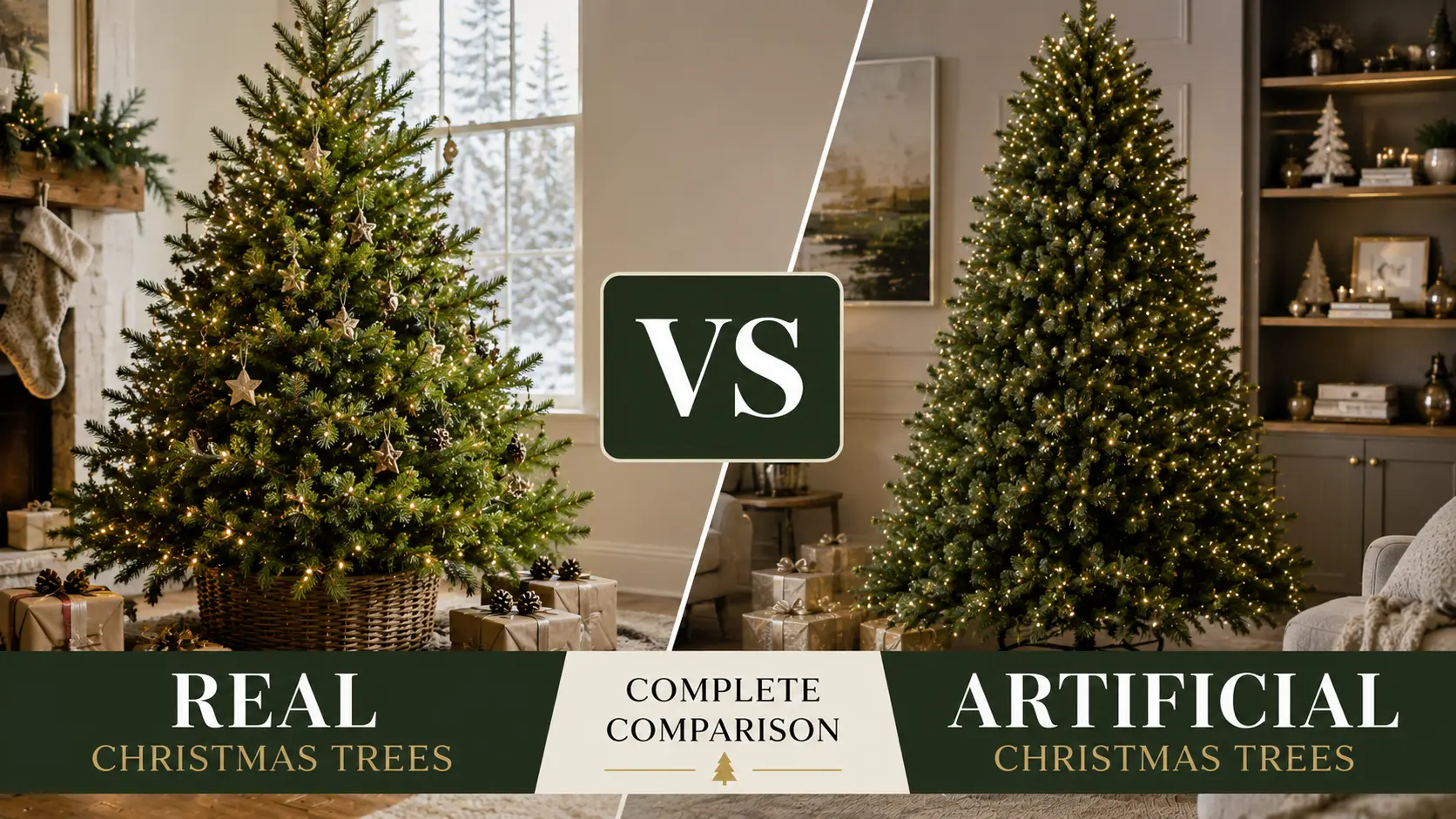
If you are choosing a tree primarily for fragrance, real Christmas trees are in a category of their own. No artificial product currently replicates the full complexity of a living conifer’s scent profile. That said, not all real trees smell the same, and the differences between species are significant enough to influence your decision.
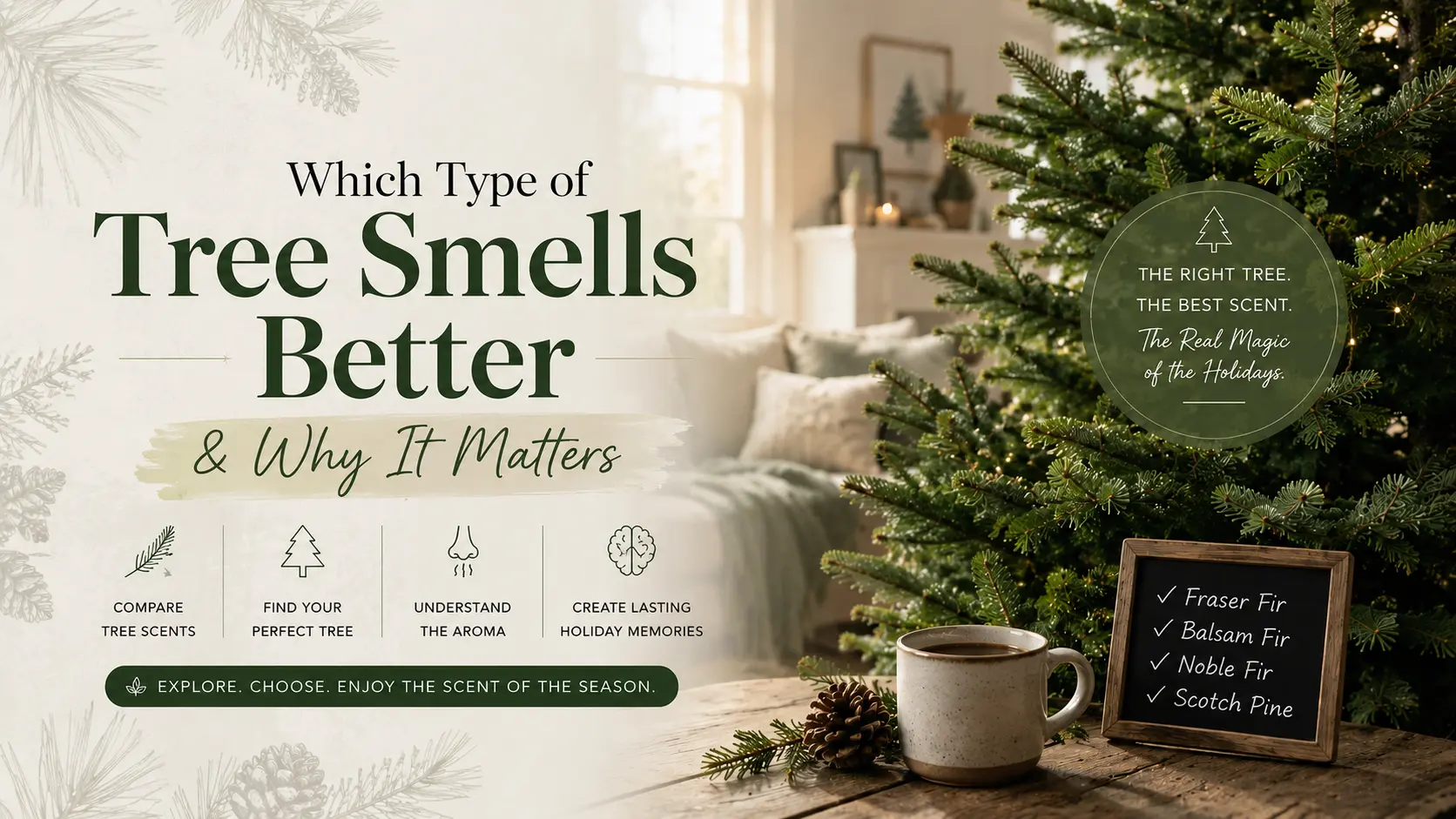
Here is a closer look at the most popular species and what each brings to the christmas tree experience in terms of fragrance.
Fraser Fir
The Fraser fir is consistently ranked as one of the best smelling christmas tree options available. Its scent is fresh, mild, and slightly sweet with a clean evergreen quality that is not overpowering. For households where someone may be sensitive to strong fragrances, Fraser fir hits a perfect middle ground: unmistakably a Christmas tree without being assertive enough to dominate a room.
Beyond fragrance, Fraser firs hold their needles exceptionally well and have a naturally symmetrical form, which makes them among the most popular choices in the United States.
Balsam Fir
For those who want the most intensely traditional christmas tree fragrance, balsam fir is often the answer. This species produces one of the richest, most complex scent profiles of any commonly available Christmas tree. It has deep, resinous base notes layered with a clean, slightly sweet top note that fills a room quickly. Balsam fir is the species that most closely matches what people describe when they say they want a tree that “smells like Christmas.”
The fragrance comes partly from the resin canals in the needles and bark, which release volatiles readily in warm indoor environments. Balsam fir can be slightly more demanding in terms of watering and care to maintain needle freshness, but for fragrance enthusiasts, it is hard to beat.
Douglas Fir
The Douglas fir occupies an interesting middle ground. Its scent has a slightly sweeter, almost fruity quality compared to the crisper profile of the true firs. Some people describe it as having faint notes of citrus or vanilla alongside the classic evergreen base. It is a distinctive and appealing fragrance, though it is not as immediately recognizable as balsam or Fraser fir.
Douglas firs tend to release more fragrance when the needles are handled or brushed against, making decorating particularly aromatic. They are widely available in the western United States and offer solid needle retention when kept well-watered.
Noble Fir
Noble fir has a crisp, clean scent that is lighter than balsam but more structured than Fraser. Its fragrance tends toward a more airy, forest-like quality with less of the heavy resinous depth you get from balsam. Noble firs are prized in the Pacific Northwest and have become increasingly popular nationally for their rigid branches, which hold heavy ornaments well, and their attractive blue-green needle color.
For people who find the intensity of balsam fir a bit much, noble fir offers a beautiful, refined christmas tree aroma without the same level of assertion.
Scotch Pine
Scotch pine was for decades the most common Christmas tree sold in North America, and its sharp, turpentine-edged scent defined the holiday fragrance for a generation of Americans. It is a stronger, more resinous smell than the firs, with a distinctly piney quality that some find powerfully nostalgic and others find slightly harsh.
Scotch pine holds its needles well even after the tree dries out, which was historically a practical advantage. Its fragrance tends to be more one-dimensional than the layered profiles of the firs, but it remains deeply associated with Christmas for people who grew up with it.
Christmas Tree Scent Comparison Table
| Species | Scent Intensity | Scent Character | Best For |
|---|---|---|---|
| Balsam Fir | High | Deep, resinous, sweet | Maximum fragrance experience |
| Fraser Fir | Medium | Clean, mild, fresh | Balanced scent and needle retention |
| Douglas Fir | Medium | Sweet, citrusy, fruity | Unusual and pleasant fragrance profile |
| Noble Fir | Low-Medium | Crisp, airy, forest-like | Light fragrance, elegant appearance |
| Scotch Pine | Medium-High | Sharp, piney, resinous | Traditional pine scent fans |
Artificial Christmas Trees: Can They Compete?
The honest answer is no, at least not in terms of natural, authentic christmas tree fragrance. Artificial trees are manufactured from PVC, PE plastic, or metal and produce essentially no scent at all. The materials are inert at room temperature. When you walk past an artificial tree, you smell the room you are in, not the tree.
This is one of the most significant functional differences between real and artificial trees and also one of the least discussed. Manufacturers have responded to consumer demand for fragrance with a range of scent accessories, including infused sprays, scented pinecone attachments, essential oil sticks, and scented sachets designed to hang among the branches. These can add fragrance to a space, but they do not replicate the authentic, living-tree experience that real christmas tree scent provides.
Modern artificial trees do offer meaningful advantages in other areas. How long do artificial Christmas trees last? Premium artificial trees can last fifteen to twenty years with proper storage, which changes the value proposition significantly when you calculate cost and environmental impact over time. For households that prioritize convenience, consistent appearance, and allergy management over fragrance, artificial trees make a great deal of sense.
But if scent is part of why Christmas feels like Christmas to you or your family, an artificial tree will always leave something missing.
Real vs Artificial Tree Smell: Side-by-Side Comparison
| Factor | Real Christmas Tree | Artificial Christmas Tree |
|---|---|---|
| Natural Scent | Strong and authentic | None |
| Scent Longevity | 3 to 6 weeks, varies by species | N/A unless scent accessories added |
| Scent Consistency | Fades gradually over time | Consistent if using spray or diffuser |
| Maintenance Required | Water daily, keep away from heat | No maintenance required |
| Fragrance Complexity | Multi-layered terpene profile | Single-note spray or none |
| Overall Sensory Experience | Full and immersive | Limited without accessories |
| Cost of Scent | Included in tree purchase | Accessories add ongoing cost |
Does Tree Scent Affect Holiday Enjoyment?
Research in sensory psychology consistently shows that scent is more powerful than most people acknowledge in shaping emotional states. The specific combination of alpha-pinene and other conifer terpenes has been associated in multiple studies with reduced stress, improved mood, and a sense of calm alertness. This is part of the science behind forest bathing, a wellness practice from Japan that involves spending time among trees for psychological benefit.
In a domestic holiday context, this means a real tree with strong fragrance is not just aesthetically pleasing. It may be actively contributing to the feeling of relaxation and warmth that people associate with the best holiday memories.
Think about the experience of walking into a home where a fresh balsam fir stands in the corner. Before you see it, before your host greets you, that scent reaches you. It communicates something: that this is a home that marks the season, that effort and care went into creating an atmosphere. Guests notice and respond to this in ways they often cannot quite articulate.
For families with young children, the tree’s fragrance becomes part of the sensory landscape of December, layered alongside cookie smells and wood smoke and familiar holiday music. These sensory combinations become the raw material of long-term holiday nostalgia. The christmas tree experience in its fullest form is built as much from what children smell as from what they see.
How Long Does a Real Christmas Tree Keep Its Fragrance?
The longevity of christmas tree fragrance depends on several interacting factors: species, initial freshness, indoor temperature, humidity, and how well the tree is cared for after purchase.
Balsam fir, which has the most intense fragrance at purchase, also tends to fade more quickly in warm, dry indoor environments. Fraser fir’s milder scent tends to be more sustained over the full season. Noble fir can maintain a pleasant if subtle fragrance for the duration of its display, often four to six weeks.
Environmental conditions matter a great deal. A tree displayed in a warm, dry living room near a heating vent will lose its fragrance significantly faster than one kept in a cooler space with moderate humidity. Indoor heating is the enemy of both fragrance and needle retention.
The freshness of the tree at purchase is the single most important factor. A tree cut weeks before it reaches a retail lot has already lost most of its most volatile aromatic compounds. Cutting from a local farm or choosing a retailer with high stock turnover gives you significantly better fragrance. For comprehensive advice on keeping your tree fresh and aromatic throughout the season, the real christmas tree care guide on watering and longevity is worth reading before you buy.
Can You Make an Artificial Tree Smell Like a Real Tree?
If you already own an artificial tree and want to add some christmas tree fragrance to your home, there are practical options that work reasonably well, even if none of them fully replicate the complexity of a living fir.
Essential oils and diffusers are among the most effective options. Cedarwood, fir needle, pine, and spruce essential oils are widely available and can be diffused into a room using an ultrasonic diffuser positioned near the tree. This creates a pervasive, pleasant holiday fragrance without direct contact with the tree itself.
Commercial tree scent sprays are sold specifically for artificial trees and are formulated to coat the branches lightly with a fragrance that lasts several days before needing reapplication. The quality varies enormously by brand, with the better products using genuine conifer-derived fragrance compounds rather than synthetic approximations.
Scented pinecones placed among the branches or in a bowl nearby can add a subtle, naturalistic fragrance. These can be made at home by coating dried pinecones in a few drops of fir or pine essential oil or purchased pre-scented.
Balsam sachets filled with dried balsam fir needles are a traditional New England craft item that produces a genuine, lasting christmas tree aroma. They can be tucked among the branches of an artificial tree with good effect.
Soy or beeswax candles in holiday fragrance blends are a good ambient option, though they require supervision and should never be left burning unattended near any tree, artificial or real.
No combination of accessories will replicate the full living-tree fragrance experience, but for households committed to an artificial tree for practical reasons, these options meaningfully improve the holiday atmosphere.
Scent vs Convenience: The Trade-Off
The real vs artificial tree debate is ultimately a question of what you are optimizing for. Scent is one important variable. Convenience and cost are others.
Real Trees
Real Christmas trees require more active management. They need daily watering to maintain freshness and fragrance, appropriate placement away from heat sources, and eventual disposal after the season. The cost recurs annually, though prices vary significantly by species and region. The reward for this investment is genuine, evolving christmas tree fragrance that fills your home naturally and the full sensory richness of a living tree.
Buying the right height tree for your space is also part of the real tree decision. If you are uncertain about sizing, this guide on what height christmas tree you should buy will help you avoid the common mistake of buying too large or too small for your ceiling and room proportions.
Artificial Trees
Artificial trees require essentially no maintenance during display. They go up, stay up, and come down with no watering, no needle cleanup, and no disposal logistics. For busy households, that convenience is genuinely valuable. The upfront cost is higher, but when spread across years of use, artificial trees can be significantly more economical. For a detailed breakdown of real costs over time, the cost comparison of real vs artificial Christmas trees over ten years makes the math clear and useful.
The trade-off is primarily the absence of natural christmas tree fragrance, along with a plastic or synthetic aesthetic that some households find perfectly acceptable and others find unsatisfying compared to a living tree.
Environmental Considerations
The environmental question around Christmas trees is more nuanced than it first appears. Real trees are grown as an agricultural crop, typically on farms that rotate stock over seven to ten years per tree. These farms provide habitat, sequester carbon during the growing period, and produce a fully biodegradable product that can be composted or chipped after the season.
Artificial trees have a significant upfront manufacturing footprint, requiring petroleum-derived plastics and metal components, typically produced in overseas factories and shipped internationally. However, an artificial tree used for fifteen or more years offsets much of that initial carbon cost through avoided annual tree purchases.
If you are making decisions with environmental impact in mind, this detailed look at whether artificial Christmas trees are eco-friendly provides a balanced and evidence-based assessment. The short answer is that longevity of use is the key variable: a high-quality artificial tree kept for many years is more defensible environmentally than one discarded after three seasons.
Which Tree Is Best for Different Types of Homeowners?
Different households have genuinely different priorities, and the best smelling christmas tree is not necessarily the same answer for everyone.
Traditional Families
For households with children who are building holiday memories, a real balsam or Fraser fir provides the full multi-sensory christmas tree experience. The fragrance, the ritual of watering, the needle-drop discoveries, and the collective decoration process all contribute to the kind of holiday tradition that children carry into adulthood.
Apartment Dwellers
Apartment residents often have limited space and practical constraints around disposal. A slim or compact real tree in a smaller species, such as Fraser fir, provides genuine fragrance in a manageable size. Alternatively, slim and pencil-style artificial trees are designed specifically for smaller spaces and can be enhanced with diffused essential oils.
Busy Professionals
For households where time is the scarcest resource, an artificial tree eliminates the daily watering routine and the weekend trip to a tree farm. The fragrance trade-off can be partially addressed with a quality essential oil diffuser. The convenience advantage is real and significant.
Allergy Sufferers
Some people have sensitivities to pine pollen, mold that can grow on a tree’s cut end, or specific terpene compounds. For these households, a high-quality artificial tree is genuinely the better choice. The absence of christmas tree fragrance is a feature rather than a drawback. Adding fragrance through diffused oils allows for some control over concentration and compounds.
Luxury Decor Enthusiasts
For those who prioritize premium aesthetics and a high-end holiday atmosphere, a large, freshly cut noble fir or Fraser fir combined with thoughtful lighting creates an environment no artificial tree can match. The fragrance of a premium-quality real tree is itself a luxury element that distinguishes a home during the holiday season.
Minimalist Homes
Minimalist interiors often favor clean lines and low visual clutter. A well-chosen artificial tree can be decorated precisely and stored identically each year, which suits a minimalist sensibility. For fragrance without complexity, a single-note pine diffuser keeps the scent presence subtle and controlled.
Does Tree Size Affect Fragrance?
The relationship between tree size and fragrance is real but often misunderstood. A larger tree does not automatically produce more fragrance per unit of air. What matters is the ratio of foliage to room volume and how well the room circulates that scented air.
A nine-foot balsam fir in a small, enclosed living room will produce an intense fragrance experience, potentially even overwhelming for some people. The same tree in a two-story open-plan living space may feel barely noticeable. Smaller trees in rooms with good air circulation often provide a more pleasant and consistent christmas tree aroma than larger trees in poorly ventilated spaces.
If you are considering a pre-lit tree in a larger size, browsing pre-lit christmas tree options will help you find configurations that balance visual presence with practical display requirements. For real trees, air circulation around the tree matters: avoid corners that trap air and position the tree where household movement naturally distributes the fragrance through your living space.
Common Myths About Christmas Tree Smell
Myth: All fir trees smell the same. This is genuinely false. As the species profiles above illustrate, balsam, Fraser, noble, and Douglas firs have distinct, measurably different terpene profiles that produce noticeably different fragrance experiences. Balsam is deep and resinous. Fraser is mild and clean. Douglas is sweet and citrusy. Noble is airy and light.
Myth: Artificial trees can smell identical to real trees. Current technology produces artificial christmas tree smell options that are pleasant approximations at best. The multi-layered, evolving complexity of a living tree’s terpene release cannot be replicated by any spray, oil, or sachet currently on the market.
Myth: Bigger trees always smell stronger. Room size, air circulation, species, and freshness all influence the fragrance experience far more than tree height or mass. A compact, fresh balsam fir will often produce more noticeable fragrance than a large, older Fraser fir.
Myth: Strong smell means a fresh tree. Freshness and fragrance intensity are related but not identical. Some species naturally produce more volatile terpenes than others regardless of freshness. A fresh noble fir will smell less intense than a slightly older balsam fir. Freshness is better assessed by needle flexibility and moisture at the cut end than by fragrance strength alone.
Myth: Flocked trees smell as strong as unflocked real trees. The flocking material applied to create that snowy look partially coats the needles and reduces terpene evaporation. If you are choosing between a flocked and a traditional real tree primarily for fragrance, the comparison of flocked vs traditional christmas trees will help you understand the full trade-offs.
Which Tree Smells Better? Final Verdict
Real Christmas trees win decisively on fragrance. The natural terpene chemistry of a living conifer produces a multi-layered, evolving christmas tree aroma that no artificial product currently matches. Among real trees, balsam fir delivers the most intense and complex fragrance, while Fraser fir offers the best balance of scent quality, needle retention, and manageability. Douglas fir is the best choice for those who want something distinctive. Noble fir suits households that prefer fragrance as an understated background note rather than a room-filling presence.
Artificial trees are not a viable substitute for christmas tree fragrance but are a legitimate choice for households where fragrance is not a priority, where allergies or sensitivities are present, or where convenience is the dominant consideration. Scent accessories can partially compensate for the absence of natural fragrance but should be understood as supplements rather than solutions.
The best smelling christmas tree for your household depends on your fragrance preferences, your tolerance for tree care, your budget, and how central the olfactory dimension of Christmas is to your traditions. For most families who want the full, immersive holiday atmosphere, a real tree is the clear recommendation.
Conclusion
Christmas tree scent is not a minor detail. It is one of the primary sensory channels through which the holiday season registers emotionally, and for many families, it is inseparable from what Christmas feels like.
Real trees, particularly balsam and Fraser firs, offer a fragrance experience that is genuinely irreplaceable. Their natural terpene profiles create the deep, evolving christmas tree aroma that anchors holiday memories and transforms a decorated room into something that feels unmistakably festive. Artificial trees offer meaningful advantages in convenience, cost over time, and allergy management, but they cannot replicate this sensory dimension without supplementary effort.
For buyers prioritizing fragrance: choose a real balsam or Fraser fir, buy as fresh as possible, and maintain it with proper watering and cool placement. For buyers prioritizing convenience: choose a high-quality artificial tree built to last, invest in a quality essential oil diffuser, and accept that the fragrance experience will be different but not absent.
The holiday atmosphere you create is ultimately shaped by the choices you make at every level, from the lights to the ornaments to the tree you choose and how it smells on Christmas morning. That last element matters more than most buying guides will tell you.
Frequently Asked Questions
Q: Which Christmas tree species smells the best overall? A: Balsam fir is widely considered the best smelling christmas tree for its deep, rich, complex fragrance. Fraser fir is the runner-up for those who prefer a milder, cleaner scent that is still unmistakably festive.
Q: Do artificial Christmas trees have any natural scent? A: No. Artificial trees are made from plastic and metal, which produce no natural fragrance. Any scent associated with an artificial tree comes from added accessories such as sprays, essential oils, or scented sachets.
Q: How can I make my Christmas tree smell stronger? A: For real trees, making a fresh cut before placing in water, keeping the water reservoir full, and positioning the tree away from heating vents all help maximize and extend fragrance. Gently handling the branches periodically also releases additional terpenes. For artificial trees, a quality essential oil diffuser with fir or pine oil placed nearby produces the most naturalistic effect.
Q: Does a Christmas tree lose its scent over time? A: Yes. As the tree dries out and volatile terpenes evaporate, the fragrance gradually diminishes. Most real trees maintain noticeable fragrance for three to five weeks with good care, after which the scent fades significantly.
Q: Is Christmas tree scent safe to breathe? A: For most people, yes. The terpenes released by real Christmas trees are naturally occurring organic compounds present throughout forested environments. However, people with certain chemical sensitivities, asthma, or specific terpene allergies may find concentrated christmas tree fragrance irritating. If this is a concern, noble fir or Fraser fir, which produce milder fragrance, are better choices, and good ventilation always helps.
Q: Do flocked Christmas trees smell as strong as regular real trees? A: Generally no. The snow-like coating applied in the flocking process partially coats the needles, reducing the surface area available for terpene evaporation. A flocked real tree will typically produce less fragrance than the same tree without flocking.
Q: Which Christmas tree is best for people with allergies? A: Artificial trees are the safest option for people with significant allergies to pine pollen, tree molds, or specific terpene compounds. Among real trees, species with lower terpene output such as noble fir are less likely to trigger sensitivities than high-output species like balsam fir or Scotch pine.
Q: Do Christmas tree lights affect the tree’s fragrance? A: LED lights produce very little heat and have minimal impact on fragrance. Traditional incandescent lights generate more heat, which can accelerate needle drying near the lights and subtly increase terpene evaporation in those areas, temporarily intensifying local fragrance while potentially shortening the tree’s overall lifespan. For guidance on choosing the right lighting for your tree, the christmas tree lights and lighting guide covers the practical differences in detail.