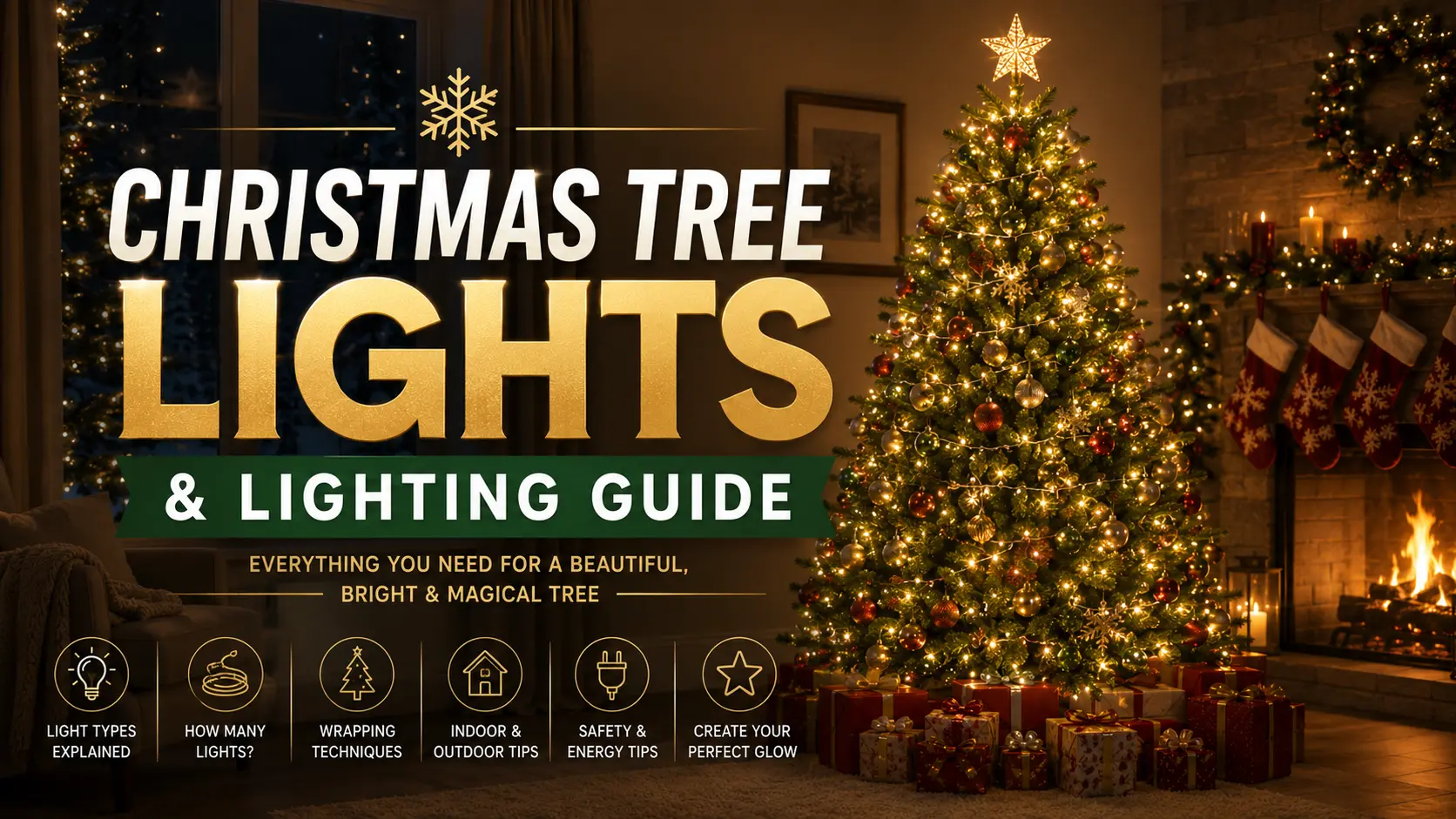

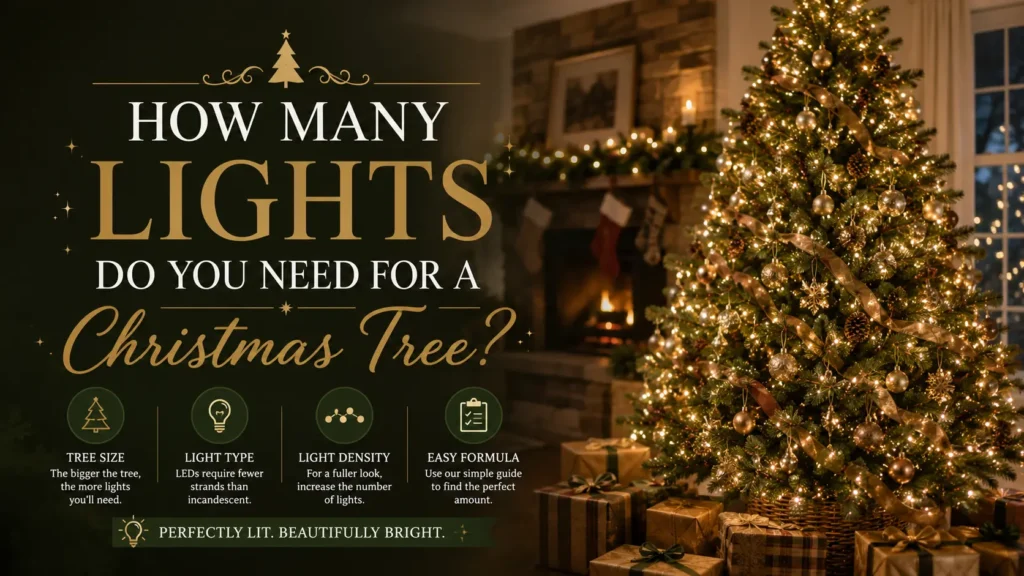
Lighting is the single most important element of Christmas tree decorating, and it is also the one that goes wrong most often. Too few lights and the tree looks flat and underwhelming, no matter how thoughtfully the ornaments are placed. Too many and it becomes a glowing blob with no visual depth or structure.
Getting the light count right is not complicated, but it does require thinking about more than just tree height. The type of tree you have, the density of its branches, the style you are going for, and even the type of bulb you choose all affect how many lights you actually need.
Whether you are starting fresh with a new artificial tree from christmastree.deals or trying to figure out why last year’s display never looked quite right, this guide will give you a clear, practical answer.
General Rule for Christmas Tree Lights
The most widely used starting point for Christmas tree lighting is 100 lights per foot of tree height. A 6-foot tree under this guideline would use 600 lights. A 9-foot tree would use 900 lights.
That said, 100 lights per foot is a baseline, not a rule. It works for a reasonably full tree with standard branch density when you want a balanced, festive look. If you prefer a brighter, heavily lit display, 150 lights per foot is more appropriate. For a subtle, understated style, 75 lights per foot may be enough.
The table below gives you a quick reference for standard and bright coverage across the most common tree sizes.
Christmas Tree Light Guide by Height
| Tree Height | Minimum (75/ft) | Standard (100/ft) | Bright (150/ft) |
|---|---|---|---|
| 4 feet | 300 lights | 400 lights | 600 lights |
| 5 feet | 375 lights | 500 lights | 750 lights |
| 6 feet | 450 lights | 600 lights | 900 lights |
| 7 feet | 525 lights | 700 lights | 1,050 lights |
| 8 feet | 600 lights | 800 lights | 1,200 lights |
| 9 feet | 675 lights | 900 lights | 1,350 lights |
| 10 feet | 750 lights | 1,000 lights | 1,500 lights |
Use the standard column as your starting point, then adjust based on your tree’s fullness and the look you want. A thick, heavily branched tree at 6 feet may actually need closer to 800 lights to illuminate all its interior depth, while a slimmer or more open tree may look fine with 500.
How Tree Type Affects Lighting Needs
Tree type influences lighting requirements more than most people realize. A number like “700 lights for a 7-foot tree” is only useful when you account for what the tree actually looks like.
Flocked Trees
Flocked Christmas trees have a textured, snow-dusted surface that interacts with light differently than plain green trees. The white or off-white coating reflects and diffuses light naturally, which means each bulb reaches a larger visual area. Because of this, you can often use slightly fewer lights on a flocked tree and still achieve a full, luminous effect.
For a flocked tree, start at around 80 to 90 lights per foot rather than the full 100. More important than quantity here is placement. Warm, softly glowing lights nestled into the interior branches create the most flattering look on flocked trees, where the contrast between the light source and the white surface becomes part of the visual. You can find detailed guidance on this approach in this guide on the best lights and decor ideas for flocked Christmas trees.
Pre-Lit Trees
Pre-lit Christmas trees come with lights already integrated into the branches, which removes the guesswork entirely. Manufacturers design the light placement during production, calibrating density and spacing for even distribution across the full height and width of the tree.
If you own a pre-lit tree, you technically do not need additional lights. However, many decorators choose to add supplemental strands to increase brightness, add a second color temperature, or create layered depth on larger trees. If you do this, stick to 50 to 100 additional lights maximum on a standard 6 to 7-foot pre-lit tree to avoid overcrowding.
For decorating ideas that work with integrated lighting systems, this collection of stunning decoration ideas for pre-lit Christmas trees is worth reading before the season begins.
Slim and Pencil Trees
Slim trees have a narrow silhouette and fewer branches than full-profile trees of the same height. This means less surface area to illuminate and less interior depth to consider. The standard 100-lights-per-foot guideline tends to overshoot for slim trees.
For pencil or slim-style trees, use 60 to 75 lights per foot. The goal is to define the vertical silhouette rather than create deep layered illumination. Over-lighting a slim tree makes it look cluttered rather than bright, since the narrow form does not have the volume to absorb many strands gracefully.
Sparse or Open Trees
Some artificial trees and most real-cut trees have natural gaps and irregular branch density. Open trees actually benefit from slightly higher light counts placed strategically in the gaps, since you are compensating visually for the lack of foliage. Aim for 100 to 120 lights per foot and focus placement in areas where the branch coverage is thinner.
How Tree Height Changes Light Requirements
Height affects not just quantity but also how you approach the entire lighting process. A tabletop tree and a room-filling statement tree require completely different strategies.
Small Trees (3 to 5 feet)
Small apartment trees and tabletop trees are the easiest to light. A single 300 to 500-light strand is usually sufficient. The smaller scale means mistakes are easy to spot and easy to correct. For tabletop trees, a single wrap from top to bottom in a loose spiral is enough. Avoid layering on small trees since there is not enough branch depth for interior lights to read as anything other than a tangle.
Medium Trees (6 to 8 feet)
The 6 to 8-foot range is the most common for family living rooms and requires a deliberate approach. You will likely use two to four strands of 200 to 300 lights each. At this height, layering becomes important. One set of lights should go on the interior branches close to the trunk, and a second set should go on the outer branches. This creates a sense of depth that a single-layer wrap cannot achieve.
Visual balance also becomes a factor at this height. The bottom half of a medium tree tends to be wider and denser than the top, which means the lower section often needs more lights proportionally. Do not distribute strands evenly from top to bottom. Use about 60 percent of your lights on the lower two-thirds of the tree and the remaining 40 percent on the top third.
Large Statement Trees (9 to 10 feet)
A 10-foot Christmas tree is a serious commitment in terms of both decoration time and light count. At this scale, you are looking at 1,000 to 1,500 lights as a starting point, and experienced decorators often go higher for fully illuminated showroom-style results.
Large trees require a layered approach with at least three light depths: interior lights near the trunk, mid-branch lights, and outer lights. Skipping the interior layer on a large tree creates a dark, cavernous center that is visible from most angles in the room. Large trees also take time to light properly. Budget at least two to three hours for a 10-foot tree if you want a polished result.
Avoid dark gaps by stepping back every 20 to 30 minutes during the process and checking the tree from across the room. Problem areas are much easier to spot from a distance than up close.
LED vs Incandescent: Does It Change How Many Lights You Need?
The short answer is yes, modestly. LED bulbs are individually brighter than incandescent bulbs of the same size, which means a 100-count LED strand will often illuminate a tree more thoroughly than a 100-count incandescent strand.
In practical terms, this means you can sometimes use 10 to 20 percent fewer LED lights than incandescent lights to achieve the same visual result. If you would normally use 700 incandescent lights on a 7-foot tree, 600 LED lights of comparable quality may produce an equivalent level of brightness.
However, this difference varies significantly by brand and product quality. Budget LED strands are sometimes dimmer than expected, in which case the standard 100 lights per foot guideline still applies. When in doubt, round up rather than under-light.
LED lights also allow you to connect more strands in series without overloading a circuit, which simplifies the logistics on large trees. If you are trying to decide between LED and incandescent for your tree this season, the full breakdown in this LED vs incandescent Christmas lights comparison covers every relevant factor including energy cost, safety, and lifespan.
Warm White vs Cool White: Which Should You Choose?
The quantity of lights matters, but so does the quality of light they produce. Color temperature shapes the entire mood of your tree and your room during the holiday season.
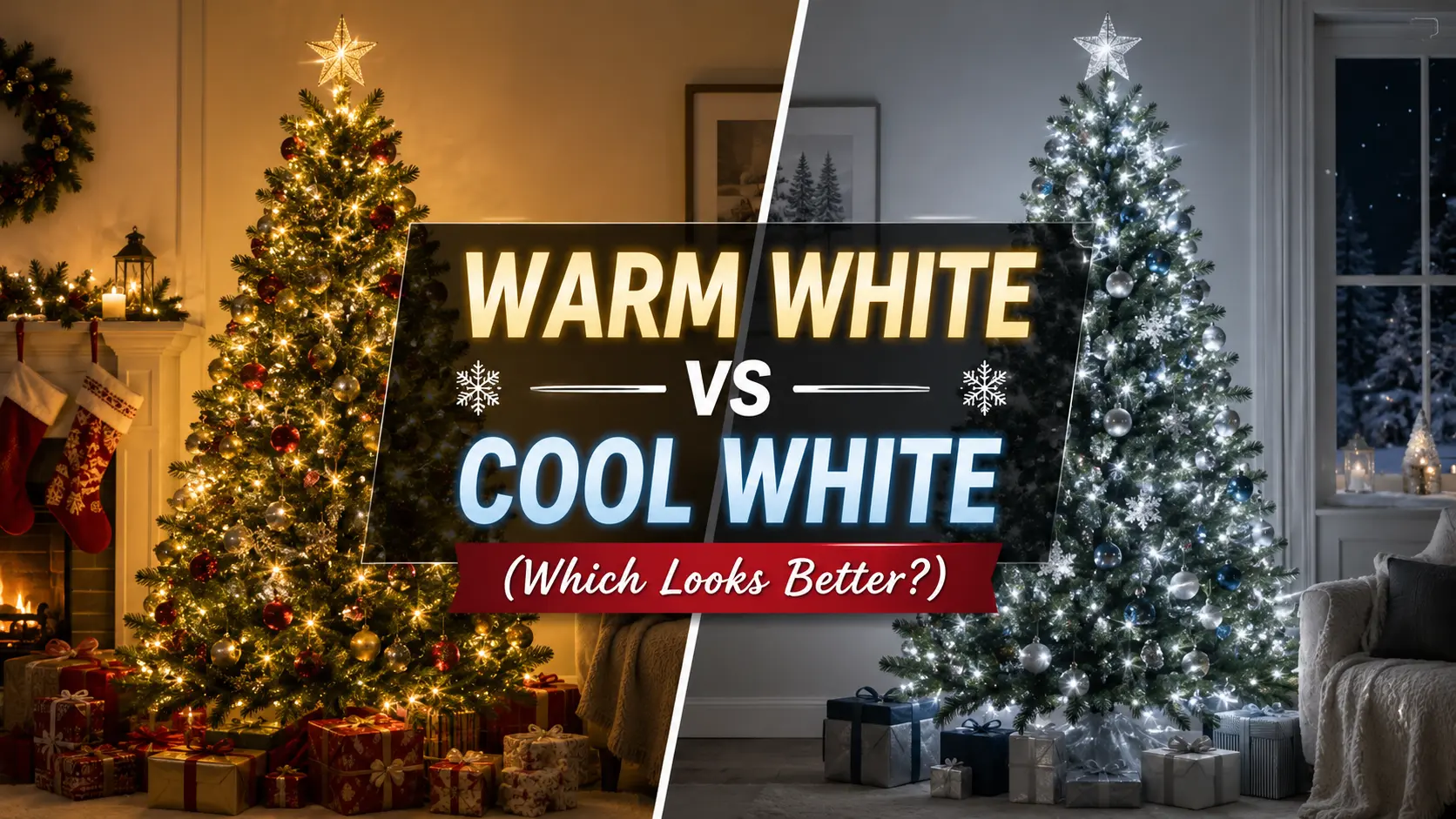
Warm White (2700K to 3000K)
Warm white produces a soft, golden glow that most people associate with traditional Christmas decorating. It is flattering in living rooms with wood tones, fabric sofas, and warm paint colors. Warm white is the best choice for flocked trees, where it creates a contrast between the soft amber glow and the white snow-like surface that looks genuinely beautiful.
Rustic, farmhouse, and traditional decor styles almost all call for warm white. It is also the natural pairing for vintage or classic ornament collections in red, gold, and green.
Cool White or Daylight (4500K to 6500K)
Cool white lights produce a crisper, more bluish-white light that reads as modern and intentional. They suit contemporary homes with neutral palettes, minimalist decor, and silver or metallic ornament collections. Cool white on a slim pencil tree in an all-white or grey living room is a distinctive, editorial look that warm white cannot replicate.
For Scandinavian-inspired holiday setups with natural wood elements, white ornaments, and an emphasis on clean simplicity, cool white is almost always the right choice.
Avoid Mixing Temperatures
Using both warm and cool white lights on the same tree almost never looks intentional. The two temperatures read as a mistake rather than a design choice to anyone who notices it. If you are adding supplemental lights to a pre-lit tree, check its existing color temperature before buying additional strands, and match it as closely as possible.
How to Wrap Christmas Tree Lights Properly
Having the right number of lights is only half the work. How you place them determines whether the tree looks professionally lit or hastily decorated.
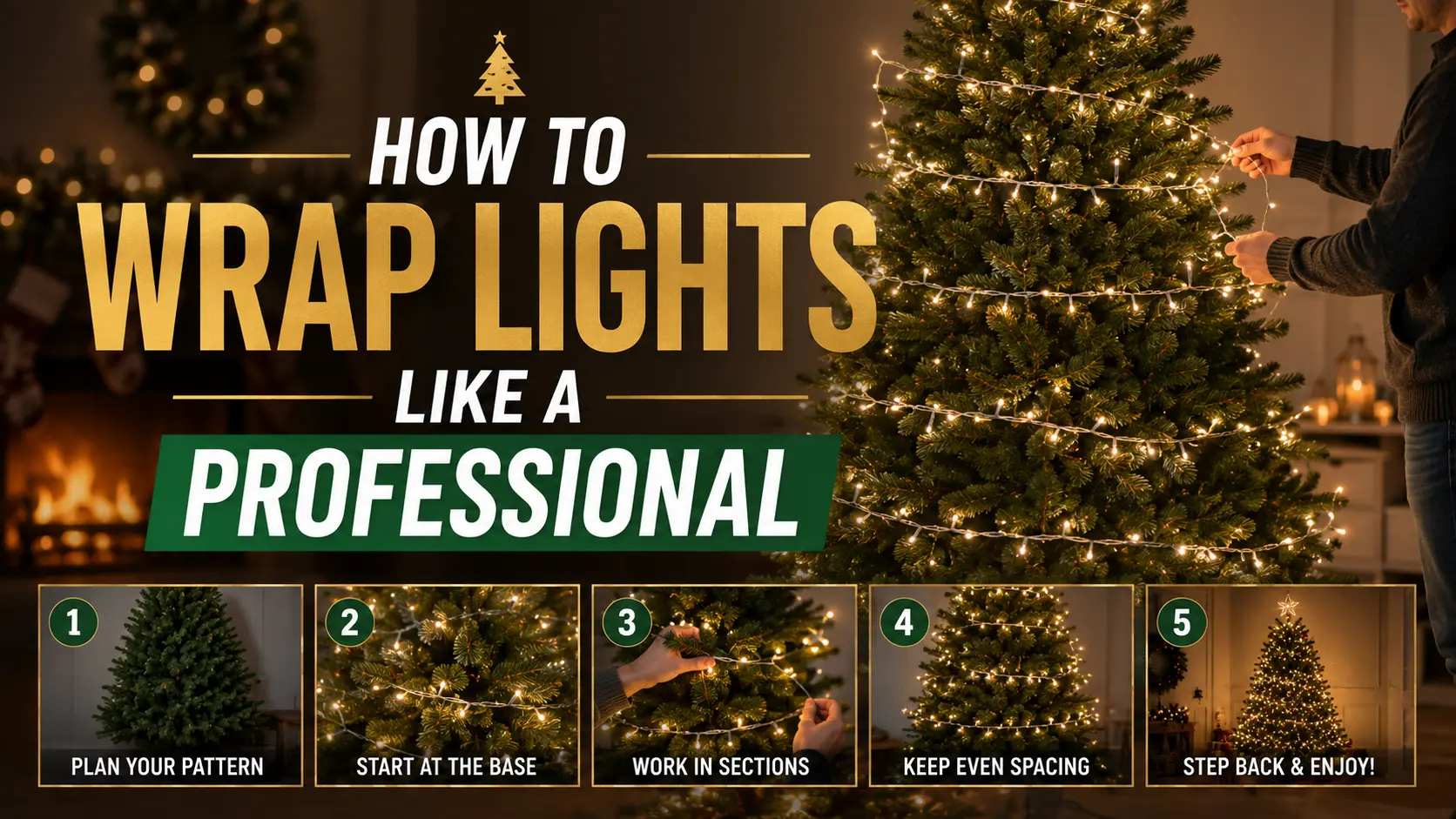
Start at the Trunk
Always begin lighting from the trunk outward, not from the tips of the branches inward. Starting at the trunk lets you place lights in the interior depth of the tree where they create a warm base glow. Interior lights are what make a tree look three-dimensional rather than like a flat, illuminated shape.
Secure the first lights near the trunk at the base of the tree, then work outward in a loose zigzag pattern between branches before moving up to the next section.
Work in Horizontal Sections
Rather than wrapping the entire tree in a single continuous spiral, work in horizontal bands of roughly 12 to 18 inches each. Light the lower section completely before moving up. This approach makes it easier to distribute lights evenly and go back and fix gaps before you are committed to the whole tree.
Use the Vertical Weave
Within each horizontal band, weave the strand in and out between branches vertically rather than going around the outside only. Push the light strand toward the trunk on alternate passes. This creates the layered, depth-creating effect that separates a well-lit tree from a basic one.
Step Back Frequently
Check the tree from across the room every 10 to 15 minutes. Dark patches and uneven areas are essentially invisible when you are standing 18 inches from the tree but immediately obvious from 10 feet away. Catching these early is far easier than redistributing lights after the entire strand is placed.
Leave the Plug Accessible
Before you start, decide where your power outlet is and plan the direction of the strand so the plug end exits the tree near the base closest to the outlet. Running an extension cord up through the middle of a decorated tree to reach a misplaced plug is not a good solution.
Common Christmas Tree Lighting Mistakes
Even experienced decorators make these errors. Knowing what to watch for helps you avoid them before they become a problem.
Using too few lights. The most common mistake by far. A dimly lit tree looks unfinished regardless of the ornaments. When in doubt, start with the bright end of the recommended range and remove a strand if it feels like too much.
Wrapping only the outer branches. Lights placed exclusively on the outer tips of branches create a flat outline effect. Without interior lights, the tree lacks depth and the center appears dark even from the front.
Mixing color temperatures. As covered above, combining warm and cool white lights on the same tree looks like an error. Use one temperature consistently throughout.
Ignoring extension cord safety. Only use outdoor-rated extension cords for lights that will run through the season, and never exceed the cord’s wattage rating. Daisy-chaining multiple standard power strips is a fire risk. Check manufacturer limits for strand-to-strand connections and stay within them.
Overcrowding the base. The bottom of the tree is often wider and gets more attention during decorating, which leads many people to front-load their lights at the bottom. Distribute deliberately, keeping the upper third of the tree adequately lit even though it is easier to see and reach.
Leaving dead sections untested. Always test every strand before placing it on the tree. Finding a dead 200-light strand after it is woven into the inner branches of a fully decorated 8-foot tree is exactly as frustrating as it sounds.
Best Lighting Styles for Different Decor Themes
The technical side of lighting only goes so far. Matching your lighting style to your overall decor theme ties everything together.
Minimalist Trees
Minimalist holiday decor prioritizes restraint. Use fewer lights than you might otherwise and distribute them precisely. Cool white or neutral white LED mini lights on a slim tree with a handful of carefully chosen ornaments reads as deliberate and sophisticated. Resist the urge to add more just because the tree looks quiet.
Luxury Trees
Layered lighting is the signature of a high-end tree display. A warm white LED base layer throughout the interior is supplemented by larger globe bulbs or vintage-style Edison bulbs at focal points. The interplay between light sizes and the slight variation in their color creates richness and visual complexity. For truly luxurious results, add a third accent layer using a complementary soft color, deep gold or pale champagne work well without competing with warm white.
Farmhouse and Rustic Trees
Warm white mini lights at generous density (100 to 120 per foot) on a full-profile tree evoke the traditional, cozy aesthetic that farmhouse decor is built around. Natural elements like pinecones, dried citrus slices, and wooden ornaments work well with this lighting approach. Incandescent lights still have genuine visual appeal in this context if you already have them.
Scandinavian Trees
Cool white LEDs, minimal density (75 per foot or less), and precise even spacing define this style. The goal is a frosty, calm quality of light rather than a warm and abundant one. Pair with a white or silver ornament scheme and natural wood or woven accents for a cohesive result.
Pro Tips for Making a Tree Look Fuller with Lights
A well-lit tree looks fuller than it actually is. These techniques help maximize that effect.
Place lights toward the trunk on alternate passes. Every second pass of the light strand should push toward the trunk rather than staying on the outer third of the branch. This creates a glow from within the tree that makes it appear denser.
Use smaller bulbs for interior layers. Mini LED lights on the interior branches and slightly larger globe or C6 bulbs on the outer branches adds subtle dimension that is more visually complex than a single bulb size throughout.
Cluster lights near branch junctions. The points where branches meet the main trunk or a major lateral branch are natural gathering places where light pools most attractively. Concentrating a few extra lights near these junctions creates warm focal points that draw the eye into the tree’s interior.
Add depth in the upper third. The top portion of a Christmas tree has fewer and shorter branches, which means it often ends up under-lit relative to the fuller lower half. Make a deliberate effort to weave lights generously into the upper third rather than just circling the outermost tips.
Final Christmas Tree Lighting Recommendation Chart
This table combines tree size, tree style, and desired brightness level into a single practical reference.
| Tree Size | Tree Style | Desired Brightness | Recommended Lights |
|---|---|---|---|
| 4 feet | Slim/Pencil | Subtle | 240-280 lights |
| 4 feet | Full/Standard | Balanced | 400 lights |
| 5 feet | Flocked | Balanced | 400-450 lights |
| 6 feet | Slim/Pencil | Subtle | 360-400 lights |
| 6 feet | Full/Standard | Balanced | 600 lights |
| 6 feet | Full/Standard | Bright | 900 lights |
| 7 feet | Flocked | Balanced | 560-630 lights |
| 7 feet | Full/Standard | Balanced | 700 lights |
| 7 feet | Full/Standard | Bright | 1,050 lights |
| 8 feet | Full/Standard | Balanced | 800 lights |
| 8 feet | Full/Standard | Bright | 1,200 lights |
| 9 feet | Full/Standard | Balanced | 900 lights |
| 9 feet | Full/Statement | Bright | 1,350 lights |
| 10 feet | Full/Standard | Balanced | 1,000 lights |
| 10 feet | Full/Statement | Bright | 1,500+ lights |
| Pre-Lit (any size) | Integrated LED | Balanced | Supplemental only (0-200) |
For pre-lit trees, consult the ultimate guide to pre-lit Christmas trees for specific guidance on selecting, maintaining, and decorating around integrated lighting systems.
Conclusion
Figuring out how many lights you need for a Christmas tree comes down to four things: height, fullness, tree style, and the brightness level you want. Start with 100 lights per foot as your baseline, adjust for tree type and personal preference, and always err on the side of slightly more rather than slightly less.
Beyond the count, how you place those lights matters just as much as how many you use. Layering lights from the interior out, working in horizontal sections, and stepping back frequently to check for gaps will produce a result that looks intentional and polished rather than simply bright.
The right lighting does not just illuminate a tree. It defines the atmosphere of an entire room during the most visually rich season of the year. Take the time to do it thoughtfully, and the difference will be worth it every evening you switch it on.
Frequently Asked Questions
How many lights do I need for a 6-foot Christmas tree?
A standard 6-foot tree with average branch density looks best with 600 lights using the 100-per-foot guideline. For a brighter, more heavily lit look, aim for 800 to 900 lights. For a subtle, understated style, 400 to 450 is enough.
Is 100 lights per foot a good rule for Christmas trees?
It is a reliable starting point for a balanced, full look on a standard artificial tree. Flocked trees and slim trees typically need 75 to 90 lights per foot since their structure reflects or concentrates light more efficiently. Full-profile trees used as statement displays can go up to 150 per foot.
Do LED lights require fewer strands than incandescent?
Modestly, yes. LED bulbs are typically brighter per bulb, so you can sometimes use 10 to 15 percent fewer LEDs than incandescent lights for a comparable result. This varies by product, so check the lumen output when comparing strands.
Should I put lights on the inside of the Christmas tree?
Yes. Interior lighting is what gives a tree its visual depth and three-dimensional quality. Placing lights only on the outer branches creates a flat, outlined effect. Always start from the trunk and work outward.
How do I avoid dark spots on my Christmas tree?
Work in horizontal sections and step back from the tree every 10 to 15 minutes to check for dark areas from across the room. Dark patches are almost invisible up close but obvious from a distance. Catching them before you move on to the next section makes them easy to fix.
Can I mix warm and cool white Christmas lights?
It is not recommended. The two color temperatures contrast with each other in a way that looks unintentional rather than layered. If you want to add depth or variety, try varying bulb sizes within the same color temperature instead.
How many lights does a 10-foot Christmas tree need?
A 10-foot tree needs at minimum 1,000 lights for a balanced look, and 1,500 or more for a fully bright, statement-level display. Large trees also benefit most from a three-layer approach: interior lights near the trunk, mid-branch lights, and outer-branch lights for maximum depth and coverage.