
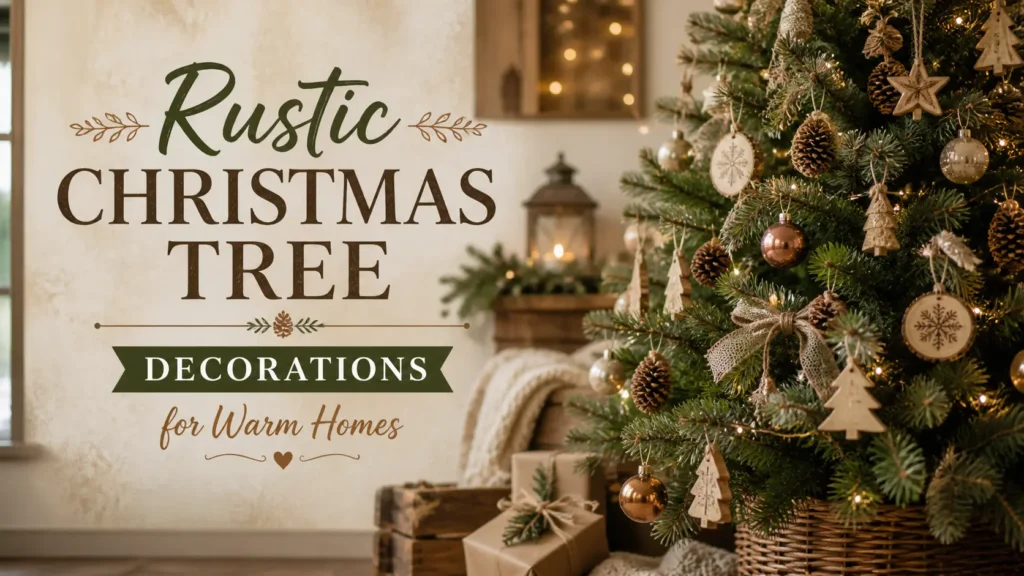
There is something deeply comforting about walking into a room lit by the soft glow of a Christmas tree dressed in natural textures, earthy tones, and handmade touches. No sharp metallic glitter. No over-polished baubles that catch light like a chandelier. Just warmth. The kind that feels like it belongs in the house, not just on the tree.
Rustic Christmas tree decorations tap into something most people quietly crave during the holiday season: simplicity with soul. Whether you grew up in a home where ornaments were passed down instead of purchased, or you are discovering this style for the first time, the rustic aesthetic has a way of making Christmas feel like it actually means something.
This guide covers everything from choosing the right tree to selecting decorations, lighting techniques, color palettes, and styling tips that will help you build a setup that feels genuinely warm rather than just seasonal. If you have been looking for rustic Christmas tree ideas that translate well into a real, lived-in home, you are in the right place.
What Defines a Rustic Christmas Tree
Before diving into the details, it helps to understand what separates a rustic tree from every other style. The word “rustic” gets used loosely in home decor, but when it comes to Christmas, it means something specific.
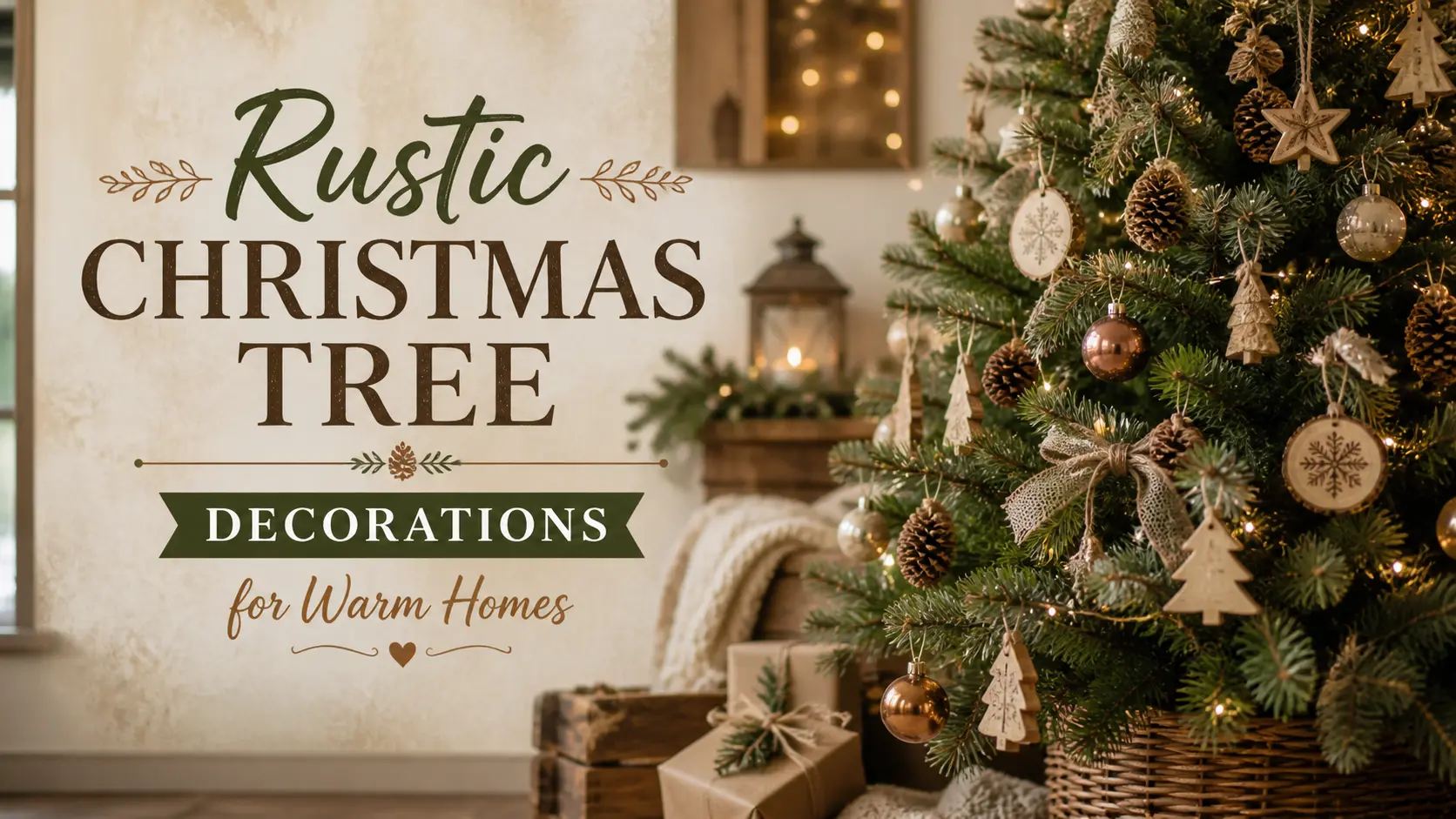
Rustic Christmas decor leans heavily on natural materials. Think raw wood, burlap, linen, dried botanicals, twine, pinecones, and aged metal. The color story is grounded in what you might find outdoors: deep greens, warm browns, beige, cream, and muted reds. The overall feeling is one of imperfect beauty, where the charm comes from texture and character rather than shine and symmetry.
A rustic tree does not look like it was staged for a catalog. It looks like someone who genuinely loves Christmas spent an afternoon decorating it while something was baking in the oven. That lived-in, handcrafted quality is the whole point.
Key characteristics include:
- Natural and organic materials over synthetic ones
- Earthy, warm color palettes with little to no glitter or metallic shine
- Handmade or vintage ornaments that tell a story
- Textures layered together: rough, soft, woven, carved
- Imperfection celebrated rather than hidden
If your instinct is to reach for the most perfect, symmetrical ornament on the shelf, rustic styling will ask you to set it back down and pick up the wooden one with a small crack in it instead.
Choosing the Right Tree for Rustic Style
The foundation of any great tree setup is the tree itself. For a rustic aesthetic, the goal is to choose a tree that feels natural and full without looking overly manicured.
Full, Natural-Looking Trees
A fuller tree works best for rustic decor because it gives you room to layer textures and tuck in natural elements like pinecones and ribbon without the tree looking sparse. Trees with slightly irregular branch spacing actually enhance the rustic look. Perfectly uniform, machine-trimmed silhouettes can work against the aesthetic you are trying to build.
If you are using a real tree, choose one that has a natural imperfection or two. That slight lean or the branch that grows at an odd angle is not a flaw. It is character.
Pre-Lit Trees for Soft Warm Lighting
For those who prefer artificial trees, pre-lit Christmas trees with warm white lights built in are a strong choice for the rustic style. The advantage is that the light is already distributed evenly throughout the branches, giving you a consistent warm glow as your base before you add a single ornament.
Warm white (as opposed to cool or daylight white) is essential here. The soft amber tone mimics candlelight, which pairs naturally with wood, burlap, and earthy tones in a way that cool white simply cannot.
Larger Trees for Statement Setups
If your space allows for it, a taller tree creates an impressive focal point that can anchor an entire room. 10-foot Christmas trees work particularly well in living rooms with high ceilings, where they can be styled with oversized natural elements like large pinecone clusters, chunky ribbon, and generous garlands without looking overcrowded.
For smaller rooms or tighter corners, a slimmer profile tree can still carry rustic decor beautifully. You can find tips on making the most of limited space in this guide to slim and pencil Christmas trees for small spaces.
Rustic Christmas Tree Color Palettes
One of the quickest ways to achieve a cohesive rustic look is to commit to a color palette before you start decorating. Mixing too many colors leads to visual noise, which is the opposite of the calm, warm feeling you are going for.
The Classic Natural Palette
This is brown, beige, cream, and deep green. It is the palette of the forest floor in winter. Ornaments in these tones blend with the tree itself while adding dimension through texture. Wooden beads, linen ribbon, cream-colored fabric balls, and dried orange slices all live comfortably within this palette.
Red and Plaid Accents
Adding pops of deep red or burgundy introduces warmth without overwhelming the natural base. Plaid ribbon in red and black or red and tan is one of the most popular choices for rustic holiday decor because it reads as both traditional and unpretentious. Use it for bows, garlands, or as ribbon cascading loosely through the branches.
Soft Gold and Warm White
If you want a slightly more elevated rustic look, soft matte gold works well alongside natural tones. The key word here is matte. High-gloss gold immediately tips into a more glamorous direction. Brushed or antique-finish gold ornaments, small brass bells, and gold twine can add a subtle richness without abandoning the warmth of the rustic style.
Rustic Christmas Tree Decoration Ideas
This is the heart of it. The decorations you choose determine whether your tree actually feels rustic or whether it just looks like a regular tree in a slightly earthier color story. Here are the most effective categories of rustic Christmas tree decorations to work with.
Wooden Ornaments and Carved Decor
Wood is the backbone of rustic decorating, and Christmas ornaments are no exception. Laser-cut wooden snowflakes, hand-carved animals, small wooden cabins, and simple disc ornaments with burned designs are all excellent choices. They add visual weight without shine, and they layer beautifully with softer elements like ribbon and fabric.
When shopping for wooden ornaments, look for ones with visible grain, rough edges, or hand-finishing. The more machine-perfect they look, the less they will serve the aesthetic.
Burlap Ribbons and Garlands
Burlap ribbon is one of the most versatile tools in rustic Christmas decorating. You can weave it loosely through branches for a casual, undone look, tie it into simple bows at the ends of branches, or use it as a base for layered ribbon combinations.
Pairing burlap with a thinner red plaid ribbon or a delicate lace trim creates contrast without disrupting the earthy palette. Burlap garlands, sometimes made with small fabric flags or pennants, add horizontal movement across the tree that keeps the eye engaged.
Pinecones and Natural Elements
Pinecones are perhaps the most iconic element of natural Christmas decorations. You can wire them directly onto branches, use them as ornament hangers, or cluster them near the base of the tree to create a grounded, woodland feel.
Beyond pinecones, consider dried orange slices (which also add a subtle scent), cinnamon sticks bundled together with twine, dried cotton stems, small sprigs of eucalyptus, and preserved magnolia leaves. These natural elements bring texture and an almost sensory quality to the tree that store-bought plastic ornaments cannot replicate.
Handmade Ornaments
Handmade ornaments are what truly elevate a rustic tree from styled to soulful. These do not need to be elaborate. Simple salt dough ornaments stamped with patterns, fabric-covered balls made from scrap linen or flannel, paper star ornaments folded from kraft paper, or small sewn pouches filled with dried lavender all contribute to that handcrafted warmth.
If you have children, including their handmade ornaments is a natural fit for the rustic style. Imperfection is welcome here. A crooked clay handprint ornament or a Popsicle stick snowflake belongs just as much as anything you would buy from a shop.
Vintage Rustic Touches
Vintage finds bring history and character to a tree in a way that new items rarely can. Old keys hung on twine, small vintage tins used as ornaments, antique bells, worn wooden spools, or mismatched old Christmas ornaments from a thrift store all carry a quiet nostalgia that fits beautifully within a rustic scheme.
Flea markets, estate sales, and second-hand shops are excellent sources for this kind of material. The slight variation in age, color, and wear between different pieces actually strengthens the overall look rather than weakening it.
Cozy Lighting Techniques
Lighting deserves its own mention even within the decorations section because it affects everything else. Beyond whatever lights are already on the tree, consider adding small candle-style clip lights to branch tips for an old-fashioned effect. Battery-operated fairy lights in warm white can be wound through a garland or used to illuminate a section of the tree you want to highlight.
The goal is a soft, diffused glow that casts gentle shadows. Harsh or bright lighting will flatten the textures you have worked to create. For more ideas on layering light effectively, this guide to the best lights and decor ideas for a flocked Christmas tree covers similar principles that apply to rustic setups as well.
Lighting for a Warm Rustic Feel
Lighting is the single most powerful element in creating a cozy atmosphere, and it is often underestimated in the planning stage.
Warm white lights are non-negotiable for a rustic tree. The color temperature of cool white or daylight LED lights sits in a blue-toned range that makes everything look crisp and modern. Warm white light, typically in the 2700K-3000K range, produces a soft amber glow that makes natural textures look richer and the whole space feel more intimate.
When adding lights to a tree that is not pre-lit, start from the trunk and work outward toward the tips. Weaving light into the deeper parts of the tree creates depth and dimension rather than a flat ring of light around the outside.
Avoid blinking or multicolor light settings. The rustic aesthetic is about calm and steadiness, not spectacle.
If you are using your tree as the primary light source in a room during evenings, consider adding a few additional warm sources nearby: a small lamp with a warm bulb, a few candles on the mantel, or a set of lights strung along a nearby shelf. The tree will look more integrated with the space and the overall atmosphere will be warmer.
How Rustic Compares to Other Christmas Tree Styles
Understanding how the rustic style differs from its cousins helps you make more intentional decisions when decorating. These styles often overlap but have distinct identities.
Rustic vs. Farmhouse
Farmhouse Christmas style and rustic style share a lot of DNA. Both favor natural materials, neutral tones, and a handmade quality. The difference is that farmhouse decor leans slightly more toward a polished, curated look. It is comfortable but tidy. Rustic allows for a little more wildness and imperfection. If you are drawn to the farmhouse aesthetic, this article on why farmhouse Christmas trees are having a moment explores that style in depth.
Rustic vs. Minimalist
Minimalist Christmas trees strip everything back to clean lines, negative space, and a carefully chosen few ornaments. Rustic goes in the opposite direction, layering textures, materials, and natural elements generously. Both can feel sophisticated, but minimalist leans cool and modern while rustic leans warm and abundant. For a detailed look at the minimalist approach, see this guide to minimalist Christmas tree ideas.
Rustic vs. Luxury
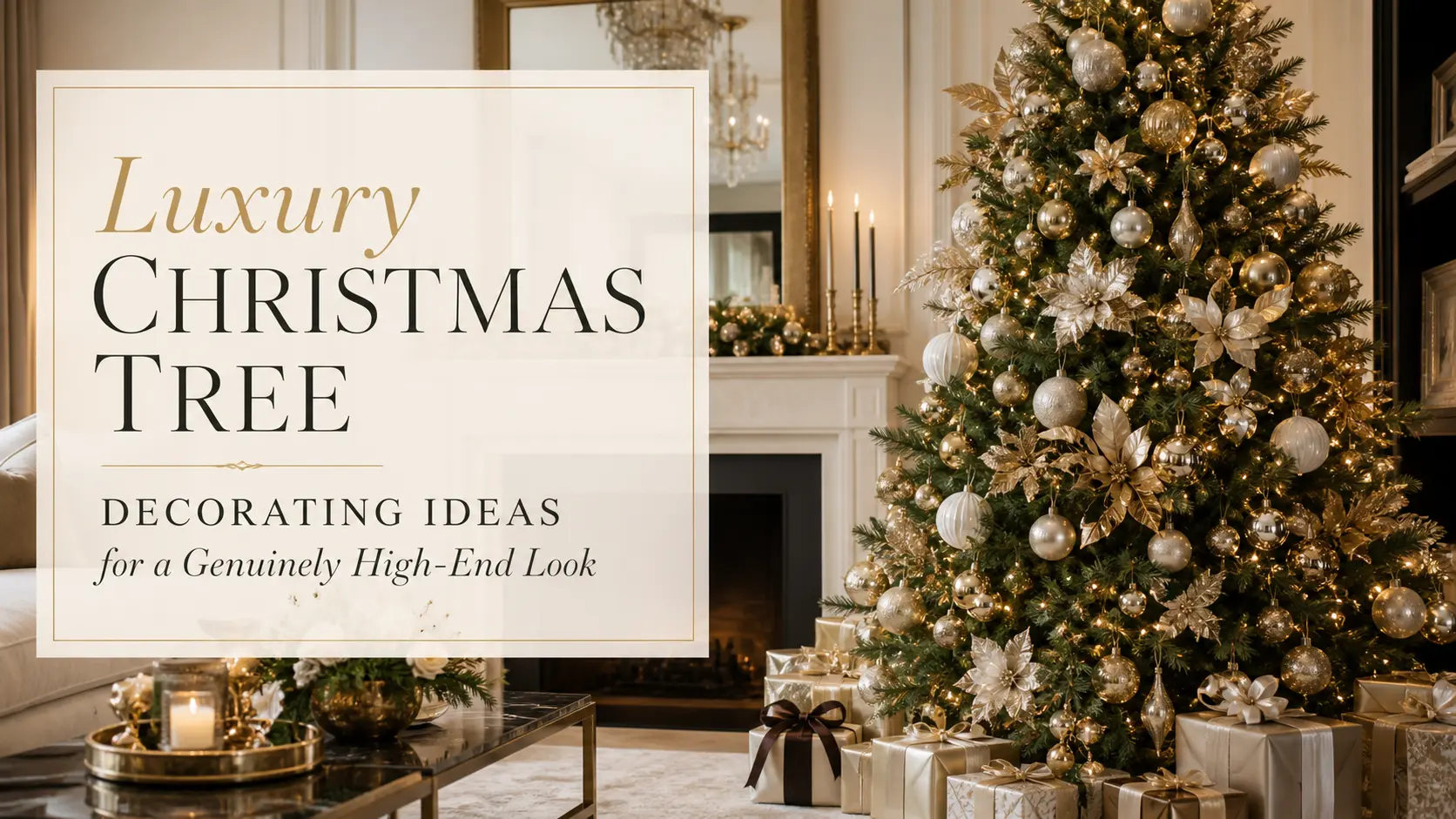
Luxury Christmas trees are built around glamour: crystal ornaments, metallic finishes, dramatic color contrasts, and elaborate ribbon work. The goal is to impress. Rustic trees are built around comfort. The goal is to welcome. Both can be beautiful, but they serve completely different emotional experiences. If you want to see how the luxury look is executed, this guide to luxury Christmas tree decorating ideas covers it well.
Rustic vs. Scandinavian
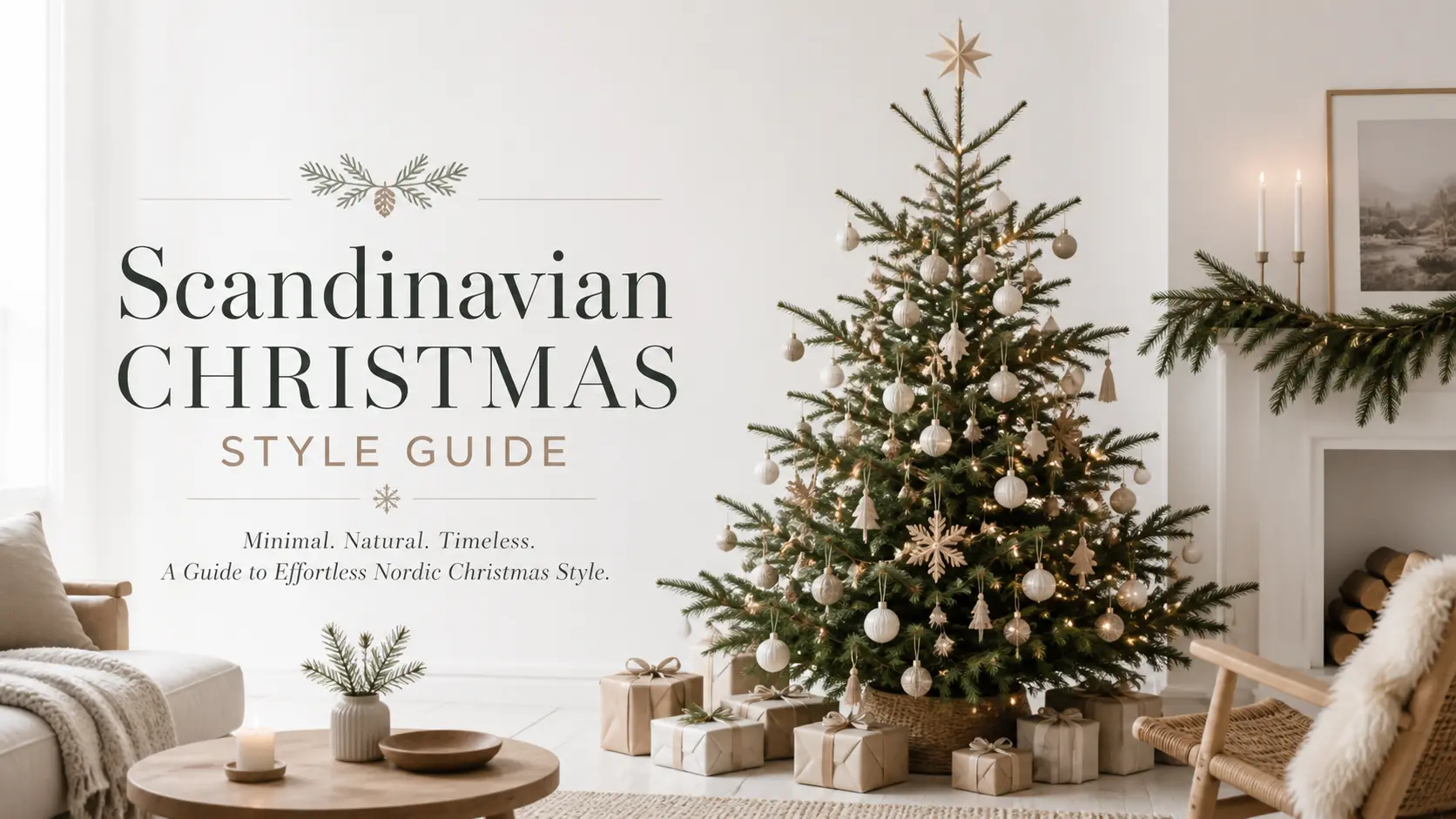
Scandinavian Christmas style shares rustic’s appreciation for natural materials and simplicity, but it is considerably more restrained. Scandinavian trees tend to feature clean white, birch wood, subtle red accents, and very deliberate spacing. Rustic style is warmer, more layered, and more informal. The Scandinavian approach is less about cozy abundance and more about quiet elegance. You can explore that aesthetic further in this Scandinavian Christmas tree style guide.
Placement and Styling Tips
Where you put the tree and what surrounds it is just as important as the tree itself.
The corner placement is classic for good reason. Tucking a tree into a corner of the living room, especially near a fireplace or a window, creates a natural frame and anchors the tree without it feeling like an obstacle in the room. A corner also allows you to focus lighting and decor on the front-facing two-thirds of the tree, which is where most of the visual impact lives anyway.
If you are working with a corner space, this guide on how to style a pencil Christmas tree in a corner offers useful spatial advice that applies to fuller trees as well.
Pairing with a fireplace amplifies the cozy factor significantly. A rustic tree positioned near a lit fireplace creates a combined warmth, visual and literal, that is hard to beat. Add a simple burlap or plaid tree skirt at the base, a few wrapped gifts in kraft paper and twine, and a small arrangement of pinecones or candles on the mantel above, and you have a complete scene.
Rugs, blankets, and ambient furniture matter too. A thick wool rug, a basket of throw blankets nearby, and a comfortable chair angled toward the tree all contribute to the experience of the space. The tree is the centerpiece but the room it lives in tells the rest of the story.
Budget-Friendly Rustic Decoration Ideas
The good news about rustic Christmas decor is that it actively rewards working with what you have and what you can find inexpensively. This is one style where a smaller budget does not mean a lesser result.
Gather from nature. Pinecones, branches, dried seed heads, and small stones are free if you know where to look. A cluster of pinecones gathered from a park, dried on newspaper at home, and then wired onto the tree costs nothing. The same applies to small branches of evergreen tucked between ornaments.
Use the craft store strategically. Burlap ribbon is inexpensive. Wooden ornament blanks that you can paint, stamp, or burn at home are among the most affordable options available. Salt dough ornaments made from flour, salt, and water cost almost nothing to produce and can be stamped with cookie cutters, painted in earthy tones, and finished with a coat of sealant.
Repurpose what you already have. Old buttons strung on twine. Small spice jars filled with cinnamon and hung on ribbon. Fabric scraps from old flannel shirts cut into strips and tied into bows. Pieces of old sheet music rolled into cones. The rustic aesthetic is inherently improvisational, and objects that would otherwise be discarded often find a natural home on a rustic tree.
Shop second-hand. Thrift stores and charity shops reliably stock boxes of old Christmas ornaments at a fraction of retail cost. The mix of ages, styles, and slight wear in a thrift store haul is actually ideal for rustic decorating.
Common Mistakes to Avoid
Even with good intentions, a few common errors can undermine the rustic look you are working toward.
Over-decorating. Rustic style needs room to breathe. When every inch of branch space is covered, the textures and natural materials lose their impact. Restraint in placement is one of the most important skills in this style. Step back frequently as you decorate and resist the urge to fill every gap.
Using too many shiny or high-gloss elements. A single metallic ornament can work if it is aged or brushed rather than bright. But when shiny elements accumulate, they shift the energy of the tree away from warmth and toward glamour. Check your selections before hanging and set aside anything that reflects light sharply.
Ignoring the base. The tree skirt or base covering is often an afterthought, but it completes the composition. A neutral burlap skirt, a simple woven basket, a stack of logs surrounding the stand, or even a galvanized metal bucket can anchor the whole setup. Leaving a plastic stand exposed interrupts the visual flow.
Buying everything at once in the same style. Collections of matching ornaments from a single set tend to look coordinated but not curated. The warmth of a rustic tree comes from variety: different sizes, slightly different shades, different materials, different ages. Mix your sources and your items will feel more authentic.
Neglecting scent. This is not strictly a visual mistake, but a rustic Christmas tree that smells like nothing misses an opportunity. Dried orange slices, cinnamon sticks, cedar sachets, or a small dish of potpourri placed near the base can deepen the sensory experience of the whole setup in a way that genuinely affects how the space feels.
Final Thoughts
Rustic Christmas tree decorations are not about a trend. They are about a feeling: warmth, belonging, and the kind of beauty that comes from materials that are honest about what they are. Wood feels like wood. Burlap feels rough. Pinecones smell like the outside. These are the qualities that make a rustic tree feel real rather than staged.
When you invest in this approach, even modestly, you create a Christmas setup that invites people to sit down, stay a while, and actually feel at home. That is a harder thing to achieve than it sounds, and it is worth far more than any perfectly polished ornament collection.
Whether you are starting from scratch this year or adding rustic layers to what you already own, the ideas in this guide give you a solid foundation. Start with one or two natural elements, commit to a warm color palette, and let the imperfection be part of the point.
Frequently Asked Questions
What colors work best for a rustic Christmas tree? Earthy, warm tones work best: brown, beige, cream, deep red, muted gold, and forest green. These tones reflect the natural materials that define the rustic style. Avoid anything bright, neon, or high-gloss.
Can I use a white or flocked tree for rustic decor? Yes, with care. A lightly flocked tree with a subtle snow effect can work in a rustic setting if the decorations are consistently natural and earthy. Heavy bright-white flocking tends to push the aesthetic toward a more contemporary or Scandinavian style rather than rustic.
What is the best tree topper for a rustic Christmas tree? A star made from twigs or driftwood, a simple burlap or linen bow, a dried botanical arrangement, or a vintage-style metal star in a brushed finish all work beautifully. Avoid rhinestone or heavily embellished toppers.
How do I make rustic Christmas ornaments at home? Salt dough is the easiest starting point: combine one cup of flour, half a cup of salt, and half a cup of water, roll out, cut shapes, bake until hard, then paint in neutral or earthy tones. Fabric-wrapped polystyrene balls, twine-wrapped plain ornaments, and dried citrus slices are also simple DIY options.
How many ornaments should I put on a rustic tree? There is no fixed number, but rustic trees generally benefit from less rather than more. A common approach is to use roughly 50 to 75 ornaments on a 6-foot tree, leaving visible branch space between them. Natural filler elements like pinecones and ribbon can supplement without overcrowding.
How do I keep a rustic Christmas tree looking cohesive? Commit to your color palette before you start and add one category of decoration at a time: lights first, garlands second, larger ornaments third, smaller ornaments and natural elements last. Stepping back between layers helps you see the overall effect and avoid clustering.
What is the difference between rustic and farmhouse Christmas decor? Rustic decor leans into imperfection, natural textures, and a more informal abundance. Farmhouse decor shares many of the same elements but tends toward a slightly tidier, more polished presentation. Both use natural materials and neutral tones, but farmhouse has more intentional structure while rustic feels more freely layered.