
There is something quietly powerful about a Christmas tree that does not try too hard. No cascading tinsel, no mismatched ornaments from three different decades, no flashing multi-colored lights that turn your living room into a carnival. Just a clean, intentional tree that looks like someone actually thought about it.
Minimalist Christmas trees have been growing in popularity for a good reason. Modern homes lean toward cleaner aesthetics. People are increasingly drawn to the idea of a holiday space that feels calm rather than chaotic. And honestly, less decoration often means less stress, less spending, and a look that holds up through the entire season without feeling overdone by December 10th.
This guide covers everything you need to pull off a minimalist tree that actually makes an impact. From choosing the right tree shape to nailing your color palette, placing ornaments with intention, and avoiding the most common decorating mistakes, you will walk away with a clear vision of what your holiday setup can look like this year.
What Is a Minimalist Christmas Tree?
A minimalist Christmas tree is not just a bare tree with one ornament and a shrug. It is a deliberate design choice. The concept is rooted in the idea that every element on the tree should earn its place. Nothing goes up without a reason.
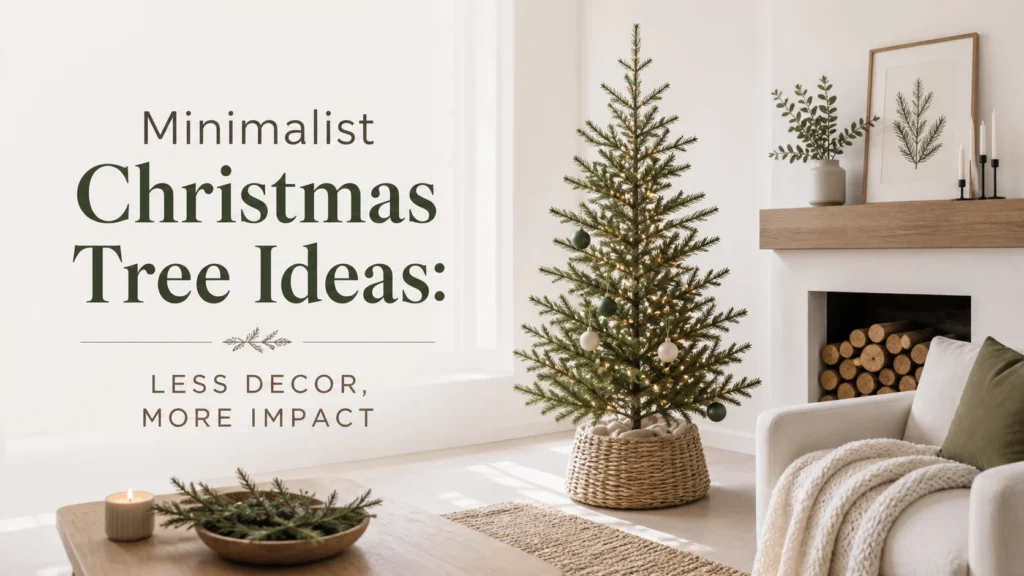
The look centers on simplicity, clean lines, and a limited color palette. Decorations are spaced with intention. The tree itself often does a lot of the visual work, with just enough ornamentation to add character without overwhelming the space.
At its core, minimalist Christmas decor is about editing. You are not removing beauty from the tree. You are removing the noise so the beauty actually registers. If you are looking to explore options for a clean, curated holiday setup, christmastree.deals is a solid starting point for modern tree styles that fit this aesthetic well.
The best minimalist trees tend to share a few traits: a structured shape, cohesive color choices, soft lighting, and breathing room between decorations. That last part is more important than most people realize.
Choosing the Right Tree for a Minimalist Look
The tree itself is the foundation. If you start with the wrong shape or style, no amount of careful decorating will save the final result.
Slim and Pencil Trees
Slim and pencil-shaped trees are arguably the most natural fit for minimalist styling. Their narrow profile creates a vertical, architectural look that complements modern interiors. They take up less floor space, which makes them ideal for apartments or rooms where you want the tree present but not dominant.
Because a pencil tree has a smaller surface area, there is less temptation to over-decorate it. A few well-chosen ornaments and a strand of warm white lights can look genuinely stunning. If you are working with a narrow room or a tight corner, you might also find this guide on styling a pencil Christmas tree in a corner helpful for placement ideas. Browse the full slim and pencil Christmas tree collection to find the right fit for your space.
Flocked Trees
Flocked trees bring a soft, snow-dusted look that pairs beautifully with neutral and muted palettes. The white or light grey texture of the flocking does a lot of decorative work on its own. This means you can add very little and still have a tree that looks complete.
A flocked tree with simple cream ornaments, a few sprigs of dried eucalyptus, and warm ambient lighting looks like something out of a Scandinavian interior magazine. The muted base tone keeps things feeling understated even when you do add decoration. Explore flocked Christmas trees if this direction appeals to you, and check out ideas for lights and decor for flocked trees to see how others are styling them.
Pre-Lit Trees
Pre-lit trees simplify the decorating process in a way that aligns perfectly with minimalist values. You skip the untangling of light strands, avoid the problem of uneven distribution, and start with a base that already looks intentional.
For a minimalist setup, a pre-lit tree with warm white or soft cool-white lights is ideal. You do not need to add more lighting. The built-in lights are often enough on their own, which frees you up to focus on minimal, meaningful ornament placement. Browse pre-lit Christmas trees if you want to start with a clean foundation that requires very little additional work.
Best Minimalist Christmas Tree Color Palettes
Color is where minimalist styling either comes together or falls apart. The safest approach is to pick two colors maximum and stick to them. Three if one of them is a neutral like white, cream, or natural green.
White and Neutral Tones: This is the most popular palette for minimalist trees. Cream, ivory, soft white, and warm beige ornaments on a green or flocked tree create a look that feels sophisticated without effort. Add a few natural textures like cotton stems or woven ribbon and the effect is complete.
Black and White Contrast: A bold choice, but when done right, it is striking. Matte black ornaments against a bright green or white-flocked tree make a strong visual statement. This palette works best in modern or contemporary interiors where contrast is already part of the design language.
Green with Subtle Metallic Accents: The natural green of the tree becomes the primary color, and you add just a touch of gold, brass, or copper. Matte metallics work better than high-shine for this style. Too much glitter pushes the look away from minimalist and toward glam.
Monochrome Silver or Gold: Choose one metallic family and stay there. All silver, or all gold, but not both. Use varying textures within that family, matte and satin and brushed finishes, to keep it visually interesting without introducing more color.
Minimalist Christmas Tree Ideas
This is where the real inspiration lives. These are the specific styling directions you can take depending on your taste, your space, and your existing home decor.
Single-Color Ornament Theme
Pick one ornament color and use it exclusively. All white. All deep burgundy. All forest green. All matte black. When every ornament shares a color family, the eye reads the tree as a unified whole rather than a collection of random objects. This is one of the simplest and most effective minimalist strategies.
Vary the shapes rather than the colors to keep it interesting. Use balls, teardrop shapes, and simple star forms in the same hue and the tree instantly looks curated.
The Barely Decorated Tree
This approach leans into restraint more than any other. You use significantly fewer ornaments than you think you need, maybe a third of what you would normally use, and you space them with extreme intention. Each ornament sits in a pocket of negative space.
The result looks deliberate rather than unfinished because the spacing communicates thought. This style works best with a full, dense tree where the lush green serves as the backdrop.
Scandinavian-Inspired Styling
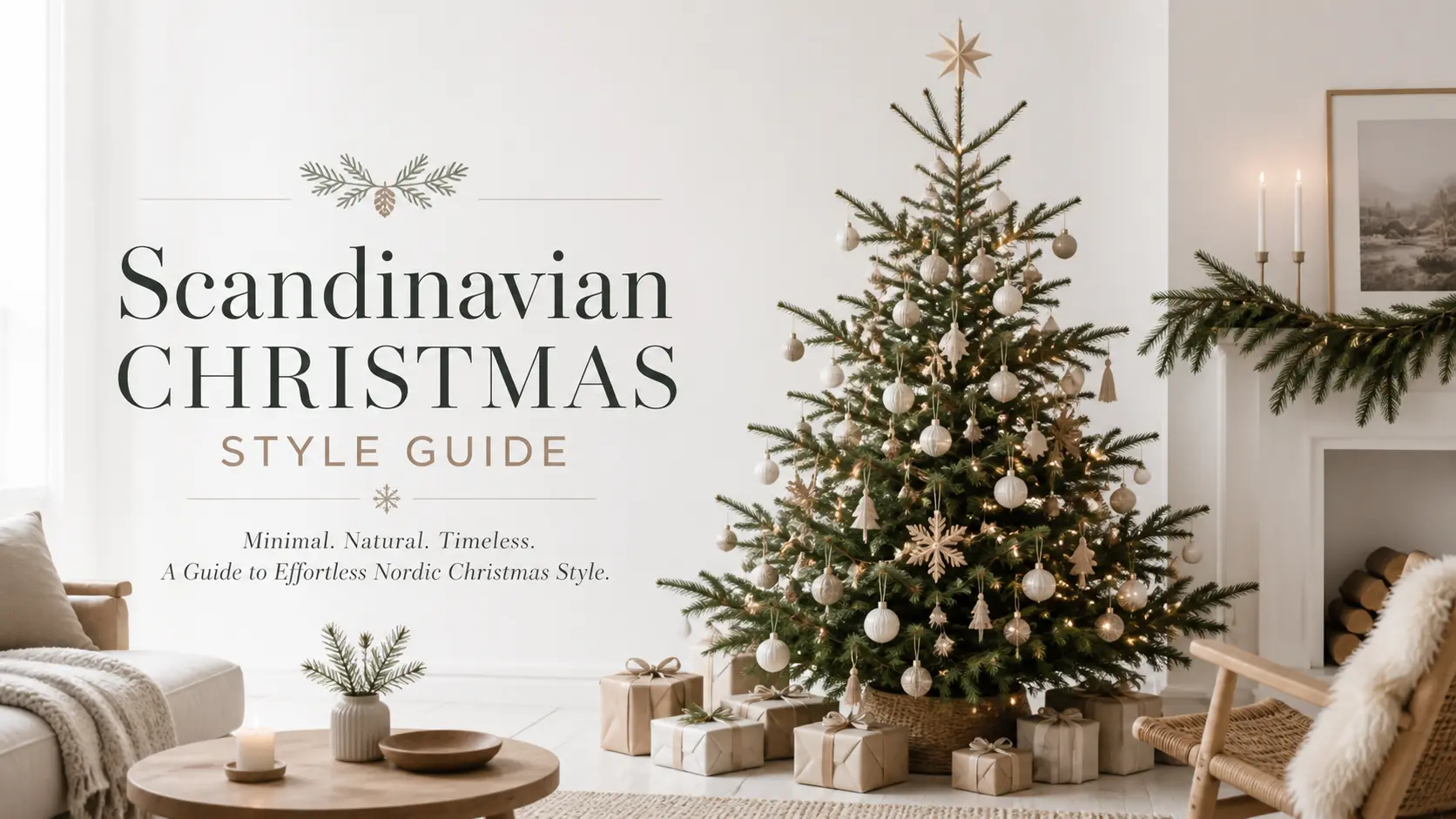
Scandinavian holiday decor is minimalist at its core. Think natural materials, simple geometric shapes, and a muted palette of white, cream, and natural wood tones. Add small wooden stars, simple felt ornaments, and a strand of warm fairy lights.
This style pairs beautifully with a flocked tree or a natural-looking green tree. Avoid anything shiny or glittery. The charm of Scandinavian styling comes from its quiet warmth, not its sparkle.
Natural Wood and Linen Decor
Use ornaments made from dried wood slices, rattan balls, twine-wrapped spheres, and linen bows. This palette is almost entirely neutral and earthy, and it photographs beautifully.
A tree decorated this way looks organic and warm without feeling traditional or kitschy. It pairs well with a biophilic interior style where natural materials are already prominent throughout the space.
Monochrome White Styling
All white, all the time. White ornaments, white ribbon, white tree topper, and warm white lights. On a flocked tree this becomes almost ethereal. On a green tree it creates a crisp, clean contrast.
The challenge with all-white styling is creating enough textural variation to keep it interesting. Mix matte finishes with satin, velvet with glass, and smooth with textured to add visual depth without adding color.
Soft White Lighting Only
Sometimes the decoration is the light itself. Strip away the ornaments entirely, or use only two or three significant pieces, and let a beautifully wrapped set of warm white lights carry the whole look.
This works especially well for small slim trees or for corner placement. The tree becomes more of a glowing architectural object than a decorated holiday centerpiece, and in the right space that is exactly the right call.
Large vs Small Minimalist Trees
The principles of minimalist styling apply at any scale, but the execution looks different depending on tree size.
Large Statement Trees
A tall, clean tree in a minimalist style can be genuinely dramatic. If you have the ceiling height, a 9 or 10 foot tree with sparse, intentional decoration becomes a serious design statement. The sheer scale does the heavy lifting. You barely need ornamentation.
For rooms with high ceilings or open-plan living areas, a large tree styled with restraint is more impactful than a smaller tree loaded with decoration. Browse 10-foot Christmas trees if you are working with the space to go big and want a clean, commanding look.
Small Space Minimalism
Minimalism and small spaces were made for each other. A slim or pencil tree in a corner, styled with a handful of ornaments and soft lighting, fits naturally into a compact apartment or studio without dominating the room.
You can find detailed ideas specifically for this setup in this post about slim and pencil trees for small spaces, which covers placement, sizing, and decoration approaches that work in tighter rooms.
Minimalist Decorating Tips
Getting the look right is partly about what you add and partly about how you think through the process. These practical tips will help you style with more confidence.
Edit before you add. Before putting anything on the tree, lay out every ornament you are considering. Then remove half of them. You will probably be surprised by how much is left and how good the tree looks with less.
Think in thirds. Place your ornaments at varying depths across the tree, some near the tips, some halfway in, and some closer to the trunk. This creates a sense of dimension without adding more pieces.
Let spacing breathe. The empty space between ornaments is not a gap you need to fill. It is part of the design. A minimalist tree with obvious breathing room between decorations looks intentional. A crowded tree just looks busy.
Use odd numbers. Groups of three or five tend to look more natural than even numbers. When clustering any decorative element, keep it odd.
Avoid tree skirts with heavy pattern. A simple linen, white faux fur, or neutral woven tree skirt keeps the base clean. A loud patterned skirt interrupts the calm you have worked to build with the rest of the tree.
Keep the topper simple. A single metal star, a small twig star, or even no topper at all works better than a large elaborate bow or figure that fights for attention with the rest of the tree.
Budget-Friendly Minimalist Ideas
Minimalism is actually the most affordable approach to Christmas decorating. You need less, which means you spend less. Here is how to maximize impact while keeping costs low.
Invest in one or two statement pieces. Rather than buying a large set of mixed ornaments, put your budget into one or two larger, higher-quality ornaments that anchor the tree. The rest can be simple and inexpensive.
DIY natural elements. Dried orange slices, cinnamon sticks tied with twine, pinecones sprayed lightly with white paint, and paper stars folded from craft paper cost almost nothing and look genuinely beautiful in a minimalist setup.
Repurpose what you already own. Plain white or cream ornaments that have been sitting unused suddenly become the main feature when the rest of the decoration is stripped back. You may already own the pieces for a minimal tree without realizing it.
Skip the elaborate tree topper. A simple star cut from cardboard and wrapped in gold paper, or a small bunch of eucalyptus tied with a linen bow, costs almost nothing and looks considered.
Minimalist vs Farmhouse Christmas Tree
Both styles value simplicity over extravagance, but they express it very differently.
A farmhouse Christmas tree leans into nostalgia and texture. It often features buffalo plaid ribbon, rustic wooden signs, burlap bows, vintage-looking ornaments, and a warm, lived-in feel. The goal is cozy and charming. You can read more about this direction at why farmhouse Christmas trees are having a moment.
A minimalist tree is quieter and more architectural. Where farmhouse embraces warmth and character through collected objects, minimalist styling prioritizes clean composition and visual restraint. The mood is calm rather than cozy. The look is contemporary rather than nostalgic.
Both are valid directions, but they appeal to different sensibilities. If your home already leans toward clean lines and neutral furniture, minimalism will feel more cohesive. If your space has more warmth and texture, farmhouse styling will integrate more naturally.
Common Mistakes to Avoid
Even with the best intentions, a minimalist tree can slip into looking unfinished or just plain sparse rather than intentionally styled. These are the mistakes most people make.
Overdecorating and calling it minimalism. If you add too much and then take a little away, you have not really committed to the concept. Start with almost nothing and add only what clearly improves the look.
Using too many colors. Three or more ornament colors will always push a tree away from minimalism. Stick to one or two, and let the tree color itself act as the third.
Ignoring proportion. Tiny ornaments on a large tree look lost. Large ornaments on a small tree look crowded. Match your ornament size to your tree size.
Skipping texture variation. All matte or all shiny tends to read as flat. A mix of finishes within the same color family adds depth without visual chaos.
Neglecting the base and surroundings. A minimalist tree sitting next to a cluttered console table or surrounded by busy wrapping paper loses its impact immediately. The area around the tree matters as much as the tree itself.
Conclusion
A minimalist Christmas tree is not a compromise. It is a choice to do more with less, to let thoughtful decisions replace sheer volume. The trees that tend to make the biggest impression are not the ones loaded with every ornament collected over twenty years. They are the ones where you can tell someone thought about what they were doing.
Start with the right tree shape for your space, commit to a tight color palette, place your decorations with breathing room, and resist the urge to fill every gap. The result will be a holiday setup that feels calm, intentional, and genuinely beautiful.
If you are ready to start shopping for the foundation of your minimalist setup, slim pencil trees, flocked styles, and pre-lit options all lend themselves naturally to this aesthetic. The less you put on the tree, the more each element matters, so it is worth starting with a tree that already looks good on its own.
Frequently Asked Questions
What is the best tree shape for a minimalist Christmas setup? Slim and pencil trees are the most popular choice because their narrow profile keeps the footprint small and the look architectural. Flocked trees also work very well because the texture of the flocking does much of the decorative work on its own.
How many ornaments should a minimalist tree have? There is no fixed number, but a useful rule is to use about a third of what you think you need. On a 6-foot tree, that might mean 15 to 25 ornaments placed with clear spacing rather than 60 to 80 packed together.
What colors work best for a minimalist Christmas tree? White and cream, monochrome black and white, green with subtle gold or brass accents, and single-tone metallic palettes all work beautifully. The key is limiting yourself to two colors maximum and using the tree itself as a third.
Can a minimalist Christmas tree still feel warm and festive? Absolutely. Warm white lighting, natural textures like wood and linen, and soft neutral tones create a space that feels cozy and festive without being chaotic. Minimalism does not mean cold or sterile.
Is a minimalist tree cheaper to decorate? Yes, in most cases. Because you are using fewer ornaments and keeping the palette tight, you are buying less overall. Investing in one or two quality pieces rather than a large mixed set is both more affordable and more aligned with the minimalist approach.
What should I avoid on a minimalist Christmas tree? Avoid multiple colors, heavily patterned ribbon, elaborate tree toppers, tinsel, flashing lights, and any ornament that does not fit the palette you have chosen. When in doubt, leave it off.
Can I achieve a minimalist look with a tree I already own? Yes. The style is about editing and intention, not equipment. Strip back your existing decorations, choose a tight color story from what you already have, and pay attention to spacing. Many people are surprised by how good their existing tree looks with significantly less on it.