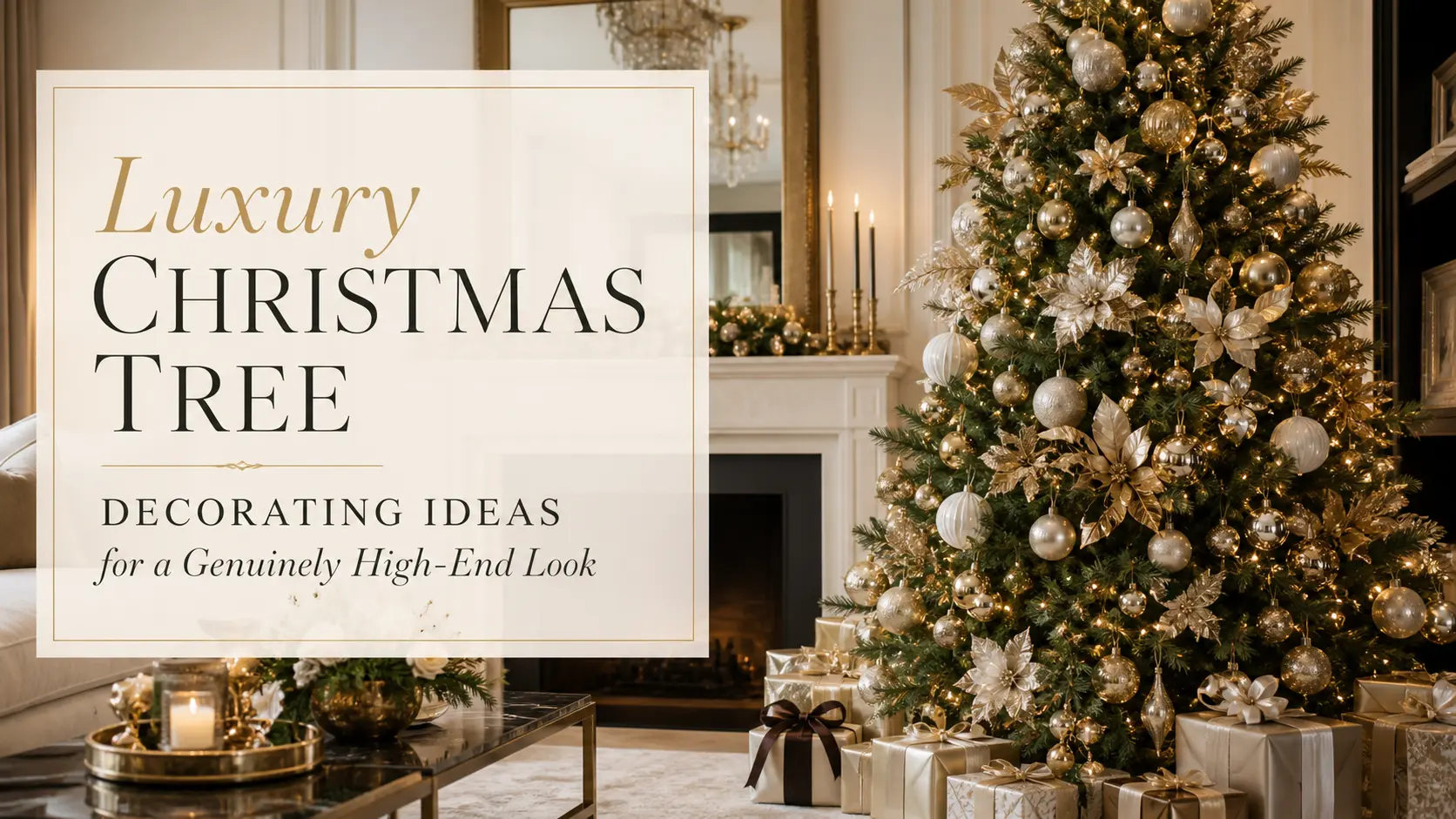

There is a specific feeling that comes from walking into a room and finding a Christmas tree that stops you completely. Not because it is covered in every ornament from a box in the attic, but because every detail is deliberate. Every ribbon sits exactly where it was placed. Every ornament reflects light in precisely the right way. That is what luxury Christmas tree decorating actually means, and it is far more achievable than most people assume.
Over the past several years, high-end holiday styling has moved from hotel lobbies and department store windows into everyday homes. Homeowners are choosing fewer, better pieces. They are thinking about their trees the way interior designers think about a furniture arrangement. This guide covers everything you need to create that kind of result, from picking the right tree to choosing your final finishing touches.
What Actually Defines a Luxury Christmas Tree
Before spending money on ornaments or ribbon, it helps to understand what separates a premium-looking tree from one that simply has expensive pieces on it. A luxury tree is defined by restraint, intentionality, and quality in every layer, not volume.
If you are starting from scratch and want a strong selection of trees to build this kind of look on, christmastree.deals covers a wide range of premium artificial options across different styles and sizes.
The core elements that define a genuinely elegant tree are:
- Material quality. Shatterproof plastic ornaments in bright primary colors rarely read as elegant. Glass, mercury glass, crystal, brushed metals, and matte porcelain finishes carry weight and light in ways that elevate the whole tree.
- A defined color story. Luxury trees almost always commit to a tight palette of two or three tones, then use texture and finish variation within that palette rather than introducing new colors.
- Balanced visual weight. Nothing clusters in one area and leaves another bare. Large anchoring pieces sit deep in the branches; smaller details live on the outer tips.
- Intentional negative space. Leaving gaps between ornaments allows individual pieces to breathe and be seen. Overcrowding kills the effect immediately.
- Cohesion from topper to base. A luxury tree is styled as a single object, not a collection of separate decisions stacked on top of each other.
Choosing the Right Tree for a High-End Result
Your tree is the foundation. Even the most thoughtful decor will look average on the wrong base. For a luxury look, the tree itself needs to contribute to the aesthetic before a single ornament goes on it.
Full, Realistic Artificial Trees
A dense, full-bodied artificial tree with realistic needle variation and branch structure reads as premium from across the room. Trees with flat, uniform branches or visible wire at the tips undermine the whole setup. Look for trees labeled as having PE (polyethylene) tips, which mimic the texture and color variation of real spruce or fir branches convincingly.
Flocked Trees for a Quiet, Wintery Elegance
Flocked trees carry a restrained, almost sculptural quality that pairs naturally with white, gold, silver, and champagne palettes. The snow-dusted finish reduces visual noise on its own, which means your ornaments stand out more clearly against a soft, neutral background. Flocked Christmas trees have become one of the most requested styles for high-end holiday interiors. They do a lot of the styling work before any decoration is added. For specific decor ideas that work beautifully on this style of tree, this guide on lights and decor ideas for flocked Christmas trees is worth reading through.
Pre-Lit Trees for Perfect, Consistent Lighting
Lighting is one of the most critical components of a luxury look, and pre-lit trees remove the most common source of inconsistent illumination. Lights built into the branches distribute evenly from the inside out, creating the lit-from-within glow that high-end trees are known for. Pre-lit Christmas trees also eliminate the tangled-cord problem and keep the inside of the tree visually clean. If you want to go deeper on styling a pre-lit tree specifically, these decoration ideas for pre-lit Christmas trees offer detailed inspiration.
Large Statement Trees
Scale matters in luxury decor. A 7-foot tree in a room with 10-foot ceilings leaves awkward dead space above. Going taller commands the room. 10-foot Christmas trees create the kind of dramatic vertical presence that makes a space feel genuinely designed rather than simply decorated. In a standard living room with average ceiling height, even an 8 or 9-foot tree changes the entire proportion of the space.
Luxury Christmas Tree Color Palettes
Color discipline is where most home decorators diverge from professional stylists. Choosing a palette and committing to it is one of the fastest ways to close that gap. Here are four color stories that consistently produce high-end results.
Gold and White
Timeless, warm, and radiant. This palette works with any lighting temperature and flatters both flocked and traditional green trees. Use polished gold balls alongside matte white ornaments, then add a velvet or satin ribbon in deep ivory to tie the two tones together.
Champagne and Ivory
Subdued and sophisticated, this is the palette that photographs best and ages most gracefully from year to year. Champagne metallic finishes, ivory velvet ribbon, and pearl or crystal accents create a look that feels genuinely curated rather than assembled.
Black and Gold
Bold, modern, and dramatic. This palette requires confidence to execute well, but the result is unlike anything else. A non-flocked dark green tree provides enough contrast to let the black and gold elements read clearly. Use matte black ornaments alongside hammered gold spheres for the most refined interpretation of this palette.
Silver and Crystal
Cool, crisp, and luminous, silver and crystal palettes are particularly striking under bright white or neutral lighting. Glass icicle ornaments, acrylic crystal teardrops, and brushed silver balls together create a tree that looks like it belongs in a design magazine.
Within any of these palettes, introduce variation through finish: matte alongside gloss, brushed metal beside polished glass, ribbed texture next to smooth. This is what gives a tree visual richness without breaking its color story.
Luxury Christmas Tree Decorating Ideas
This is where the real work happens. The following techniques are what stylists and interior designers use to produce the trees you see in editorial shoots and high-end showrooms.
Layered Ribbon Styling
Wired ribbon is the single most transformative element you can add to a tree, and it is frequently underused or used poorly. For a luxury result, do not drape ribbon horizontally around the tree like a banner. Instead, cut 12 to 18-inch lengths and fold or scrunch them into loose loops before tucking the base of each loop directly into the branches. This creates a three-dimensional, voluminous effect that photographs beautifully and reads as expensive even from across a room.
Use two ribbon styles in the same tonal family, one patterned and one solid or metallic, and distribute them throughout the entire tree rather than concentrating them in one area. Velvet ribbon in deep burgundy or sage can anchor a gold-and-ivory palette. Organza or satin in champagne adds movement without heaviness.
Oversized Anchor Ornaments
A common mistake in home decorating is using ornaments that are all roughly the same size. Luxury trees use a deliberate size hierarchy. Large ornaments in the 5 to 6-inch range go deep in the branches, close to the trunk, where they catch inner light and create depth. Medium ornaments at 3 to 4 inches fill the middle zone. Small ornaments and glass teardrops sit at the tips, adding sparkle at the outer edge of the tree’s silhouette.
When placing large ornaments, push them back on the branch rather than hanging them from the very tip. This depth is what creates the layered, three-dimensional quality that distinguishes a styled tree from a decorated one.
Metallic and Glass Finishes
Matte ornaments absorb light; glass and metallic ornaments reflect and multiply it. In a luxury setup, the ratio typically leans toward reflective finishes because they create the impression that the tree is generating its own illumination. Mercury glass ornaments have a vintage, hand-crafted quality that reads as premium regardless of their actual cost. Mixing polished gold balls with brushed gold teardrop ornaments in the same palette creates texture contrast without any color confusion.
Designer Tree Toppers
The topper is the most visible point on the tree and should not be an afterthought. Traditional star toppers with velvet overlay, oversized wired ribbon bows in matching palette colors, and sculptural bird or angel figures made from quality materials all work within a high-end styling framework.
A large, sculptural bow made from wired satin or velvet ribbon in your chosen palette, built directly into the top branches rather than simply placed on top, creates a full and finished crown that anchors the whole design. What to avoid: plastic toppers with visible seams, pre-packaged bows in mismatched colors, and anything that looks like it belongs on a tree from twenty years ago.
Coordinated Ornament Themes
Rather than using a box of mixed ornaments, luxury trees typically commit to two or three ornament shapes and repeat them throughout the tree in different finishes. For example: round balls, elongated teardrops, and one specialty shape like a pinecone or geometric prism, all in gold and ivory, distributed evenly from top to bottom. This repetition with variation is what creates visual rhythm without monotony.
High-End Picks and Fillers
Decorative branch picks with small pearl clusters, frosted berries, or feather accents fill gaps and add layers of texture that ornaments alone cannot provide. These small additions are what professional stylists use to make a tree look finished. They are inexpensive individually but have an outsized impact on the overall result when placed thoughtfully.
Lighting for a High-End Look
Poor lighting choice cancels out every other styling decision. The most beautifully decorated tree in cool white LED light with a blue tint reads as harsh and clinical. The same tree under warm white or soft gold light looks completely different.
For most luxury palettes, choose lights labeled “warm white” with a color temperature around 2700K. Avoid “cool white” or “daylight” bulbs unless you are building a very specific modern or silver-and-crystal aesthetic where the cooler tones complement the palette.
Layering Lights for Depth
Layering lights adds depth. If your tree is not pre-lit, start by winding a strand of mini lights close to the trunk before adding the outer layer. This inside glow is what pre-lit trees replicate and is one of the things that separates a well-lit tree from a flat one.
Avoid using light curtains draped over the outside of the tree as your primary light source. They illuminate only the surface and leave the interior of the tree completely dark, flattening the three-dimensional effect entirely.
Avoiding Harsh Brightness
More light is not always better. An overly bright tree draws attention to its own illumination rather than to the ornaments and decorations on it. The goal is a warm, ambient glow that makes the tree feel inviting rather than interrogated.
Modern vs Classic Luxury Styles
Not everyone wants the same version of luxury. The two main approaches differ in meaningful ways, and knowing which direction you are going before you start decorating saves a significant amount of time and money.
Modern Luxury
Modern luxury Christmas tree styling is defined by restraint. It uses a minimal ornament count with maximum visual impact per piece. Ornament shapes tend toward the geometric or abstract. Toppers are either boldly architectural or absent entirely. The palette is strict, often limited to two tones, and the branch structure of the tree is treated as a design element in itself.
If this approach appeals to you, this article on minimalist Christmas tree ideas covers the philosophy and execution in detail.
Classic Luxury
Classic luxury trees are layered, rich, and detailed. They use higher ornament density with coordinated picks, ribbon, and fillers throughout. Warm gold, ivory, burgundy, and deep green tones dominate. Toppers are traditional and substantial, usually a large angel, a structured star, or an elaborate bow. The overall effect is one of abundance that is controlled and cohesive rather than chaotic.
If you enjoy a warmer, more traditional interpretation of elegant holiday decor, this piece on why farmhouse Christmas trees are having a moment offers a complementary perspective on styling with texture and warmth.
The mistake is mixing these two directions without intention. A tree that starts classic and introduces modern geometric ornaments mid-way through looks confused rather than eclectic.
Placement and Styling Tips
Where you put the tree affects how the whole room reads. A luxury tree placed in a corner without any surrounding consideration looks orphaned. A few placement principles that make a real difference:
- Create a visual anchor. Place the tree where it draws the eye naturally, usually the focal wall of the living room, opposite the main entry point into the space.
- Consider the backdrop. A white or neutral wall behind the tree lets the tree itself stand out. A busy wallpapered wall or a cluttered bookshelf behind the tree competes with it visually.
- Add a tree skirt or collar. A tree skirt or woven basket collar in a complementary material finishes the base and connects the tree to the floor. Linen, faux fur, velvet, and woven jute all work well depending on the overall palette.
- Coordinate surrounding decor. Throw pillows, candles, and adjacent decorative pieces in the same palette connect the tree to the rest of the room rather than making it feel like a separate installation.
- Respect symmetry. In a formal or classically styled room, flanking the tree with matching elements, a pair of matching lanterns, potted plants, or wrapped gifts in coordinated paper, reinforces the sense of intentional design.
If you are working with a narrow or corner-specific space, the approach for styling changes significantly. This guide on how to style a pencil Christmas tree in a corner covers that situation in detail.
Achieving a Luxury Look Without Overspending
Luxury styling and luxury budgets are not the same thing. Many of the most elegant trees use a combination of investment pieces and well-chosen budget options. The difference between a high-end result and an average one is rarely about how much was spent in total. It is about where the money was directed.
Where It Is Worth Spending More
- Your ribbon. Wired velvet or satin ribbon from a craft store transforms a tree more than any other single element and costs far less than a comparable set of ornaments.
- Two or three large-format glass or mercury glass ornaments that serve as anchor pieces. These become the visual focal points the eye returns to.
- Your tree itself. A realistic, full artificial tree is an investment that returns value over many years. Cheap trees with sparse branching undermine every decorating effort placed on them.
Where You Can Save Without Sacrificing the Look
- Small and medium ornaments that fill the mid and outer zones. Sets of matte and gloss balls in your palette color are widely available at very reasonable prices.
- Branch picks and fillers. Simple berry picks, frosted twig bundles, and small pinecone clusters read as intentional when placed thoughtfully, regardless of their source.
- Tree skirts and collars. Neutral linen or woven grass options are widely available at low price points and look clean and deliberate.
Strategic placement is free. Putting a single high-quality ornament at eye level in a spot where it catches light does more for the overall impression than ten average ornaments placed without thought.
Common Mistakes to Avoid
Overdecorating
More ornaments do not create more luxury. Density without intention creates clutter. Knowing when to stop is one of the most important skills in high-end Christmas tree styling. If every branch is occupied, step back and remove a third of what is there.
Mixing Too Many Styles
Rustic farmhouse pieces, glam metallic ornaments, and nostalgic keepsakes on the same tree work against each other. Every style has its own visual language, and combining too many of them produces noise rather than richness. Choose a direction and hold it.
Wrong Lighting Temperature
Cool white LED lights on a gold-and-ivory tree produce a visual mismatch that no amount of styling can fix. Always match your light temperature to your palette before purchasing or stringing any additional lights.
Ignoring the Interior of the Tree
Decorating only the outer branches leaves the inside of the tree empty and dark. Pushing some ornaments back toward the trunk adds depth and creates the three-dimensional quality that professional styling is known for.
Forgetting the Base
A bare metal stand under a beautifully decorated tree breaks the illusion entirely. Always finish the base with a skirt, collar, or basket before the tree goes on display.
Mismatched Topper Scale
A tiny star topper on a large, full tree looks like an afterthought. Scale the topper to both the tree and the room. In a space with high ceilings and a 9-foot tree, the topper needs to carry significant visual weight to read at all from the floor.
Frequently Asked Questions
How many ornaments does a luxury Christmas tree need?
There is no fixed number, but luxury trees typically use fewer ornaments than most people expect. A well-styled 7-foot tree might carry 60 to 80 ornaments across three size categories, spread with deliberate negative space between pieces. The goal is rhythm, not volume.
What color palette is most popular for elegant Christmas trees right now?
Champagne and ivory, gold and white, and neutral greige tones with dusty green accents have been particularly strong in recent years. These palettes photograph well and age gracefully across seasons.
Can I achieve a luxury look with a pre-lit artificial tree?
Absolutely, and in many cases a pre-lit tree makes the process easier. The built-in lighting creates that lit-from-within glow that is one of the defining characteristics of a high-end styled tree. Choose a warm white or soft gold pre-lit option for most luxury palettes.
Is a flocked tree or a non-flocked tree better for a luxury look?
Both can produce luxury results, but they suit different palettes. Flocked trees work especially well with white, gold, silver, and champagne decor. A non-flocked dark green tree provides a richer contrast backdrop for deep jewel tones, burgundy, and traditional gold.
What is the best ribbon to use for a high-end Christmas tree?
Wired velvet ribbon in a palette-matching color is the most versatile and consistently premium option. Wired satin and organza ribbon add movement and lightness. Avoid thin, unwired ribbon, which droops and loses its shape quickly.
How do I make a Christmas tree look professionally styled?
Use a size hierarchy of ornaments, push large pieces back into the branches for depth, layer ribbon by folding it into loose loops rather than draping it, match your lighting temperature to your palette, and always finish the base. Those five things alone account for most of the difference between a home-decorated tree and a professionally styled one.
How tall should a luxury Christmas tree be?
As a general rule, aim for a tree that leaves 12 to 18 inches of clearance between the topper and the ceiling. In rooms with standard 9-foot ceilings, a 7 to 7.5-foot tree hits this proportion well. In rooms with 10-foot or higher ceilings, moving up to 9 or 10 feet makes a noticeable difference in how the room feels.
Final Thoughts
A luxury Christmas tree is not about spending the most money. It is about making deliberate choices, committing to a visual direction, and giving each element enough space to be appreciated on its own. When every layer of your tree, from the base to the topper, feels like it belongs there, that is when the whole setup stops looking decorated and starts looking designed.
Start with the right tree, choose a palette you love, and build from there. The result will speak for itself.