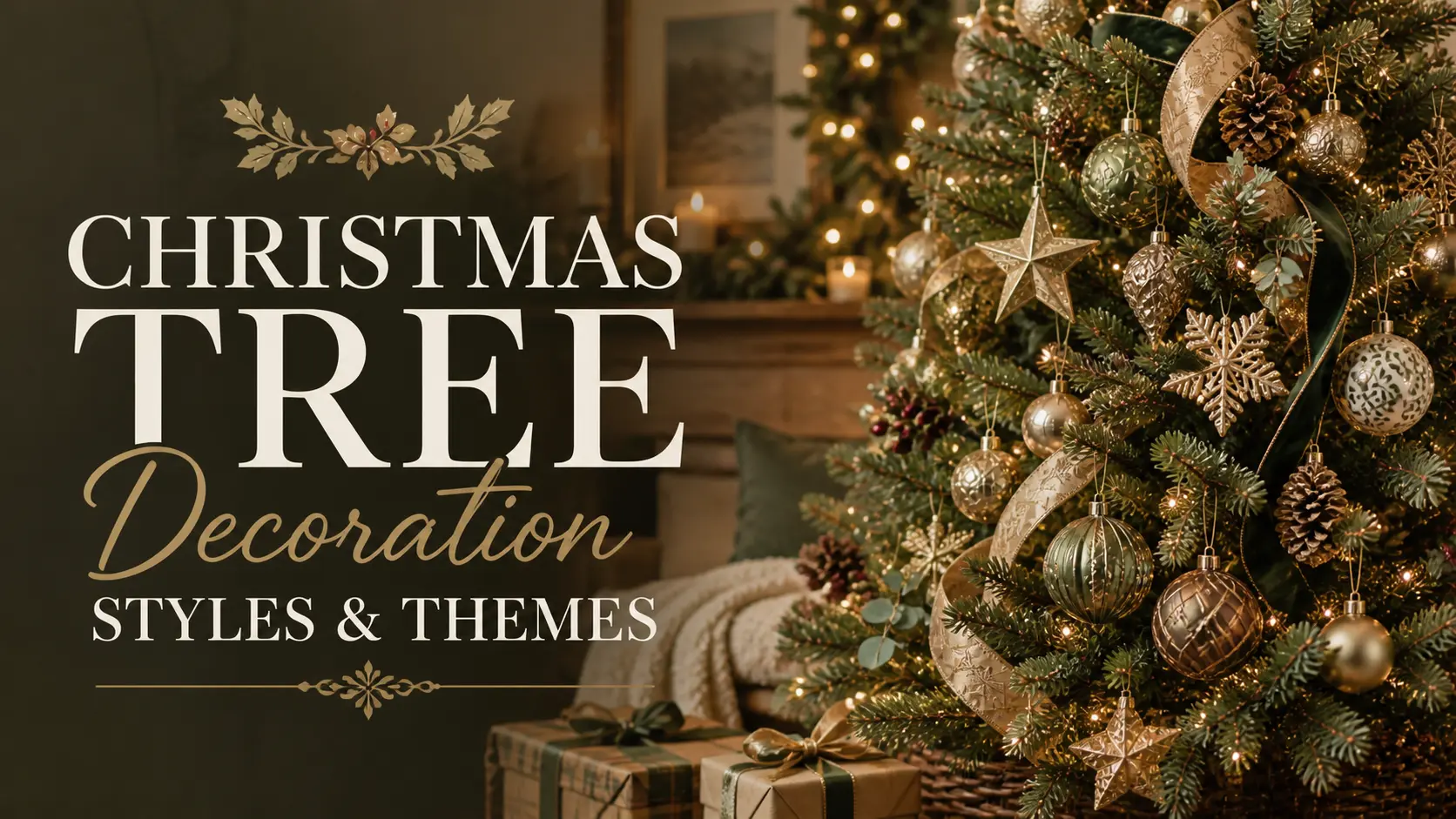

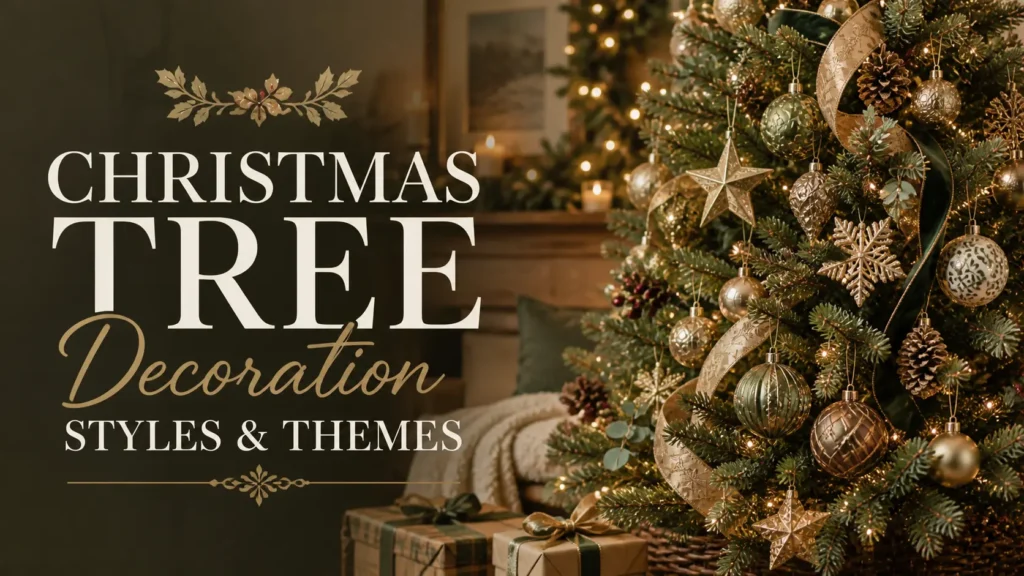
Every year, Christmas tree decorating trends shift a little. Colors fall in and out of fashion. New ornament styles emerge. Old ones get reimagined. And yet the impulse behind it all stays the same: people want their tree to feel like an extension of their home, their personality, and the kind of Christmas they actually want to have.
In 2026, the conversation around Christmas tree themes has matured considerably. It is no longer just about buying a box of mixed ornaments and hoping for the best. People are approaching their trees with the same intentionality they bring to interior design. They are choosing styles that reflect how they live, mixing references deliberately, and building setups that feel curated without feeling sterile.
This guide covers every major Christmas tree decoration style worth knowing, from the warmth of farmhouse and rustic aesthetics to the clean confidence of minimalism and the full drama of luxury decor. Whether you are starting fresh or refining what you already have, this is the most comprehensive reference you will find for Christmas tree decorating ideas in 2026.
What Are Christmas Tree Decoration Styles
A Christmas tree style is the visual language your tree speaks. It is the combination of colors, textures, ornament types, lighting choices, and overall arrangement that gives the tree a coherent identity. Without a defined style, most trees end up looking like a collection of ornaments rather than a considered design.
Decoration themes work slightly differently. A theme is often more specific: a color story (all white and gold), a concept (woodland creatures), or a cultural reference (Nordic winter). A style is broader and more architectural, like a design philosophy that governs all the decisions you make.
The reason choosing a style matters is practical. When you know your style, every decision becomes easier. You know which ornaments to keep and which to leave out. You know what color of ribbon to buy, how much to use, and where to place it. You stop second-guessing yourself at the store because you have a clear filter.
A tree with a defined style also tends to photograph better, read more clearly from across the room, and hold its visual impact longer throughout the season.
How to Choose the Right Christmas Tree Style
Choosing a style is not about following a trend, though trends can offer useful inspiration. The better approach is to work through three filters.
Match Your Home’s Existing Decor
Your tree lives in your home for several weeks. If your home is full of clean lines, neutral tones, and minimal clutter, a maximalist traditional tree with every color of ornament will look like it belongs in a different house. Conversely, if your home is warm, layered, and full of texture, a stark minimalist tree might feel cold and disconnected.
Look around at your furniture, your textiles, and your overall color story. Your tree should feel like it grew out of that environment, not landed in it from somewhere else.
Consider Your Space
The physical dimensions of your space shape what is possible. A narrow living room calls for a different approach than a wide open great room. High ceilings invite drama. Compact apartments reward restraint.
For rooms with limited floor space, slim and pencil Christmas trees offer an elegant solution that allows for full decorating without overwhelming the room. For larger spaces where you want the tree to serve as the dominant focal point, a 10-foot Christmas tree creates the kind of impact that a smaller tree simply cannot match.
Reflect Your Personal Taste
This is the most important filter and the one most people underweight. What kind of Christmas do you actually want to have? Cozy and nostalgic? Clean and modern? Warm and handmade? Glamorous and celebratory?
Your answer should drive every decorating decision. If you are not naturally drawn to glitter and metallic shine, do not choose a luxury style just because it looks impressive in photos. If you find perfectly symmetrical trees slightly unnerving, lean into rustic or farmhouse styles where imperfection is built into the aesthetic.
For the most convenient foundation regardless of style, pre-lit Christmas trees give you consistent warm lighting built into the structure, so you can focus entirely on the decorating layer without wrestling with light placement first.
The Major Christmas Tree Decoration Styles
Farmhouse Christmas Tree Style
The farmhouse style has been one of the most durable aesthetics in home decor for several years, and it translates beautifully to Christmas trees. At its core, farmhouse Christmas decorating is about warmth, practicality, and the beauty of simple, honest materials.
Think cotton stems, linen ribbons, wooden bead garlands, galvanized metal accents, and a color story built around cream, white, warm gray, and soft green. The ornaments tend to be chunky and textural rather than delicate and reflective. Buffalo check and plaid patterns appear regularly, usually in red and black or black and white.
What sets farmhouse apart from similar styles is its slight polish. It is organized and deliberate, but it never feels uptight. The goal is a tree that looks like it belongs in a farmhouse kitchen: practical, comfortable, and genuinely welcoming.
For a deeper look at this style and why it continues to resonate with so many decorators, the guide on why farmhouse Christmas trees are having a moment explores both the aesthetic and the cultural reasons behind its staying power.
Key elements: linen and burlap ribbon, wooden bead garlands, cotton bolls, buffalo check patterns, matte white ornaments, galvanized metal stars, simple greenery
Color palette: cream, white, warm gray, sage green, soft red
Minimalist Christmas Tree Style
Minimalist Christmas tree decorating is not about doing less because you cannot be bothered. It is about doing less with complete intention, so that every element carries more weight.
A minimalist tree is typically decorated with a restrained selection of ornaments, often in a single color or a carefully controlled two-tone combination. Negative space is treated as a design element, not a gap to fill. The shape of the tree itself becomes part of the composition in a way that heavily decorated trees never allow.
This approach tends to appeal to people with contemporary or Scandinavian-influenced interiors, where clarity and breathing room are valued over abundance. It also works well in compact spaces where a heavily decorated tree would feel visually overwhelming.
The discipline required for a successful minimalist tree is real. The instinct to add just one more ornament is strong. Resisting it is part of the process. For a comprehensive guide to executing this style effectively, minimalist Christmas tree ideas: less decor, more impact is an excellent starting point.
Key elements: single-color ornaments, geometric shapes, simple ribbon or none at all, statement topper, clean branch visibility
Color palette: monochromatic whites, blacks, warm grays, muted metallics
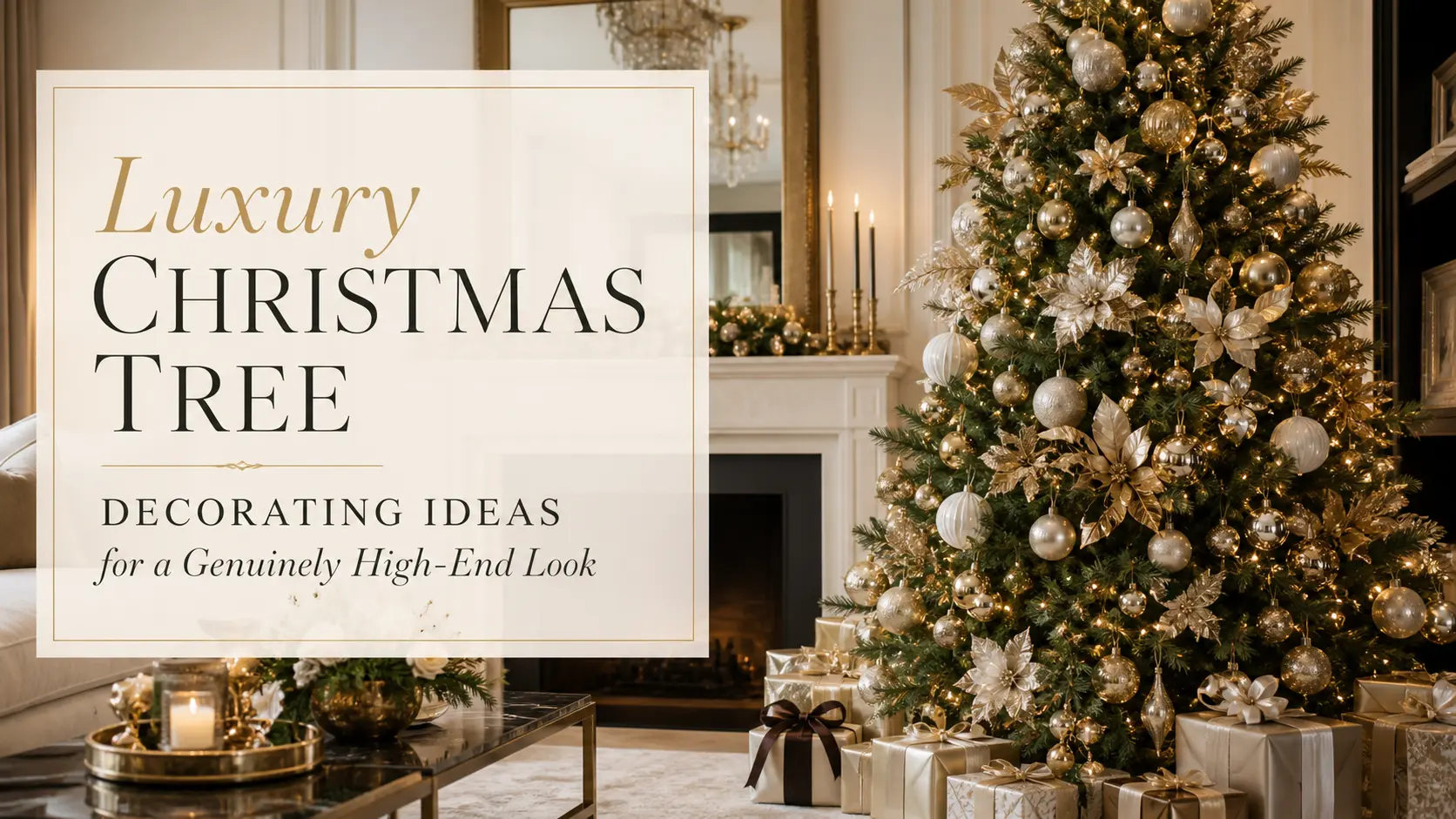
Luxury Christmas Tree Style
Luxury Christmas tree decorating is about creating something genuinely impressive without tipping into excess. This is the style of grand hotel lobbies and designer showrooms, but it is absolutely achievable at home when you understand its principles.
The foundation is quality over quantity. Every ornament is chosen for its craftsmanship, its weight, and its visual presence. Crystal drops, hand-blown glass baubles, velvet ribbon in deep jewel tones, fresh or faux flowers woven through the branches, and carefully placed lighting that creates drama without glare all contribute to the finished effect.
Color palettes in luxury trees tend toward deep, saturated tones: midnight blue and gold, burgundy and champagne, emerald and bronze. The contrast between rich, dark colors and warm metallic accents is a signature of this aesthetic.
One thing that separates genuinely luxurious trees from ones that simply look expensive is restraint in mixing. Every element should feel like it belongs to the same family. Ornaments from too many different manufacturers or collections introduce inconsistencies in finish and scale that undermine the overall impression.
The complete guide to luxury Christmas tree decorating ideas covers the specific decisions that separate a high-end look from an expensive one.
Key elements: hand-blown glass ornaments, velvet and satin ribbons, crystal accents, fresh florals, layered lighting, statement topper
Color palette: deep burgundy, navy, emerald, champagne, antique gold
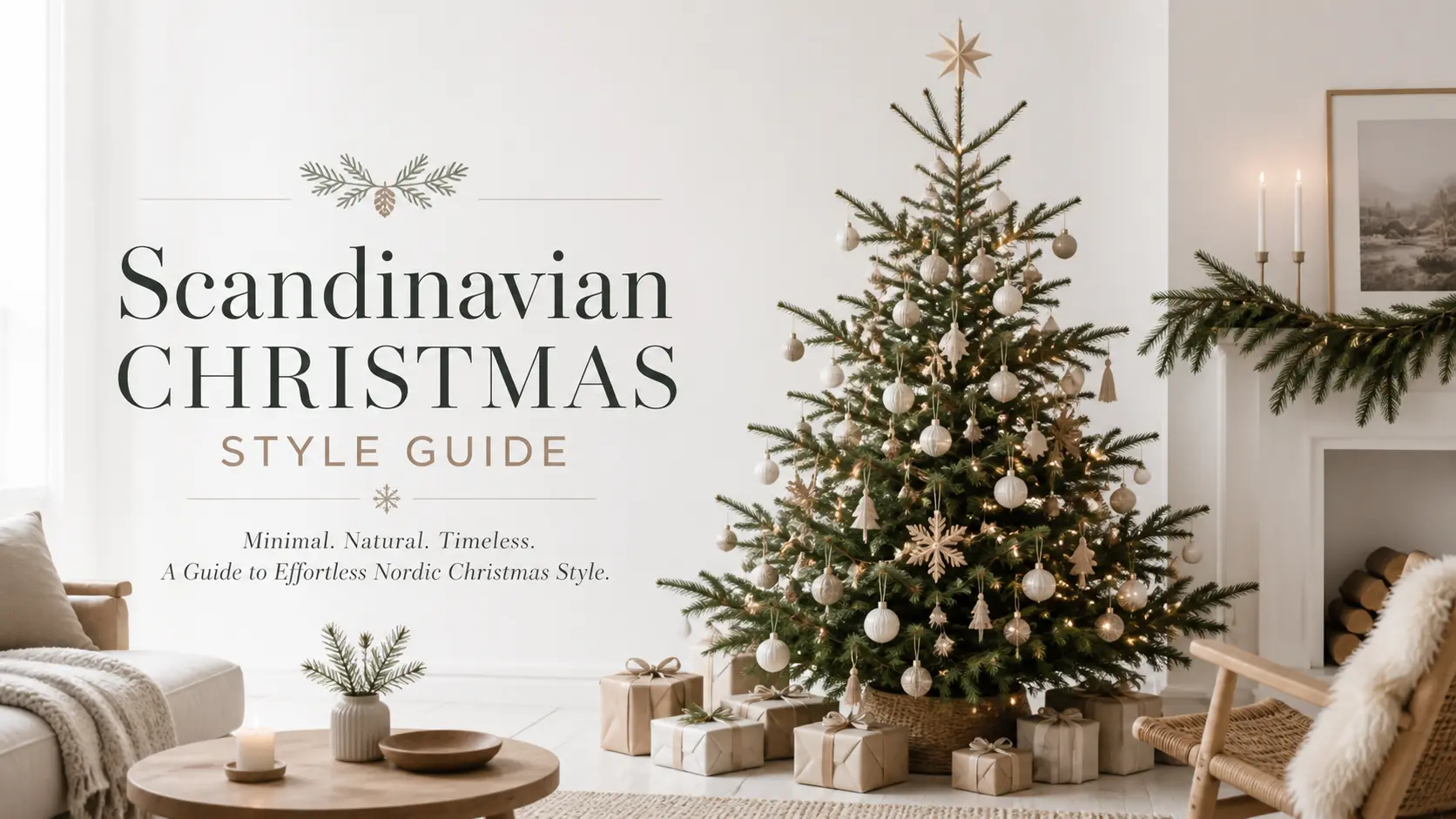
Scandinavian Christmas Tree Style
Scandinavian Christmas decorating has a philosophy behind it: that beauty comes from simplicity, that natural materials are inherently elegant, and that the holiday season should feel calm rather than chaotic.
A Scandinavian tree is typically decorated with wooden ornaments, straw stars, small woven figures, white or red fabric accents, and simple candle-style lighting. The overall effect is quiet and considered. Nothing shouts. Everything contributes.
This style draws on the Nordic concept of hygge, which loosely translates to a feeling of cozy contentment. The tree is not a showpiece so much as a gathering point, something that makes the room feel warmer and more human.
Natural materials dominate: birch wood, wool, cotton, linen, and occasionally preserved botanicals. The color palette is deliberately limited, usually white, red, natural wood tones, and deep green, with very little metallic presence.
For a full breakdown of the aesthetic principles and decoration choices that define this approach, the Scandinavian Christmas tree style guide is the most thorough resource available.
Key elements: wooden ornaments, straw stars, woven figures, simple red accents, candle-style lights, natural greenery
Color palette: white, red, natural wood, forest green, linen beige
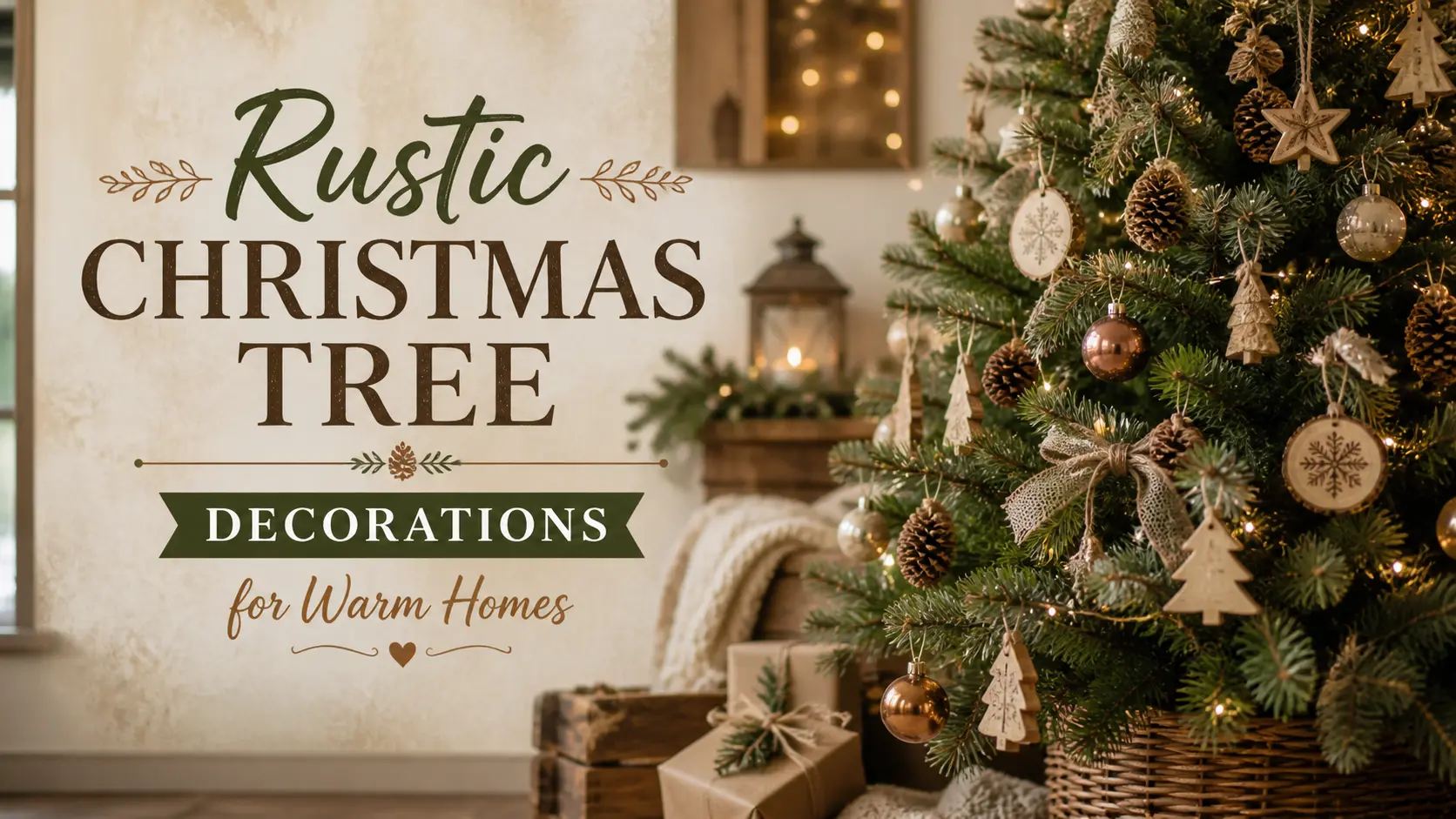
Rustic Christmas Tree Style
Rustic Christmas tree decorating is built on the same love of natural materials as Scandinavian style, but it is warmer, more generous, and less restrained. Where Scandinavian trees tend toward quiet elegance, rustic trees lean into abundance, texture, and the kind of imperfect beauty that comes from handmade and found materials.
Pinecones, dried orange slices, burlap ribbon, vintage ornaments, carved wooden figures, and cinnamon-scented accents are all hallmarks of this approach. The tree skirt is often burlap or a simple wool plaid. The lighting is always warm white, never cool or colored.
The rustic style is particularly well suited to homes with exposed brick, wood beams, stone fireplaces, or any architectural feature that already speaks a natural language. The tree becomes an extension of the space rather than a seasonal addition that feels imported.
It is also one of the most budget-friendly styles available, since so many of its defining elements can be gathered from nature, made at home, or purchased inexpensively at thrift stores and craft shops.
For detailed ideas, DIY options, and styling advice, the guide to rustic Christmas tree decorations for warm, cozy homes covers the style comprehensively.
Key elements: pinecones, burlap ribbon, dried botanicals, vintage ornaments, wooden carved decor, twine accents
Color palette: brown, cream, deep red, forest green, muted gold
Modern Christmas Tree Style
Modern Christmas tree decorating sits at the intersection of contemporary design and holiday tradition. It borrows the clean lines and geometric sensibility of modern interior design and applies them to the tree with bold, deliberate results.
Where minimalism is quiet, modern decorating can be quite assertive. Bold color choices, graphic patterns, unconventional ornament shapes, and strong structural elements like metal toppers and architectural ribbon work all play a role.
Metallic finishes appear frequently in modern trees, but they tend toward the cooler end: brushed silver, chrome, gunmetal, and matte black, rather than the warm antique gold associated with traditional or luxury styles. Monochromatic color schemes work particularly well here, especially when executed with a mix of matte and reflective finishes in the same color family.
Modern trees often benefit from creative lighting choices beyond standard string lights. Accent lighting, LED strips, or specially placed spotlights that illuminate the tree from outside can create a dramatic effect that suits the boldness of the style.
Key elements: geometric ornaments, strong structural topper, monochromatic or high-contrast palette, metallic and matte finish combination, bold ribbon
Color palette: black and silver, white and chrome, deep teal, burnt orange, cobalt blue
Traditional Christmas Tree Style
Traditional Christmas tree decorating is the style most people grew up with, and there is a reason it has never gone away. It works. It feels like Christmas. And when executed well, it holds a visual richness that more restrained styles cannot match.
The traditional tree draws from a long history of Christmas iconography: red, green, and gold are the dominant colors. Glass ball ornaments in various sizes, tinsel, candy canes, nutcrackers, nativity figures, and a star or angel topper are all familiar elements. Garlands of beads, tinsel, or popcorn wind through the branches. Lights are often multicolor or warm white.
What gives traditional trees their staying power is nostalgia. Many of the ornaments on a traditional tree carry personal history: the clay handprint from kindergarten, the glass bauble from a childhood home, the star that has sat in the same box for thirty years. The style welcomes that accumulation in a way that more design-conscious approaches cannot.
In 2026, the traditional style is seeing a subtle update. People are keeping the warmth and nostalgia but editing out some of the visual noise, choosing better-quality versions of classic ornament types and arranging them with a slightly more deliberate eye.
Key elements: glass ball ornaments, tinsel or bead garlands, multicolor or warm white lights, classic topper, candy cane and nutcracker figures
Color palette: red, forest green, gold, cream, deep burgundy
Color-Based Christmas Tree Themes
Beyond style categories, many people build their tree around a specific color story. This is particularly useful when your home already has a strong color identity that you want the tree to reflect.
White and Gold
One of the most enduringly popular Christmas tree color combinations. White and gold reads as elegant and luminous without requiring the structural discipline of a fully luxury setup. White ornaments in matte, frosted, and glossy finishes create depth. Warm gold accents in ribbon, beads, and ornament picks add richness.
This combination works across multiple styles: it can lean luxury when executed with high-quality materials, or farmhouse when the gold is brushed and the white is textured.
Blue and Silver
Blue and silver trees have a crystalline, wintry quality that is distinct from the warmth of traditional color schemes. Deep navy with bright silver creates contrast and drama. Ice blue with silver creates something softer and more ethereal.
This palette often pairs well with a modern or Scandinavian approach, where the coolness of the colors aligns with the clean, restrained decorating philosophy.
Pink Christmas Trees
Pink trees have moved steadily from novelty to genuine decorating option over the past few years, and in 2026 they remain a strong choice for people who want something genuinely distinctive. Blush pink with rose gold accents creates a soft, romantic feel. Hot pink with black or white creates something bold and maximalist.
If you are considering a pink tree but want it to feel intentional rather than playful, the key is committing fully to the color story and ensuring every element, from the ribbon to the topper to the tree skirt, belongs to the same deliberate palette.
Black Christmas Trees
Black trees are a conversation piece and an aesthetic statement simultaneously. When decorated with gold or white ornaments, they create a dramatic, high-contrast setup that reads as sophisticated and modern. With iridescent or holographic ornaments, they become something more avant-garde.
A black tree requires confidence and commitment. It dominates a room, so the surrounding space needs to be able to absorb that visual weight. But in the right setting, it is one of the most striking Christmas tree setups possible.
Trending Christmas Tree Ideas for 2026
Beyond the established styles, 2026 has brought some specific trends worth knowing about.
Dried and preserved botanicals have moved from niche to mainstream. Dried pampas grass, preserved eucalyptus, cotton stems, and seed pods are appearing on trees of all styles, adding texture and a natural, slightly undone quality that resonates with the broader interest in biophilic design.
Tonal decorating is gaining traction. Rather than mixing multiple shades within a color family, many decorators are building trees with a single, precisely controlled tone carried through every element. A tree decorated entirely in ivory, where ornaments, ribbon, lights, and topper are all as close to the same shade as possible, creates a striking sculptural effect.
Oversized ornaments are being used more deliberately. Rather than covering a tree with many small ornaments, some decorators are choosing a small number of large-scale pieces as anchors and building around them with simpler filler. This approach creates visual hierarchy and avoids the cluttered look that comes from uniform ornament sizing.
Textured ribbons and fabrics continue to gain ground over standard satin. Velvet, woven cotton, chenille, and even macrame ribbon add tactile interest that reads beautifully in person and photographs well.
Mixed lighting is becoming more sophisticated. Combining warm white string lights with strategically placed battery-operated fairy lights in ribbon or garland creates layered illumination that is more interesting than a single uniform light source. For homes with flocked trees, the guide to the best lights and decor ideas for a flocked Christmas tree offers useful guidance on how to layer light effectively on textured surfaces.
How to Mix and Match Christmas Tree Styles
Not everyone wants to commit to a single style, and the good news is that thoughtful mixing can produce some of the most interesting trees. The key is intentional combination rather than accidental collision.
Minimalist and Luxury
This is one of the most successful combinations available. Take the restraint and negative space of minimalism and fill the limited number of decoration slots with high-quality luxury pieces. A tree with twenty genuinely beautiful ornaments, excellent ribbon, and perfect lighting will outperform a tree with two hundred average ornaments every time.
Rustic and Farmhouse
These two styles share so much DNA that mixing them is almost automatic. The natural materials, earthy palettes, and handmade sensibility of rustic decorating blend seamlessly with the organized warmth of farmhouse style. The resulting tree feels genuinely lived-in and personal.
Modern and Scandinavian
Both styles value clean lines and deliberate simplicity. The difference is that modern leans toward bold and graphic while Scandinavian leans toward quiet and natural. Combining them works when you use modern structural principles (strong topper, clear color story, geometric elements) with Scandinavian materials (wood, wool, linen). The result is contemporary without being cold.
Tips for Successful Mixing
- Limit yourself to two primary styles at most. Three or more creates confusion rather than character.
- Find the elements that both styles share and use those as your foundation. Build outward from the common ground.
- Choose one style to be dominant and let the second be an accent. Equal parts of two styles often cancel each other out rather than combining.
- Maintain a single color palette even when mixing styles. Consistent color is what holds disparate elements together visually.
For small-space setups where you want the aesthetic impact of a larger style mix without the visual overwhelm, learning how to style a pencil Christmas tree in a corner can help you apply these principles within tighter constraints.
Common Christmas Tree Decorating Mistakes to Avoid
Even with a clear style in mind, a few common errors can undermine the finished result. Being aware of them beforehand is far easier than trying to fix them mid-decoration.
Mixing too many styles without a unifying principle. A little farmhouse, a little luxury, a little Scandinavian, and some traditional elements from twenty years ago do not combine into something interesting. They combine into something confusing. Choose your direction and hold to it.
Overdecorating relative to tree size. More ornaments do not automatically mean a better tree. Every tree has an appropriate density of decoration for its size and branch structure. Exceeding that density results in a tree that looks heavy and cluttered rather than full and festive. Step back regularly as you work and leave intentional breathing room.
Poor lighting as an afterthought. Lighting is the single most important element in how a decorated tree reads in a room, particularly in the evenings. Lights added hastily at the end, concentrated on the outside of the tree without depth, or chosen in the wrong color temperature will undermine even excellent ornament work. Always place lights before any other element.
Neglecting the tree skirt and base. The base of the tree is part of the composition. A beautiful tree sitting on an exposed plastic stand is like a well-dressed person wearing mismatched shoes. Whether you choose a fabric skirt, a woven basket, a galvanized metal bucket, or a stack of logs, the base needs to be considered as part of the overall design.
Buying ornaments in too many scales. When ornament sizes vary wildly with no organizing logic, the tree looks random. Use a consistent size range, or if you want to vary sizes, place larger ornaments toward the base and smaller ones toward the tips in a deliberate gradient.
Ignoring the back of the tree. If your tree is visible from multiple angles, it needs to be decorated accordingly. Even if the tree is against a wall, what you see from the sides matters. Treating the tree as purely front-facing results in a flat, two-dimensional look when viewed from any other direction.
Over-coordinating to the point of sterility. This is the opposite problem from mixing too many styles. When every single element matches perfectly, the tree can feel more like a store display than a personal decoration. A small degree of variation within your chosen style, a slightly different shade here, a different texture there, is what makes a tree feel human.
Final Thoughts
The Christmas tree has always been one of the most personal expressions of how a household celebrates the season. In 2026, the range of styles, themes, and approaches available makes it more possible than ever to build something that feels genuinely right for your home and your taste.
Whether you are drawn to the organic warmth of rustic and farmhouse aesthetics, the quiet confidence of Scandinavian or minimalist design, the full drama of luxury decorating, or the bold personality of modern and color-forward themes, the principles remain consistent: choose a direction, commit to it, and let every element serve the whole.
The individual style guides linked throughout this article go deeper into the specific decisions each approach requires. Use this page as your starting point and the linked guides as your detailed references for whichever direction you choose.
The best Christmas tree is not the most expensive one or the most photographed one. It is the one that makes your home feel most fully like itself during the most meaningful weeks of the year.
Frequently Asked Questions
What is the most popular Christmas tree style in 2026? Natural and organic styles continue to lead in 2026, with rustic, farmhouse, and Scandinavian approaches all seeing strong interest. Tonal and monochromatic decorating is also growing significantly, as is the use of dried and preserved botanical elements across multiple styles.
How do I choose a Christmas tree theme if I am starting from scratch? Start with your home’s existing decor as your reference point. Look at your dominant colors, your furniture style, and the overall atmosphere you have created in your living space. Your tree should feel like a natural extension of that environment. From there, browse the individual style guides linked in this article to find the approach that resonates most with you.
Can I mix Christmas tree decoration styles? Yes, but limit yourself to two primary styles and find a unifying principle between them, usually a shared color palette or a shared material preference. The most successful style combinations share underlying values even when they look different on the surface.
What size tree works best for a small living room? Slim and pencil-profile trees are specifically designed for narrow spaces and can carry full decorating schemes beautifully without occupying excessive floor space. A 6 to 7.5-foot pencil tree is an excellent choice for most compact rooms.
Are pre-lit trees a good choice for any decorating style? Yes. Pre-lit trees with warm white lights are versatile enough to serve as the foundation for almost any Christmas tree style. The built-in lighting creates a consistent, even warm glow that enhances natural materials, rich colors, and delicate ornaments equally well.
What lighting works best for a luxury Christmas tree? Warm white lighting is generally preferred for luxury trees, as it enhances the depth of jewel-toned ornaments and brings out the warmth of metallic finishes. Some luxury setups add accent lighting outside the tree, such as a directed spotlight, to create more dramatic illumination of key ornament arrangements.
How many ornaments should I use on a Christmas tree? A useful general guideline is roughly 10 ornaments per foot of tree height as a starting point, adjusted upward or downward based on your style. A minimalist tree might use 5 per foot. A traditional or rustic tree might use 15 or more. The right number is the one that looks intentional rather than either sparse or overcrowded.