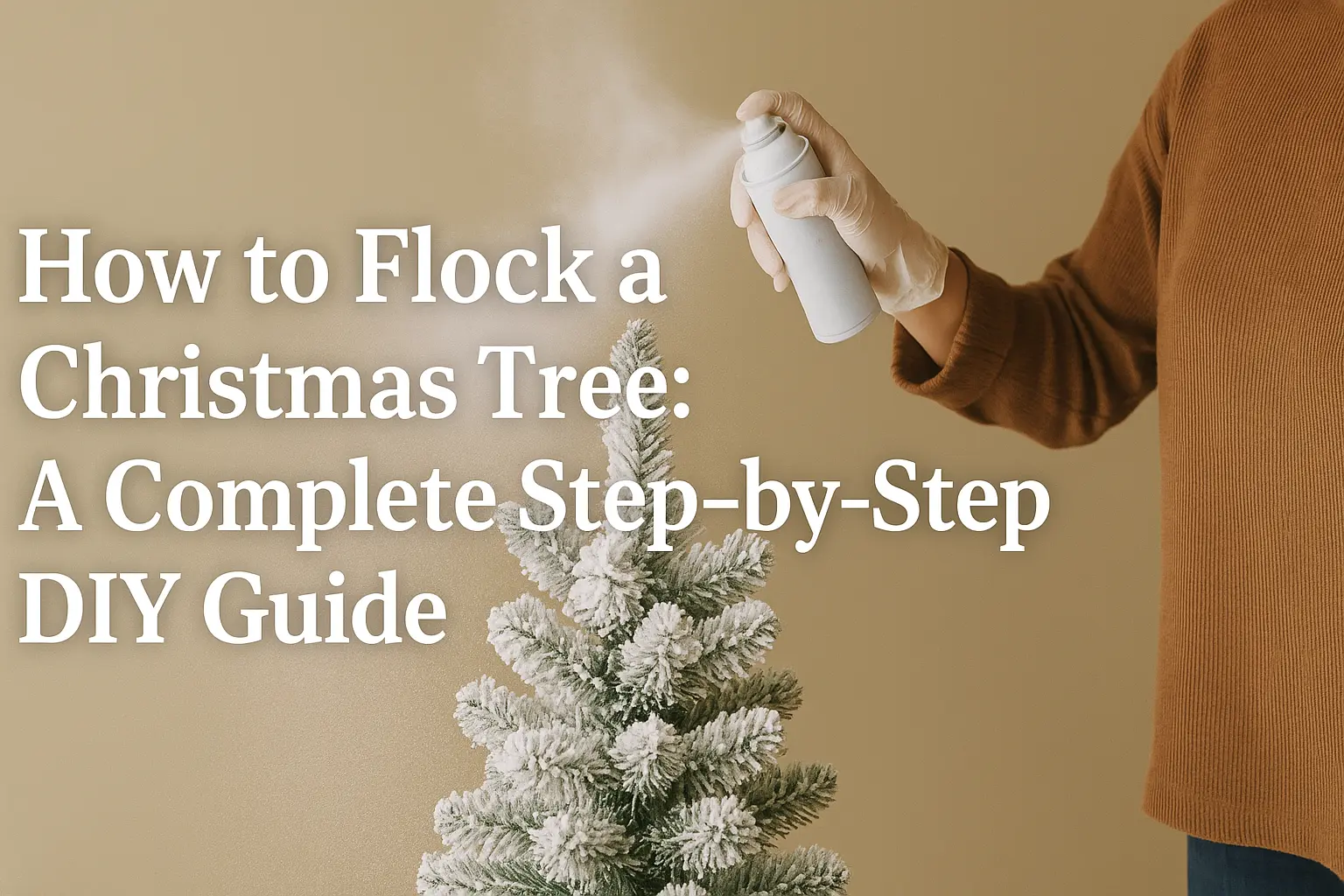

As flocked Christmas trees grow in popularity, many homeowners naturally ask an important question: are flocked Christmas trees toxic? While the snowy appearance of flocked trees adds charm and elegance to holiday décor, concerns about health, safety, pets, and children are completely valid. Understanding what flocking is made of, how it behaves indoors, and what precautions to take can help you enjoy your Christmas tree with peace of mind.
Modern flocked Christmas trees, whether pre-flocked or DIY, are generally designed for indoor use and made with safety in mind. However, not all flocking materials are the same, and the level of safety depends heavily on the product used, how it is applied, and the environment in which the tree is displayed. This guide explores flocking safety in depth so you can make informed decisions for your home during the holiday season.
Also Read: Ultimate Guide to Prelit Christmas Trees: Buying, Decorating & Maintaining
What Is Flocking Made Of?
Flocking used on Christmas trees is typically composed of finely ground cellulose fibers, cornstarch-based compounds, or synthetic materials combined with an adhesive. These materials are designed to mimic the appearance and texture of snow while remaining dry and stable indoors. Most commercially produced flocking is treated to be flame-retardant and labeled as non-toxic, especially when sold by reputable manufacturers.
Pre-flocked Christmas trees sold in stores are usually manufactured under regulated conditions, meaning the flocking materials have been tested for indoor safety. DIY flocking kits, on the other hand, vary in quality, which is why it is essential to check labels carefully. Products that clearly state non-toxic and flame-retardant are generally considered safe for home use when applied correctly.
Are Flocked Christmas Trees Toxic to Humans?
In normal conditions, flocked Christmas trees are not toxic to humans. Once the flocking has fully dried and cured, it becomes stable and does not release harmful chemicals into the air. Most people can safely enjoy flocked trees without experiencing any health issues.
However, individuals with respiratory sensitivities, asthma, or allergies may notice mild irritation during the flocking application process, especially if fine particles become airborne. This is why flocking should always be done in a well-ventilated area while wearing protective gear such as masks and gloves. Once the tree is dry, the risk of inhalation or irritation is significantly reduced.
Are Flocked Christmas Trees Safe for Children?
Flocked Christmas trees are generally safe for children when basic precautions are taken. The main concern is not toxicity but ingestion. Young children may be tempted to touch or pull at the flocking, and while most modern flocking is non-toxic, it is not meant to be eaten.
Placing the tree out of reach of toddlers and discouraging direct handling of the flocking helps reduce risk. Using pre-flocked trees or high-quality DIY flocking products further improves safety. Supervision is especially important during the first few days after flocking, when minor shedding may occur.
Are Flocked Christmas Trees Toxic to Pets?
Pet safety is one of the most common concerns related to flocked Christmas trees. Cats and dogs are naturally curious and may chew on branches, lick surfaces, or play with fallen flocking material. Most non-toxic flocking products will not cause serious harm if ingested in small amounts, but ingestion can still lead to digestive upset such as vomiting or diarrhea.
Cats are particularly attracted to flocked trees because the texture resembles snow or powder. For homes with pets, it is important to monitor their behavior around the tree and discourage chewing or licking. Using pet-safe, non-toxic flocking products and cleaning up any fallen material promptly reduces the risk significantly.
Can Flocking Cause Allergies or Breathing Problems?
While flocking itself is not toxic, it can trigger allergic reactions in sensitive individuals. Fine flocking particles can become airborne during application or when the tree is first moved into place. This may cause temporary symptoms such as sneezing, coughing, or eye irritation.
Once fully dried, flocking particles typically settle and no longer pose a respiratory risk. To minimize exposure, flocking should be done outdoors or in well-ventilated spaces, and the tree should be allowed to dry completely before being brought into living areas. Vacuuming around the tree base during the first few days also helps reduce airborne particles.
Is Flocking Flammable or a Fire Hazard?
Fire safety is a critical consideration for any Christmas tree, flocked or not. Most commercial flocking products are treated with flame-retardant chemicals to meet indoor safety standards. Pre-flocked artificial Christmas trees are typically tested for fire resistance before being sold.
However, safety also depends on how the tree is used. Placing the tree too close to heat sources, using damaged electrical lights, or overloading outlets increases fire risk regardless of flocking. Always use certified Christmas lights, avoid open flames near the tree, and unplug lights when leaving the house or going to bed.
Are DIY Flocked Christmas Trees Safe?
DIY flocked Christmas trees can be just as safe as store-bought ones if high-quality materials are used. The main risks come from using low-quality or unverified flocking products that may not be labeled as non-toxic or flame-retardant.
Following manufacturer instructions carefully, allowing adequate drying time, and ensuring proper ventilation during application significantly reduces safety risks. DIY flocking should never be rushed, especially when the tree will be placed in a home with children or pets.
How to Choose Safe Flocking Products
Choosing safe flocking products starts with reading labels. Look for flocking materials that clearly state non-toxic, flame-retardant, and suitable for indoor use. Reputable brands often provide safety certifications or testing information on packaging.
Avoid using industrial flocking or craft materials not designed for holiday décor, as these may contain chemicals not intended for indoor environments. When in doubt, purchasing a pre-flocked Christmas tree from a trusted retailer is often the safest option.
Safety Tips for Homes with Pets and Kids
To maximize safety, place the Christmas tree in a low-traffic area where it is less likely to be disturbed. Secure the tree properly so it cannot tip over, especially if pets or children are present. Regularly check for loose flocking around the base and clean it up promptly.
Supervision, proper product selection, and thoughtful placement go a long way in making flocked Christmas trees safe and enjoyable for the entire household during the holiday season.
Are Pre-Flocked Trees Safer Than DIY Flocked Trees?
Pre-flocked Christmas trees are often considered safer because they are manufactured under controlled conditions using tested materials. The flocking is evenly applied and fully cured before sale, reducing the risk of shedding and exposure.
DIY flocked trees offer customization but require more responsibility. When done carefully, DIY flocking can be just as safe, but it demands attention to product quality, ventilation, and drying time. The choice ultimately depends on personal preference and comfort level.
Final Verdict: Are Flocked Christmas Trees Toxic?
In most cases, flocked Christmas trees are not toxic when made with modern, non-toxic, flame-retardant materials and used as intended. They are generally safe for adults, children, and pets when basic precautions are followed. The biggest risks come from low-quality flocking products, improper application, or lack of supervision in homes with pets or small children.
Understanding flocking materials, choosing safe products, and following proper usage guidelines allows you to enjoy the beauty of a flocked Christmas tree without compromising health or safety.